Portuguese
  Spanish


Aerial photos led archaeologists to investigate a plantation near Belfast, where a stone circle was confirmed as a prehistoric monument in Northern Ireland. The find in Ballynahatty raises questions about ancient rituals, 50 known sites, broken arrowhead, and hidden marks in the Irish rural field even today.
A stone circle at least 4,000 years old was discovered under farmland near Belfast, Northern Ireland, in 2026, after marks seen in aerial photos caught the attention of archaeologists. The investigation is conducted by Queen’s University Belfast, with participation from community volunteers and local students.
The information was published by the Daily Galaxy on July 7, 2026. According to the publication, the prehistoric monument is located within the Ballynahatty Ritual Complex, an area already known for hosting about 50 archaeological sites and which now may reveal a larger ritual landscape than previously imagined.
Aerial photos revealed a strange mark on the plantation
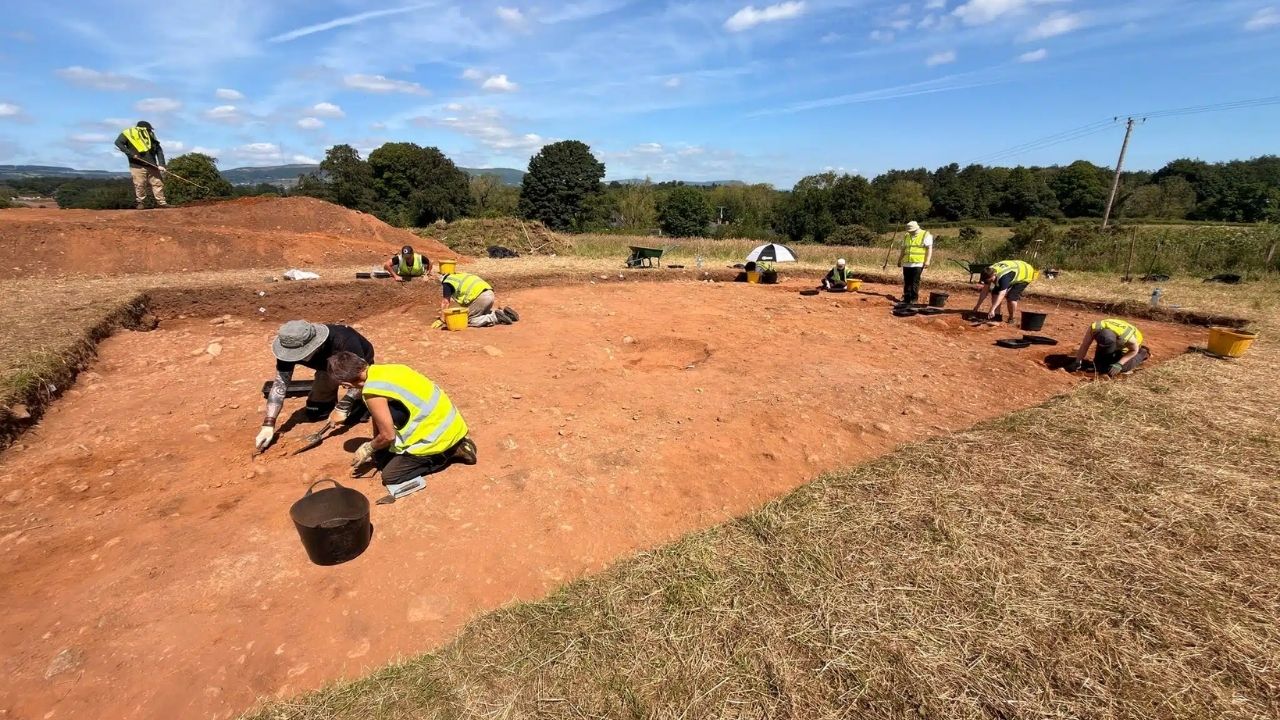
The discovery began when images taken from above showed unusual changes in the growth of the plantation. In archaeology, these marks can indicate differences in the soil caused by buried structures, ancient ditches, removed stones, or human interventions made thousands of years ago.
-
Brazilian Innovator Transforms 1962 Mercury Comet with Nissan Leaf Electric Motor, Achieving 125 km Range for Under $6,000

-
China Tests Giant 582-Ton Magnets to Contain Plasma Hotter Than the Sun’s Core, Aiming to Cut Superconductor Costs and Generate First Electricity from “Artificial Sun” by 2030
-
Seventh Grader Builds Nuclear Fusion Machine at Home, Aiming for Guinness World Record

-
Ancient Ritual Circle, Hidden for 5,000 Years, Discovered in Scotland’s Machrie Moor Using Sensors, Revealing a “Phantom Stonehenge”



In the case of Ballynahatty, the marks suggested there was something beyond the already known monuments. What seemed like just a visual difference in the field led researchers to excavate and confirm the presence of a prehistoric stone circle.
Stone circle expands the mystery in Ballynahatty
The new stone circle has been associated with the Late Neolithic or the beginning of the Bronze Age, periods marked by ceremonial constructions and collective monuments in different regions of Europe. The structure did not emerge in isolation but within an archaeological area already considered significant in Northern Ireland.
The Ballynahatty Ritual Complex is located at the southern end of the Malone ridge and gathers dozens of ancient remains. With the new discovery, archaeologists now consider that this ritual landscape may have been more extensive and complex than previous records indicated.
Ancient monument may have been damaged by farmers
Part of the monument has not been preserved to this day. According to researchers, a large portion of the stone circle may have been damaged in the 19th century when farmers removed or dismantled ancient structures that hindered land use.
This type of intervention helps explain why the site remained hidden for so long. Even when the stones disappear from the surface, the soil can still hold signs capable of revealing the original design of a prehistoric monument.
Broken arrowhead drew attention during the excavation
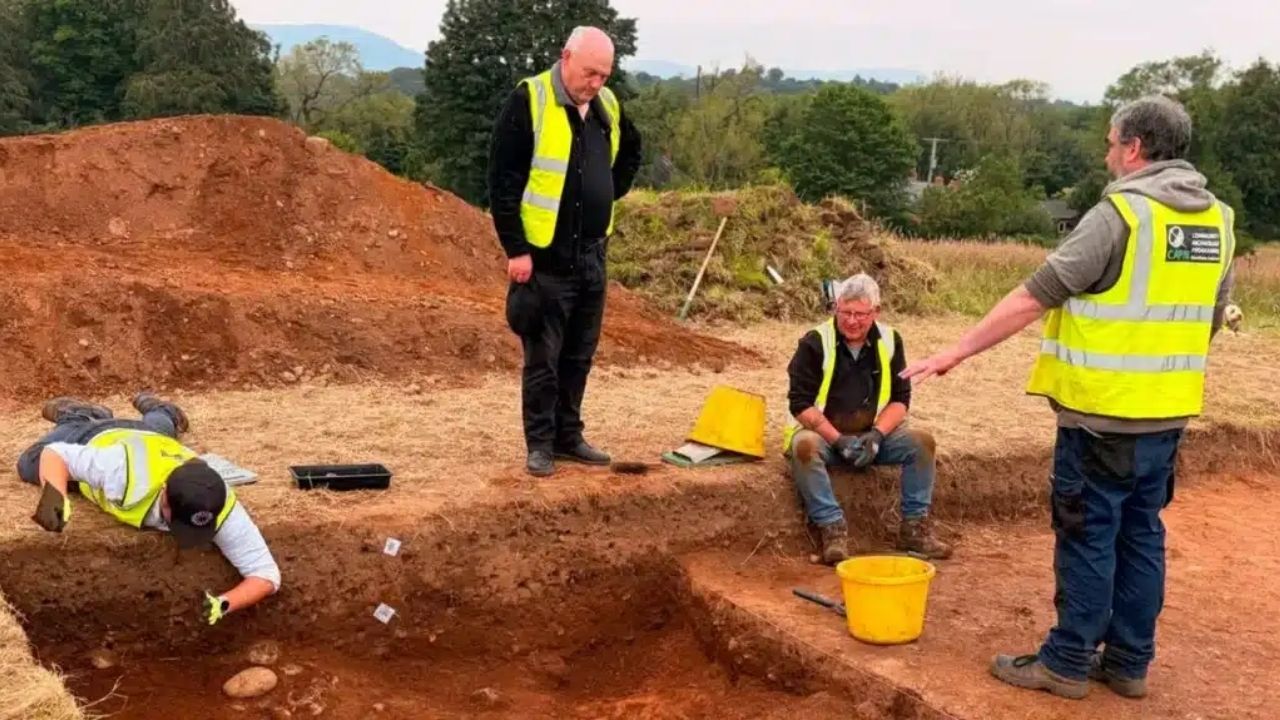
During the fieldwork, a student from Finaghy Primary School found a broken arrowhead. The find does not alone resolve the function of the monument, but it reinforces the archaeological interest of the area and shows how small fragments can help reconstruct ancient human activities.
The excavation also gained prominence for community participation. Volunteers and students worked alongside the research team, even facing periods of heavy rain and heat. The discovery transformed a common agricultural area into a practical public archaeology experience.
Ancient ceremonies are still an open hypothesis
The exact function of the stone circle remains without a definitive answer. Archaeologists still debate whether structures of this type were used in religious ceremonies, community gatherings, seasonal rituals, or observations related to certain times of the year.
Some sites in Northern Ireland show possible relationships with celestial alignments, which fuels the hypothesis of use as a prehistoric calendar. Even so, researchers avoid definitive conclusions, as each monument needs to be interpreted according to its context, position, and associated remains.
What this finding changes about the Irish past


The new stone circle shows that seemingly ordinary rural landscapes can hold important parts of human history. A field used for agriculture today may have been, 4,000 years ago, a space for collective construction, social gathering, or ritual practice.
The discovery also reinforces the value of observation technologies, such as aerial photographs, when combined with field excavations. Without the images, the mark might have remained invisible; without the excavation, it would be just a suspicion.
The mystery that continues beneath the earth
The stone circle found near Belfast does not close the story of Ballynahatty. On the contrary, it opens new questions about who built the monument, why they chose that landscape, and how this structure connected to other sites in the ritual complex.
What do you think this monument represented 4,000 years ago: a place for ceremonies, a meeting point, a sky-linked calendar, or something we cannot yet imagine? Share your opinion and join the conversation.