Portuguese
  Spanish


Strong market, global talents, and recognized games were not enough to place the country on the shelf of major Triple-A releases.
Brazil has already shown strength in the global gaming market, but it has yet to release a AAA game produced by a national studio.
Brazilian titles like Horizon Chase Turbo, Mullet MadJack, Celeste, and the Starlit franchise have gained international prominence. However, none of them have entered the category of major Triple-A blockbusters.
This scenario is noteworthy because the country gathers consumers, developers, specialized courses, international events, and professionals working in major foreign companies.
-
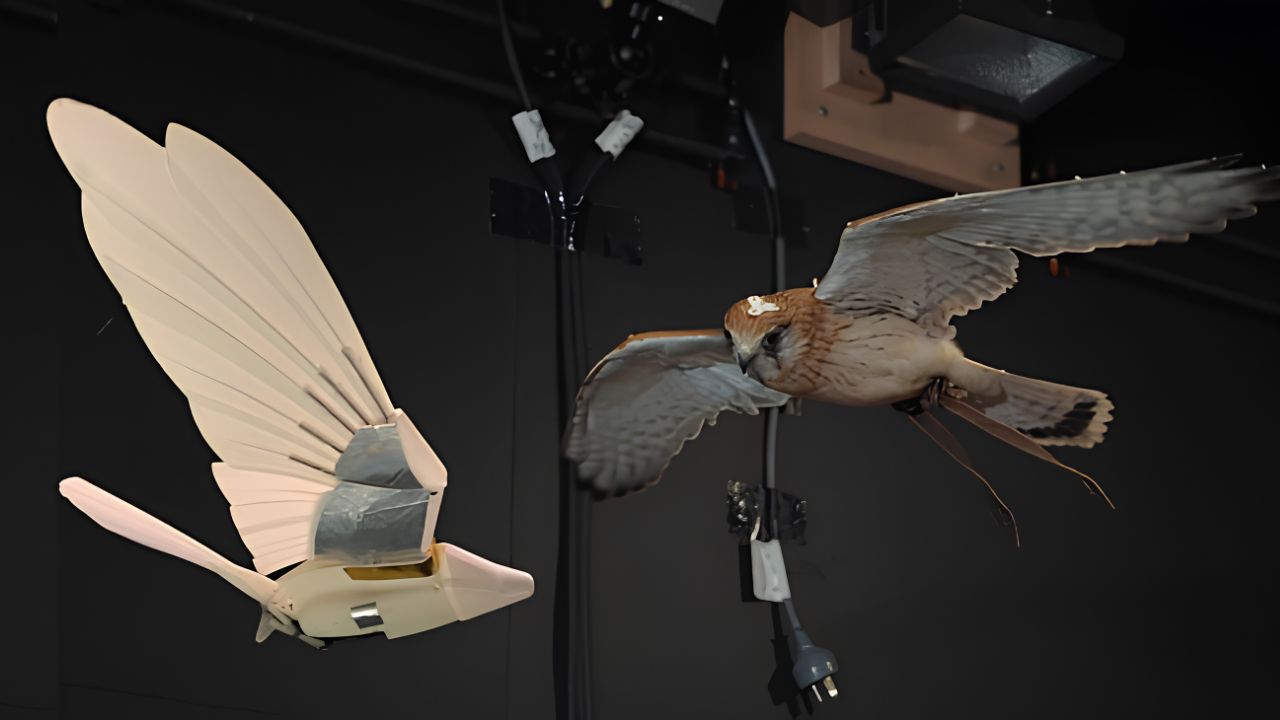
Scientists create robotic bird that uses articulated wings to maintain balance, mimicking hawks and flying with stability where common drones fail.

-
U.S. university performs surgeries with remotely controlled humanoid robots
-
A 12-year-old boy from the municipal network of Canoas won gold in the Brazilian Mathematics Olympiad, earning the school’s first national medal in history and standing out in a competition that brought together more than 18 million students, demonstrating how public education can uncover hidden talents in Brazil.
-
Why did a company that was already earning US$ 1 million decide to completely change its strategy? The answer begins with used bottles, worms, and an unexpected decision.



Surveys by Abragames, Pesquisa Game Brasil, and Newzoo place Brazil among the relevant markets for game consumption worldwide.
Producing a AAA game, however, requires much more than creativity, good professionals, and international recognition.
What defines a AAA game
A AAA game, also called Triple-A, is a large-scale production, made with a high budget, large teams, and strong investment in marketing.
The industry does not have an official certification to classify a game as AAA.
The term is used to identify projects developed by large studios or publishers, usually with global reach.
This type of production usually requires years of work, hundreds of professionals, and global marketing campaigns.
Estimates published by The Scotsman indicate that GTA V, released in 2013, would have cost about US$ 265 million between development and marketing.
This figure helps explain why the financial barrier has become one of the biggest obstacles for the Brazilian industry.
Million-dollar budget stalls national progress
No Brazilian studio currently operates with the same financial structure as major international producers.
A AAA game would require a budget of tens or even hundreds of millions of dollars.
The production would also demand a robust team, with artists, programmers, designers, producers, and specialists dedicated exclusively to the project.
This type of operation would require a broad selection of talents in the national market.
The task would not be impossible, but it would involve high cost, elevated risk, and great complexity for Brazilian companies.
Marketing also appears as a decisive point.
A AAA game does not depend solely on technical quality. The campaign needs to have global reach, presence at major events, international distribution, and strong brand building.
Brazilian talent is already in major companies
The lack of a national AAA does not mean an absence of talent.
Brazilians work in companies like Epic, Ubisoft, Rockstar, EA, Activision, Unity, and Wooga.
Professionals from the country also participate in projects linked to international brands, such as Disney and Sony Pictures.
Brazil has artists, programmers, designers, and producers prepared to work on high-level projects.
A large part of these talents, however, is spread across foreign studios or independent projects.
The challenge is to unite experience, capital, and structure in a single national operation.
Brazilian games have already proven global quality
The quality of Brazilian studios has already been demonstrated on different platforms.
National independent games have reached the international market and won over millions of players.
The Starlit franchise, with titles like Starlit Adventures and Starlit KART Racing, has reached consoles like PlayStation, Xbox, and Nintendo Switch.
These results show that Brazilian companies can create competitive products.
Independent projects and medium-sized productions, however, do not require the same structure as a AAA.
Brazil is still advancing in a stage prior to the production of major blockbusters.

Brazilian industry still seeks maturity
The gaming sector in Brazil gained more strength starting in the 1990s.
The 2010s brought significant progress with the growth of independent games.
This movement helped strengthen studios, events, and professionals in different regions.
Hubs like Rio Grande do Sul, São Paulo, and Pernambuco show that national production is widespread and expanding.
A AAA would require a more consolidated industrial pyramid.
In this model, there would be a large producer at the top, several medium-sized companies, and hundreds of independent studios at the base.
First Brazilian AAA might emerge from another model
The first Brazilian AAA game might not resemble GTA, Call of Duty, or The Witcher.
It might emerge on platforms like Roblox, Fortnite, or in business models still in transformation.
The gaming industry tends to reward those who create new paths, not just those who copy previous formulas.
Brazil is not far from AAA games due to a lack of creativity or competence.
The country still needs to gather robust capital, accumulated experience, productive scale, and international marketing.
The main question is not if Brazil will be able to produce a AAA game.
The question is when the right combination of investment, ambition, and structure will turn this goal into reality.
Do you believe that the first Brazilian AAA should follow the model of big games like GTA and Call of Duty or emerge from new platforms like Roblox and Fortnite? Share your opinion!