Portuguese
  Spanish


Sandra Nalli has already trained more than 120,000 professionals, trains teams of giants like Scania and Toyota, and has just incorporated NEO Automotive, specialized in diagnostics of hybrid and electric vehicles, to prepare Brazilian mechanics for the biggest transformation in the sector in decades
In July 2026, while Brazil discusses the arrival of electric cars, a workshop entrepreneur decided to tackle the problem where no one looks: who will repair these cars. Sandra Nalli entered a mechanic workshop at the age of 14 and spent two decades learning the trade in an almost exclusively male sector before transforming this experience into an education business.
According to Exame, the Escola do Mecânico, founded by Sandra, has 48 units in 12 states, has already trained more than 120,000 professionals, and projects to earn R$ 80 million in 2026, now boosted by the purchase of NEO Automotive, specialized in diagnostics of hybrid and electric vehicles. The bet is simple and bold: the country will need an army of electric car mechanics, and she wants to be the one to train this army.
From the workshop at 14 to the command desk
Sandra’s authority on the subject did not come from an office. She started at 14 inside a mechanic workshop and spent twenty years with her hands in grease, in an environment where women were an absolute exception, until she understood that the bottleneck in the sector was not a lack of cars to repair, but a lack of qualified people to repair them. From this realization, the Escola do Mecânico was born.
-
Former Roma and Fiorentina Player Filipe Gomes Returns to Brazil to Found Empório do Galeto, Aiming for $10 Million Revenue by 2026

-
Many Unaware: Seniors Entitled to Monthly Income, Free Transport, Medication, and Property Tax Exemption in Brazil

-
Brazil’s BNDES Funded Metro and Steel Plant Projects in Venezuela with Brazilian Support
-
Abandoned Building in Brazil to Become Biotechnology Unit with $10 Million Investment, Bridging Science, Industry, and Public Health




According to Times Brasil, the founder built the operation facing the skepticism of a market that did not expect a woman to lead a mechanic school and reached a revenue of R$ 70 million before the current goal. Her journey has become a reference for entrepreneurship in the automotive sector.
48 units, 120,000 graduates, and employment upon exit

The size of the operation explains why the brand became synonymous with mechanic training in the country. There are 48 units spread across 12 states and more than 120 thousand professionals trained, in a network that started as a social project to train young people and became a national franchise, with branches like the Bodywork School, according to Exame. The student leaves the course with a trade in hand, in a market that pays well and always has open positions.
And the school doesn’t just leave the student at the door. The company created the platforms Emprega Mecânico and Emprega+, which connect graduates to hiring workshops, about 30% of students find placement through these applications, according to Exame. The business also trains teams from giants like Scania, Toyota, Mobil, Tirreno, Norton Saint-Gobain, and MTE-Thomson, a seal of trust from the industry itself.
The electric move: buying those who already master diagnostics
The most recent move is what puts the company on another shelf. Escola do Mecânico incorporated NEO Automotive, founded by engineer Nelson Fernando and specialized in diagnostics of hybrid and electric vehicles, in an acquisition where the two share the management of the new operation, according to Exame. Instead of starting an electric course from scratch, Sandra bought those who already master the technology.
The timing is precise. The Brazilian electrified fleet grows year after year, and the electric car doesn’t break down like the combustion car: it’s software, battery, and high voltage. The traditional mechanic who doesn’t update will be looking at the car without knowing where to start, and the workshop that masters electronic diagnostics will charge a lot due to scarcity.
R$ 80 million and the goal to lead Latin America
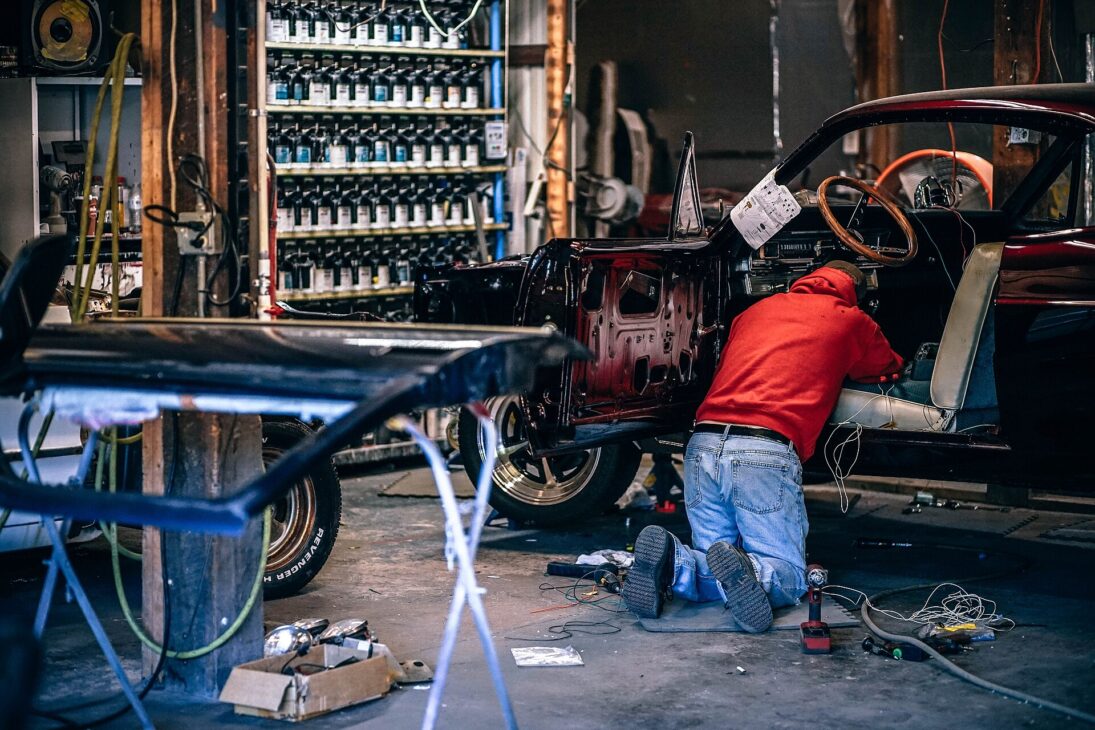
The holding company’s account is aggressive. The projection is to earn R$ 80 million in 2026, combining franchises, new education verticals, corporate training, and electrification training, with the declared goal of becoming, in two years, the main reference in technical training in the repair sector in Latin America, according to Exame. The focus: embedded technology, electrification, advanced diagnostics, and instructor training.
Sandra herself sums up the ambition in one sentence: “More than keeping up with this transformation, we want to lead it through education,” she told Exame. It’s the difference between selling a course and selling the future of an entire profession.
Why training mechanics became a million-dollar business
Brazil has one of the largest fleets in the world and a perpetual shortage of qualified labor in repair. While traditional universities train people for the job queue, the technical mechanics course provides a trade with guaranteed demand: cars break down every day, everywhere, and electrification only increases the value of those who know how to fix what few understand. It’s this mismatch that sustains a school earning tens of millions.
For the reader considering a career change, the message embedded in the story is direct: automotive repair is undergoing the biggest shift in decades, and those who qualify now in hybrids and electrics catch the wave at the beginning. The scarcity of specialists is exactly what turns a technical course into a high salary.
The lesson from the mechanic who became an education entrepreneur
Sandra Nalli didn’t invent the technical school; she applied the logic of someone who knows the workshop floor. She started at 14 in the trade, identified the qualification bottleneck, set up a national education network, and when the entire sector began to change technology, she bought the right company to get there first. Every step came from practical experience, not office theory.
In an automotive market transforming at record speed, she bets that education is the only asset that doesn’t depreciate.
Tell us in the comments: would you trust your electric car to a traditional mechanic, or do you think this new generation of specialists will dominate the workshops?