






 Portuguese
  Spanish


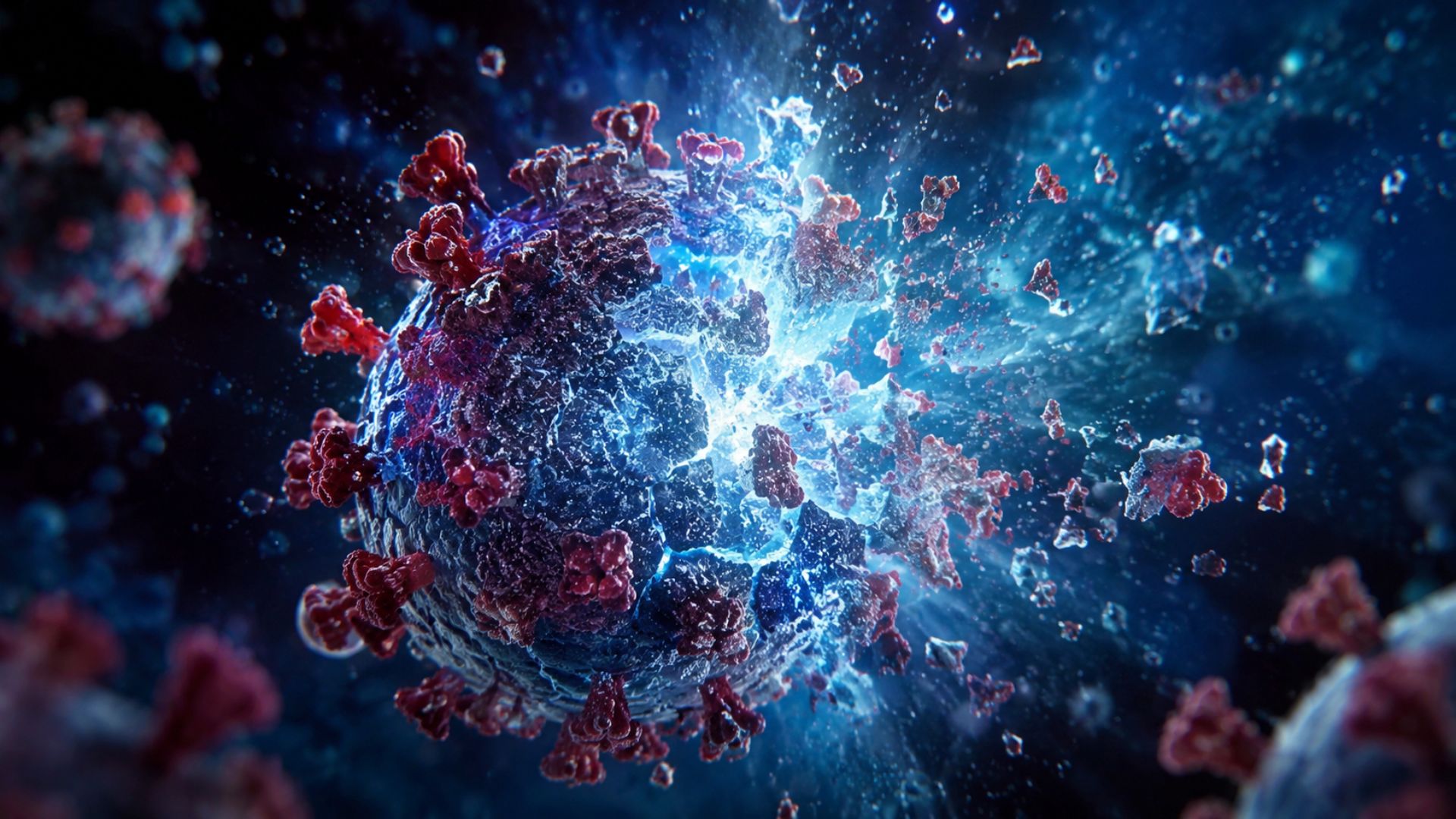

Brazilian scientists from USP discovered that high-frequency ultrasonic waves make the COVID-19 and H1N1 flu viruses explode due to a phenomenon called acoustic resonance, compared by the study coordinator to popcorn popping, without causing damage to human cells, in research published in Scientific Reports journal.
Brazilian scientists from the University of São Paulo (USP) discovered that high-frequency ultrasonic waves can eliminate COVID-19 and H1N1 flu viruses without damaging human cells. The technique uses frequencies similar to those of routine medical examinations and opens a new therapeutic front against viral diseases.
The discovery was published in the scientific journal Scientific Reports and disseminated by the São Paulo Research Foundation (Fapesp). The phenomenon, called acoustic resonance, causes structural changes in viral particles until complete rupture and inactivation of the infectious agent.
Researchers demonstrated that high-frequency sound waves are capable of breaking the virus’s protective membrane without affecting the patient’s tissues. The energy transmitted by ultrasound alters the shape of the viral particles until they rupture.
-
Astronaut from Artemis II steps down after mission to the Moon and decision surprises after a record of 406,771 km, a historic 10-day journey, and an unprecedented achievement for Canada.

-
A fossil kept for years in a small museum in Montreal concealed 450-million-year-old soft tissue, a discovery that has only happened once before in history.

-
Three teenagers transform cut cardboard into Japanese origami-style packaging that promises to retire styrofoam and bubble wrap, win a $12,500 prize, and target giants like Amazon, FedEx, and Home Depot after a robot motor arrived broken.

-
The large jar blender has a rival: Oster Ultra Power bets on 1,000 W, six stainless steel blades, and two portable cups with leak-proof lids.


The comparison used by the study coordinator became a reference for the research. “In this study, we proved that the energy of sound waves causes a morphological alteration in viral particles to the point where they explode, in a phenomenon comparable to what happens with popcorn,” explained Professor Odemir Martinez Bruno, from the USP Physics Institute and coordinator of the study.
The technique can also be applied to other viral diseases with high impact on public health. The team continues with in vitro tests against dengue, zika, and chikungunya, pathologies that affect millions of people worldwide.
How ultrasonic waves manage to eliminate the COVID-19 virus without harming cells
The mechanism that destroys the COVID-19 and H1N1 flu viruses is acoustic resonance. It is a phenomenon in which the pathogen’s structure absorbs energy from sound waves until it deforms.
As this structure degrades, the virus’s protective membrane ruptures. Without this protection, the infectious agent loses its ability to invade human cells and becomes unviable to cause disease.
The precision of the attack is the central point of the discovery. Acoustic resonance is selective: only the virus absorbs the energy of the waves and becomes destabilized, while human tissue suffers no perceptible damage.
The frequency range used by the team is between 3 and 20 megahertz, the same order of magnitude as common medical examinations. This interval distinguishes the technique from low-frequency ultrasound used to decontaminate surgical and dental equipment, a process that destroys any biological material by cavitation and cannot be applied to patients.
The difference between the two uses of ultrasound is fundamental to understanding the advance. The cavitation method destroys indiscriminately. High-frequency acoustic resonance targets only the virus.
Why the Brazilian discovery about COVID-19 surprises classical physics
The research contradicts theoretical expectations that prevailed in classical physics. According to traditional rules, the wavelength of ultrasound is much larger than the size of the virus, which theoretically would prevent any direct interaction between the two.
Despite this, experiments showed that interaction occurs and produces a measurable effect. The discovery suggests that there is a physical mechanism not yet fully understood that allows sound waves to act on structures much smaller than their own wavelength.
The scientific surprise added extra weight to the work. Gathering experimental evidence that seemingly contradicts established theory requires methodological rigor and advanced visualization tools.
To achieve this real-time visualization, the Brazilian team relied on significant international collaboration. Charles Rice, a professor at Rockefeller University in the United States and winner of the 2020 Nobel Prize in Medicine, contributed fluorescent viruses that allowed the destruction of particles to be observed in real time.
The research brought together theoretical physicists, acousticians, and virologists from various Brazilian institutions. The combination of fields is what supports the credibility of the finding, as each perspective validates the phenomenon from a different angle.
What ultrasound treatment against COVID-19 can change in medicine
The conventional path to combat viruses involves the development of antiviral drugs. It is a long, expensive process with uncertain results, often encountering viral mutations and side effects in patients.
The Brazilian technique proposes a different alternative. Instead of chemically attacking the virus, the approach uses physical energy to disable it. Professor Flávio Protásio Veras, from the Federal University of Alfenas (Unifal) in Minas Gerais and a Fapesp-funded postdoctoral researcher, classified the strategy as “promising” against enveloped viruses in general.
“The development of chemical antivirals is complex and difficult to achieve,” Veras stated. According to the researcher, acoustic resonance represents a “green” solution, as it “generates no waste, causes no environmental impact, and does not promote viral resistance.”
The non-generation of viral resistance is a significant differential. In conventional treatment, viruses exposed to antivirals frequently undergo mutations that make the drug less effective, a growing problem in global public health.
Since destruction by sound waves acts on the physical structure of the virus and not on specific molecular targets, the expectation is that the pathogen will not be able to develop resistance to the method. This, if confirmed in clinical studies, would change the equation for combating viral diseases for decades.
Which viral diseases can be treated with the Brazilian technique besides COVID-19
The team started with tests on COVID-19 and H1N1 flu, but the potential reach of the technique is much greater. Enveloped viruses (a category that includes COVID-19, flu, dengue, zika, and chikungunya) share the membrane structure that acoustic resonance is capable of disrupting.
The next in vitro tests are focused on these three tropical diseases. Dengue, zika, and chikungunya cause frequent epidemics in Brazil and other countries in tropical and subtropical regions, and none of them have widely used specific antiviral treatments.
If the technique works against these diseases, the impact on public health could be enormous. It is estimated that hundreds of millions of people live in risk areas for these pathologies, and the method would not require the manufacture of different drugs for each virus.
The possibility of application is diverse. Ultrasound equipment already exists in hospitals, clinics, and even doctors’ offices, an infrastructure that could be adapted for therapeutic use if the technique is validated in the clinical phase.
The path to application in patients is still long. In vitro studies need to be followed by animal tests and then human tests, a process that usually takes years. But the starting point established by Brazilian researchers is encouraging for national science.
And you, did you find this USP discovery impressive? Do you think ultrasound can really become a treatment against COVID-19 and the flu? Leave your opinion in the comments.


