






 Portuguese
  Spanish


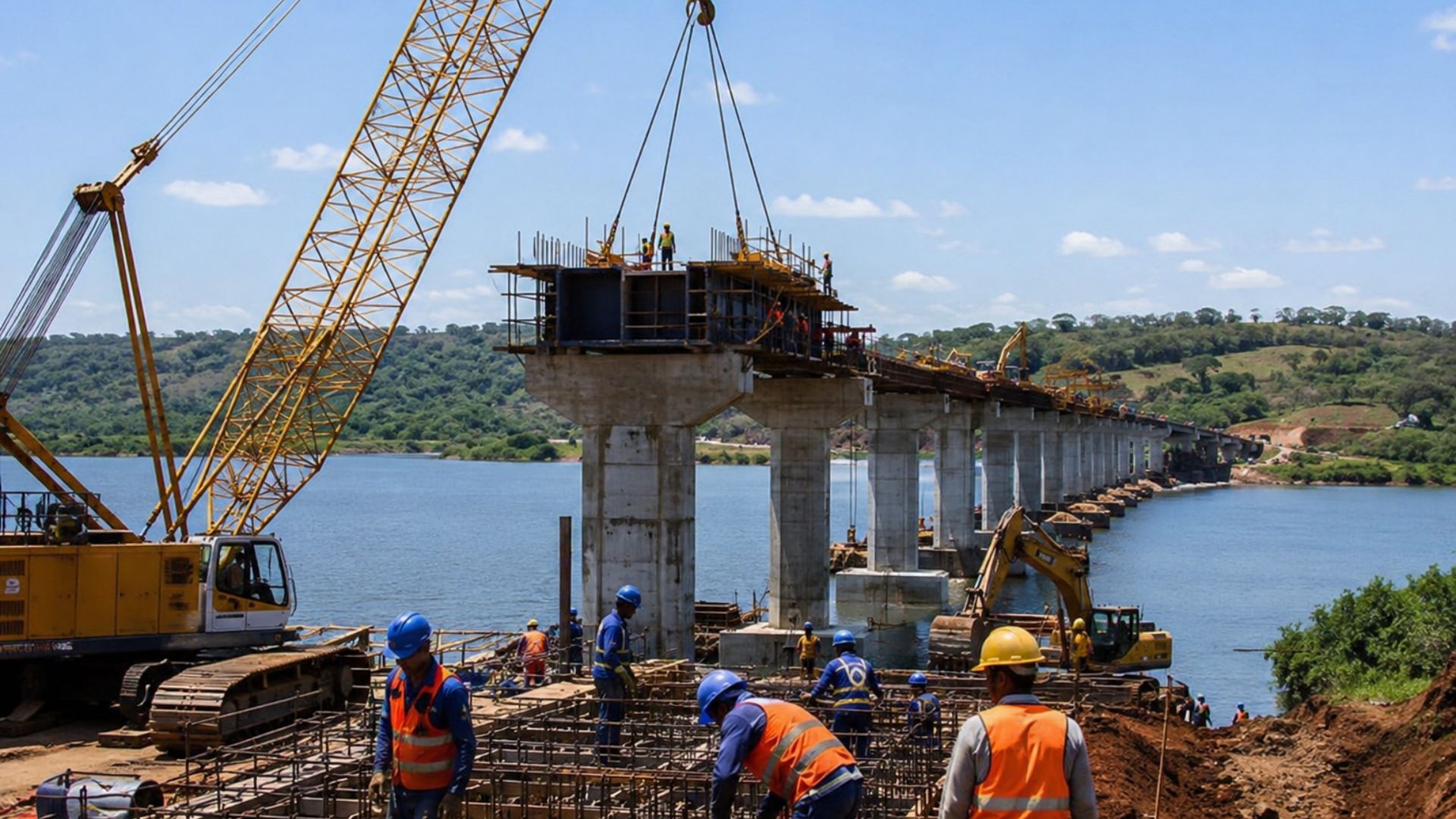
Project in the Araguaia Valley promises to replace ferry crossing between Jussara and Britânia, reduce regional travel by more than 100 kilometers, and create a new road corridor for cargo transport, resident circulation, and logistical integration in one of the most strategic agricultural areas of Goiás.
In the interior of Goiás, the construction of a bridge between Jussara and Britânia is expected to bring significant changes to mobility in the Araguaia Valley by replacing the current ferry crossing over the Lago dos Tigres.
With an estimated investment of R$ 67.9 million, the structure will be 420.8 meters long, 12.8 meters wide, and have 17 spans, forming a permanent road connection between two points considered strategic for regional circulation.
According to information presented by the Development Company of the São Francisco and Parnaíba Valleys (Codevasf), the new connection could reduce the current route traveled between the municipalities in the region by more than 100 kilometers.
-
MIT Scientists Develop Method to Transform CO₂ into a Construction Ally, Boosting Cement Strength by 13% in 24 Hours for More Sustainable Infrastructure

-
Canadian City Builds 8 Tiny Homes in 72 Hours for Homeless Youth, Plans 40 Affordable Houses for Female-Led Families Amid Housing Crisis

-
45-year-old Brazilian mother of 9 and grandmother of 12 receives 27 m² house made from recycled plastic, built in 15 hours with interlocking blocks and a recycled roof.
-
Ireland Installs 654 Modular Homes to Shelter 2,640 Ukrainian War Refugees, Offering a 60-Year Guarantee and a Model for Future Housing Crises


Besides directly affecting the routine of residents, the change is expected to influence cargo transport in an area marked by a strong agricultural presence and the need for faster and more predictable travel.
Bridge in Goiás will replace ferry crossing
Currently, vehicles, trucks, and passengers rely on ferries to cross the lake and continue their journey between the two sides of the region.

Although the system continues to function as an operational alternative, factors such as queues, boarding, disembarking, and time limitations end up interfering with travel time and predictability for those who frequently use the crossing.
With the implementation of the bridge, travel will no longer depend on the dynamics of water transport and will have a fixed connection for continuous vehicle circulation.
In this scenario, the new structure should reduce interruptions in the route, simplify access between cities, and improve the connection between rural properties, urban centers, and important highways in the region.
In areas where transport directly influences the local economy, projects of this magnitude tend to have immediate effects on logistics, service provision, and the daily circulation of goods.
Vale do Araguaia will have a new road connection
According to Codevasf, the project is part of actions linked to the Sustainable Irrigation Hub of Vale do Araguaia and meets a historical demand for road integration in western Goiás.
In the agency’s assessment, the region has strong agricultural activity and relies on faster connections for the circulation of supplies, transportation of production, and movement between productive areas.
The official estimate indicates that approximately 50,000 people should be directly benefited by the construction of the new road structure.
In addition to facilitating regional mobility, the work was planned to improve the transportation of grains and cattle, segments considered strategic for the local economy and for the flow of agricultural production.
In rural areas, factors such as travel time, operational cost, and logistical predictability often directly influence the competitiveness of producers and companies linked to the sector.
Reduction of more than 100 km is expected to change regional logistics
Among the points that most draw attention in the project is precisely the reduction of over 100 kilometers in the route currently necessary between the municipalities.
The decrease in distance tends to reduce travel time, fuel consumption, and operational wear, for both light vehicles and trucks used in freight transport in the region.
In practice, the change alters the circulation logic in a stretch that historically depended on an intermediate crossing over the Lago dos Tigres.
At the same time, the bridge is expected to influence the relationship between the municipalities of Jussara and Britânia themselves, bringing services, commercial activities, and daily commutes closer together.
With a permanent connection, residents, workers, and students will have a more predictable route to access different areas of the region without relying on the ferry’s operation.

When a bridge replaces a water crossing, the impact usually goes beyond physical infrastructure and changes how people, companies, and services use the territory.
In this type of scenario, the reorganization of routes and the reduction of travel time usually facilitate access to public services, commercial activities, and regional economic connections.
420-meter structure reinforces the importance of the work
Another aspect that reinforces the scale of the project is the size of the structure planned to cross the Lago dos Tigres in the interior of Goiás.
With a length of 420.8 meters, the bridge is expected to become one of the main road interventions in the region, while the width of 12.8 meters was designed to ensure adequate vehicle circulation in the section.
Furthermore, the division into 17 spans highlights the technical dimension of the enterprise and reinforces the importance of the work within the regional road network.
Planned as part of a territorial integration axis, the structure aims to improve the connection between productive areas, municipalities, and corridors used in agricultural transport.
In the Araguaia Valley region, cities and rural properties depend on road connections to access urban centers and distribute production to different destinations.
Within this context, the bridge appears as an alternative to reduce historical bottlenecks related to mobility and cargo movement in western Goiás.
Even with the continuation of the ferry crossing until the completion of the work, operational limitations of this system tend to become more evident during periods of higher traffic.
Trucks, light vehicles, and agricultural machinery need to follow the schedules and capacities of the vessels, a situation that is likely to change significantly with the implementation of the fixed connection.
The work should facilitate the flow of grains and cattle
Besides the impact on regional mobility, the new connection could directly influence the economic dynamics related to agribusiness in the Araguaia Valley.


With faster access between rural properties, cities, and state highways, producers and companies tend to gain greater predictability in the transport and circulation of goods.
The project also gained attention due to the contrast between the invested amount and the practical effects announced for the region’s population.
The R$ 67.9 million planned for the work, combined with the replacement of the ferry and the significant shortening of the route, concentrate characteristics often associated with large infrastructure projects with a direct impact on daily life.
In different parts of the country, interventions of this type tend to attract attention because they transform situations easily perceived by the population in daily life.
By eliminating stages of the waterway crossing and creating a permanent connection, the future bridge changes the circulation routine and reduces some of the unpredictability currently faced by those who depend on the route.
In the case of Jussara and Britânia, the new structure was presented as a tool to strengthen regional integration in the Araguaia Valley and improve road flow between productive areas.
The expectation is that the connection will become a new corridor for cargo circulation and residents’ movement, enhancing logistical efficiency in a region heavily dependent on land transport.
Also part of a broader strategy of infrastructure investments in the country’s interior, the project reinforces the pursuit of faster connections in areas linked to agribusiness.
In regions where distance and time directly influence economic activity, projects of this magnitude are often seen as mechanisms to reduce operational costs and improve the circulation of people and goods.
While ferry travel requires successive stages of boarding and crossing, the future road connection is expected to allow continuous vehicle flow over Lake of the Tigers.
As a result, the trend is for faster trips and less complex routes in an area where mobility and logistics have a direct influence on the residents’ routine and the functioning of the regional economy.








Be the first to react!