





 Portuguese
  English
  Spanish
  5 min of reading
  0 comments


Lowered crossing at Fort de Roovere transforms old military moat into an unusual tourist experience, creating the illusion of an open path between walls of water, almost invisible in the landscape and integrated into the defensive history of the Netherlands.
The Moses Bridge in Halsteren, in the southwest of the Netherlands, draws attention for the way it creates the impression that the water has been parted to form a dry path within the moat of Fort de Roovere.
Designed by the Dutch firm RO&AD Architecten, the structure is below water level and was conceived to integrate with the landscape of the old fortification, being barely noticeable when viewed from a distance.
The nickname of the passage refers to the biblical narrative attributed to Moses, in which the waters part to allow the crossing of a dry path.
-
Toilet paper roll becomes a museum piece: a reusable alternative that lasts for months, reduces kitchen expenses in a short time, and also helps avoid the consumption of a tree for every 40 or 50 disposable rolls.

-
This is the most dangerous day for pickup truck owners in São Paulo: a survey with 1,404 incidents reveals a change in the ranking of the most targeted models, an increase in thefts to 90.7% of cases, and a concentration of crimes in Greater São Paulo.
-
Nepalese guide spends six days lost in Everest’s death zone, chews ice to survive without oxygen, and is found crawling towards base camp

-
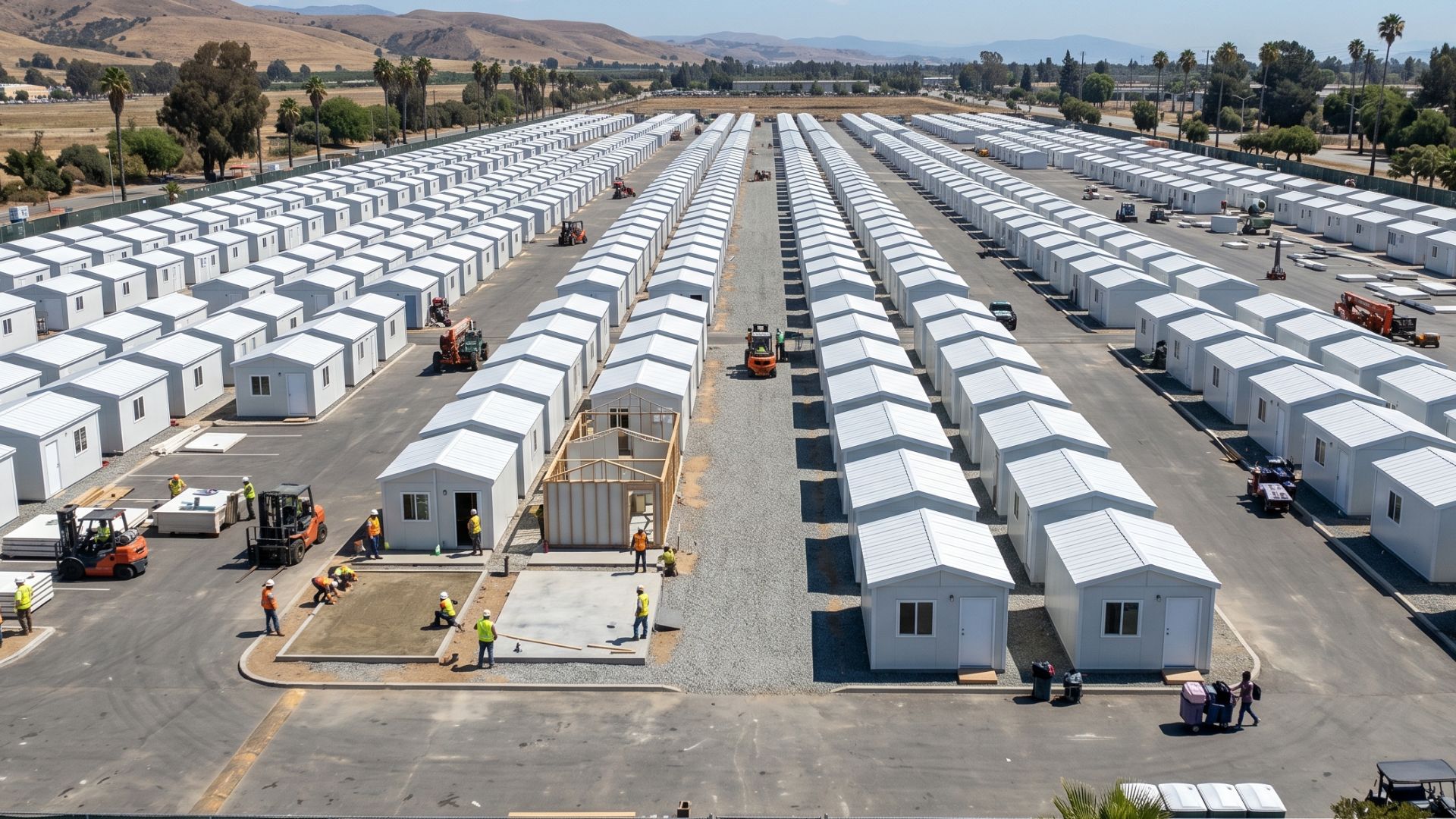
California builds 1,200 small emergency houses to remove people from tents on the streets, cars, and sidewalks: project provides quick shelters amid the crisis pushing thousands onto the streets


In the Dutch work, this visual effect does not rely on an elevated bridge, but on a lowered solution, built as a wooden trench inserted in the middle of the canal.
Moses Bridge is inside the moat of Fort de Roovere
The project was implemented at Fort de Roovere, an old defensive structure located near Bergen op Zoom, in the North Brabant region, in the southwest of the Netherlands.
The fortification is part of the West Brabant Water Line, a military system created in the early 17th century to use floodable areas as a barrier against the advance of enemy troops.
In practice, the strategy consisted of flooding lands in a controlled manner, with enough depth to hinder foot movements and too shallow to allow the efficient use of boats.
According to Accoya, the manufacturer of the wood used in the work, this defensive line was historically used to contain movements of Spanish and French troops in the region.
Fort de Roovere was built in 1628, according to local tourist information, and currently functions as an area for visitation, walking, and contemplation around Bergen op Zoom.
The region preserves elements associated with the old military defense but has received contemporary interventions aimed at public access, tourism, and recreational use of the historical space.
Challenge was to create access without altering the landscape
During the restoration process of the fort, the need arose to create a safe passage for visitors, as the moat separated part of the access route to the old fortification.
Since the area became part of walking and cycling routes, the new crossing needed to accommodate the flow of visitors without evidently altering the visual perception of the historical ensemble.
A conventional bridge could solve the circulation, but it would also create a visible structure over a military landscape originally designed to be protected by the presence of water.
According to the project description, the architects considered that an apparent bridge over the moat would conflict with the historical logic of a defense built to hinder approaches.
The adopted solution was to invert the traditional crossing model, replacing the elevated passage with a lowered path, installed within the fortification’s own moat.
Instead of taking people over the water, the office designed a lowered crossing, aligned with the fort’s terrain and the canal level, mainly visible to those approaching.
How the bridge that seems to divide the water works
The structure crosses the dyke and moat like a narrow cut in the terrain, allowing visitors to pass through the canal without walking over a suspended bridge.
Upon reaching the location, the visitor descends steps to a passage situated below water level, while the wooden sides act as containment on both sides.
This design creates the perception of a path between two walls of water, an effect that led the work to be internationally known by the nickname Moses Bridge.
Seen from afar, the structure tends to blend with the terrain’s contour, as the edge follows the ground and the water comes close to the sides of the crossing.
The central feature of the project lies in the combination of functional access and low visual interference, as the passage does not impose itself over the moat like a conventional bridge.
For those crossing the path, the water remains close to the sides; for those observing from outside, the cut blends with the canal’s design and the surrounding vegetation.
Resistant wood was chosen to withstand humidity
The bridge uses Accoya wood for the side containments and rigid wood flooring in the circulation area, according to information released by the manufacturer of the material used in the project.
According to Accoya, the choice of wood took into account its durability in contact with soil and fresh water, a necessary condition for a work installed within a moat.
Publications specialized in architecture also describe the use of EPDM membrane waterproofing, a solution applied to protect the structure and reduce infiltration risks.
The combination of treated wood, lateral containment, and waterproofing allowed for the construction of a lowered passage without significantly altering the external design of the moat.
Accoya also reports that the project received awards, including the Design of the Year 2012, granted by the Design Museum in London, as well as Dutch recognitions related to architecture and construction.
In the manufacturer’s records, the work is dated 2010, while local tourist pages cite 2011 as the year of construction or public opening.
Attraction combines military history and tourism
The Moses Bridge became part of the visiting route of Fort de Roovere by transforming an old defensive barrier into a crossing open to the public.
The moat that was part of the military protection system now guides visitors through a lowered path, maintaining the perception that the water continues to delineate the fortification.
In addition to the bridge, the area of Fort de Roovere is associated with trails, walks, and the Pompejus Tower, a contemporary viewpoint installed near the historical complex.
The presence of these elements helps explain the inclusion of the site in itineraries aimed at visitors interested in architecture, military heritage, and historical landscapes of the Netherlands.
The description that the bridge “disappears in winter” appears in reports about the work, but it was not confirmed with certainty in the official sources consulted during the verification.
The most consistent data in the available information is that the structure was designed to be barely perceptible from a distance under normal conditions, as it is lowered and integrated with the water and terrain level.
Without resorting to an elevated bridge, access to the fort was preserved through an intervention that hides within the moat and maintains the historical reading of the fortification.
The result is a functional passage that uses the water itself as part of the visiting experience, without turning the moat into a secondary element of the preserved military landscape.


Be the first to react!