Portuguese
  Spanish


Boxabl’s industrialized model gained strength after association with Musk and puts modular construction, sustainability, and housing costs at the center of Brazilian discussion
The discussion about affordable housing has gained new contours in recent years. Today, besides mortgage credit, housing programs, and traditional construction, the debate involves technology, industrialized construction, and clean energy.
In this scenario, the American company Boxabl has attracted attention with the Casita, a compact modular house, produced in a factory and delivered almost ready. The model gained enormous repercussion after Elon Musk stated in 2021 that he used a compact dwelling in the United States.
Although the house is not a Tesla product, the association with Musk increased curiosity about the topic. The possibility of integration with solar energy and Powerwall residential batteries also strengthened the idea of a new phase of housing.
-
Engineering Feat in Brazil: 6.4 km Tunnel and Powerful Pumps Overcome 200-Meter Elevation to Save São Paulo’s Cantareira Water System

-
Engineering Students Build Off-Grid Tiny Home with Sustainable Features and Offer Free DIY Guide
-
Historic Brazilian Championship Stadium Demolished for New Supermarket and Shopping Center Development

-
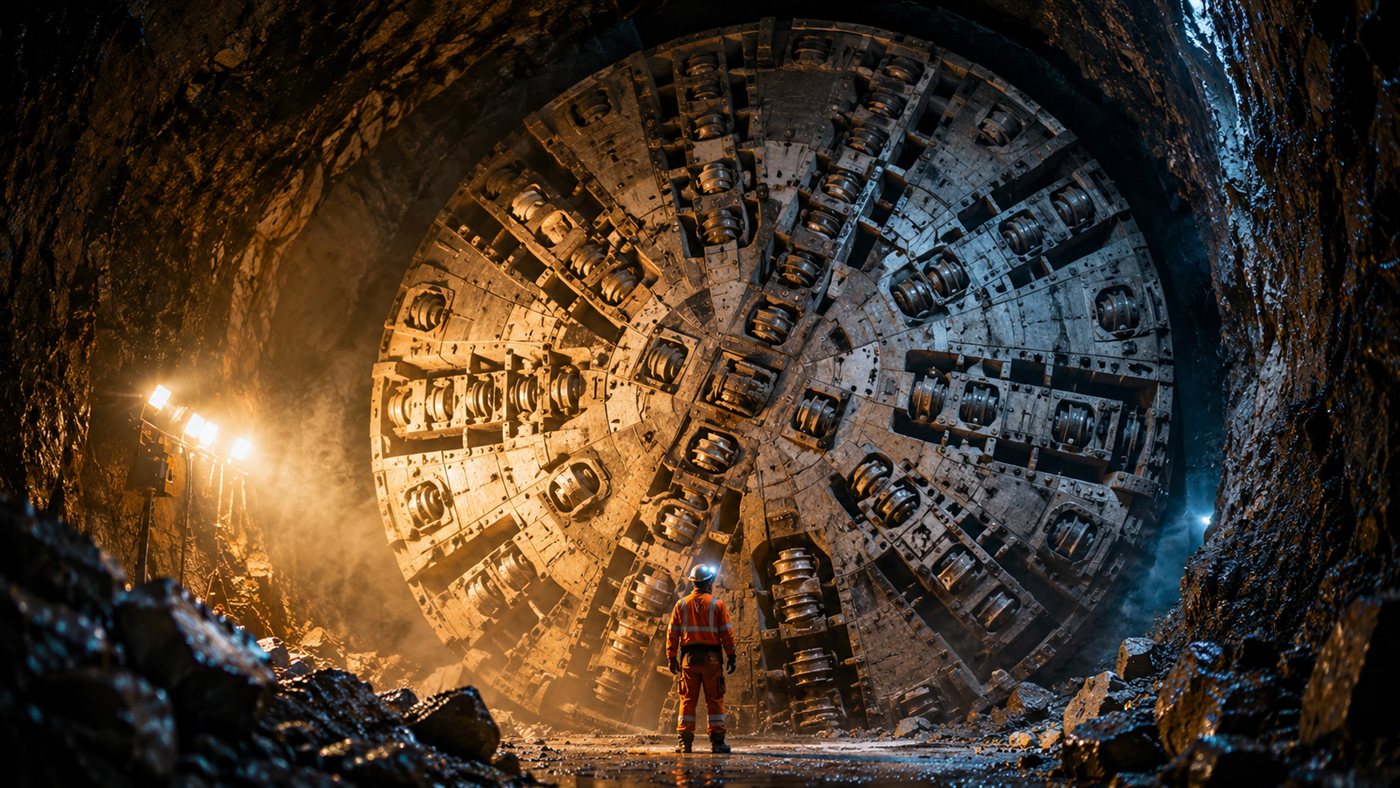
Workers excavate one of the world’s longest railway tunnels beneath the Alps between France and Italy, stretching nearly 60 km, 600 meters deep, with an investment of 11 billion euros.


Modular model tries to bring house closer to assembly line
Boxabl’s proposal is to industrialize civil construction. Therefore, the Casita follows a logic similar to the automotive industry: mass production, standardized parts, less waste, and more predictability.
According to the company, the model includes kitchen, bathroom, integrated area, and compact bedroom. After that, the unit is transported folded and installed on a previously prepared foundation.
The assembly time tends to be much shorter than that of a conventional construction. Additionally, cost control becomes clearer from the start of the project.
Price of US$ 10,000 requires context before becoming a promise
The value of US$ 10,000 appears in discussions about future versions and scale gains. This number, however, needs to be treated with caution, as transportation, finishing, and customization can alter the final cost.
Even so, the comparison draws attention. With an estimated exchange rate of R$ 5.00, this value would be close to R$ 50,000.
In Brazil, data from SINAPI, maintained by IBGE and Caixa, indicate that the cost of civil construction varies according to region and standard. A conventional 40 m² house can exceed this level even before including land, fees, and infrastructure.

Campos do Jordão enters the debate over high real estate value
Campos do Jordão emerges as an important example. The city combines strong tourism, cold climate, a valued real estate market, and constructions with a distinctive architectural standard.
In this context, modular homes could reduce construction timelines, limit disruptions, and create new sustainable lodging options. They could also expand alternatives for local workers.
Visual adaptation would be essential. The city has an identity linked to the European mountain style. Therefore, any industrialized model would need to respect this urban context.
Own energy can change the cost of housing
Self-generation of energy appears as another relevant point. With solar systems and residential batteries, a compact house could reduce expenses in the long term.
In tourist cities, energy decentralization can relieve the public grid during periods of higher consumption. In Campos do Jordão, this factor gains importance during the winter.
Brazil would still have technical and cultural barriers
Despite potential interest, there is no structured operation of Boxabl in Brazil. The arrival in the country would depend on ABNT standards, municipal licensing, land use rules, taxation, and financing.
The cultural challenge also weighs in. Brazilians still associate homeownership with broad, solid, and traditional construction.
Even so, new generations show more openness to compact, efficient, and sustainable housing. The question remains: will Brazil remain stuck to traditional concrete or make room for industrialized modular homes?