






 Portuguese
  Spanish


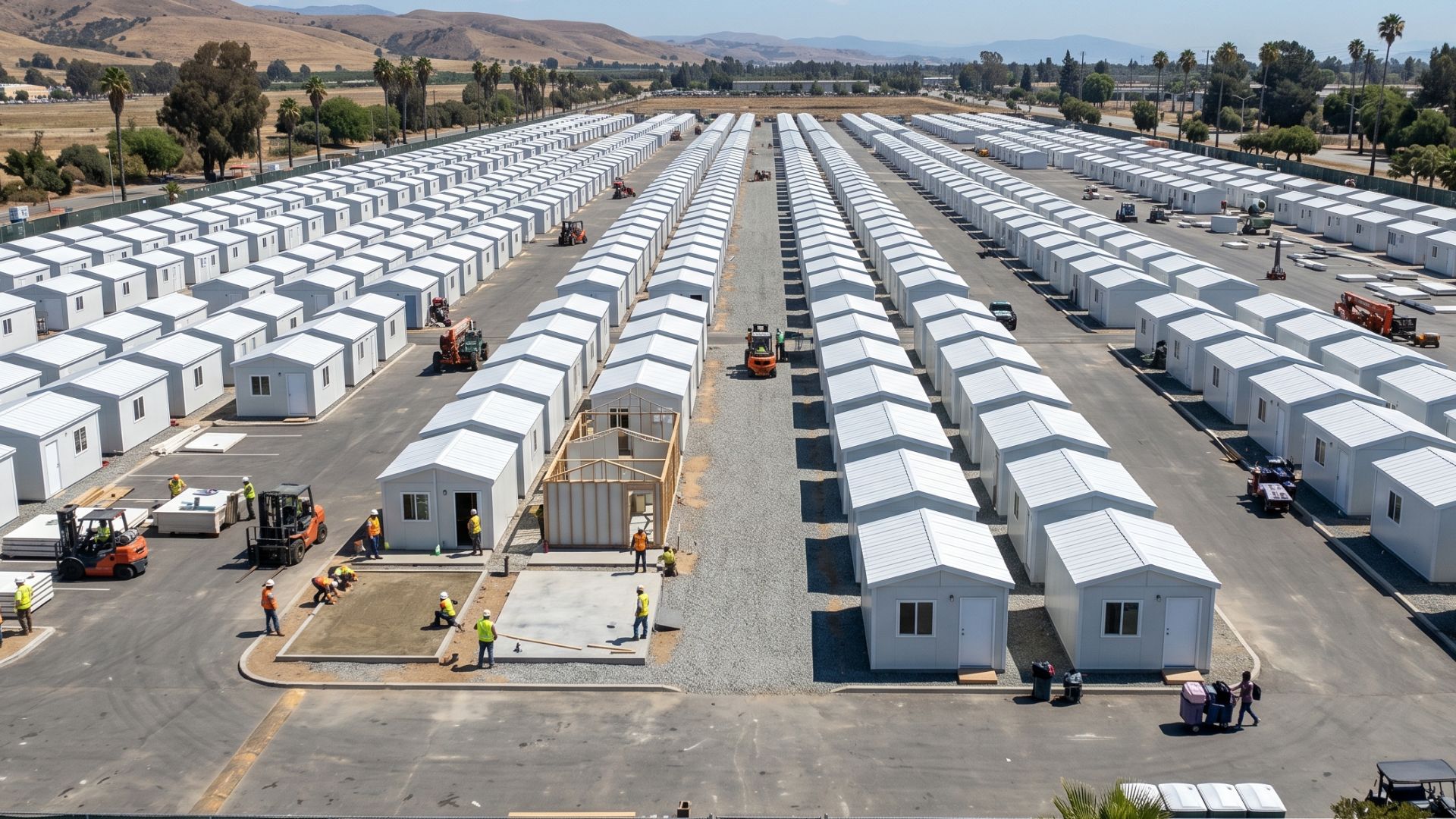


California chose Pallet tiny homes to shelter homeless people with quick assembly and a cost of $18.9k, but faced land and bureaucracy issues.
According to CalMatters, California selected six manufacturers to produce the 1,200 tiny homes promised by Governor Gavin Newsom for homeless people in Los Angeles, San Diego County, San Jose, and Sacramento. The plan was announced in March 2023 as part of the state’s strategy to move people from encampments, vehicles, and makeshift areas into more stable temporary structures.
Among the selected companies was Pallet, a Washington state manufacturer specializing in small fiberglass cabins designed for temporary shelter for homeless individuals. The initiative gained traction because the model promised something rare in California’s housing crisis: quick deployment, lower cost, and individual privacy instead of collective dormitories.
Pallet tiny homes became California’s bet to tackle the homeless crisis
According to CalMatters, the choice of Pallet was not by chance. The company had already been used in different Californian cities, such as Oakland, San Jose, and Fresno, which helped consolidate its image as one of the most visible solutions in the field of interim housing.
-
Artesian Well Becomes Lifeline for Small Brazilian Farm: Drilling Reaches 60 Meters, Finds Marble, Navigates Rock Fissures, and Strikes Fresh Water

-
Street Cleaner in Brazil Finds Discarded Books That Helped His Wife Pass Civil Service Exam and Become Police Captain
-
July’s Night Sky to Feature Planetary Alignments, New Moon, Venus at Sunset, Buck Moon, and Two Meteor Showers

-
Fisherman Catches 18kg Catfish Near Brazil’s Itaipu Lake, Among Largest Recorded in Recent Years



The proposal was well-received because it addressed growing political pressure. California has been dealing with a homeless crisis for years on a much larger scale than most American states, which has increased public spending on emergency shelters, medical care, urban cleaning, and police interventions, without solving the core of the problem.
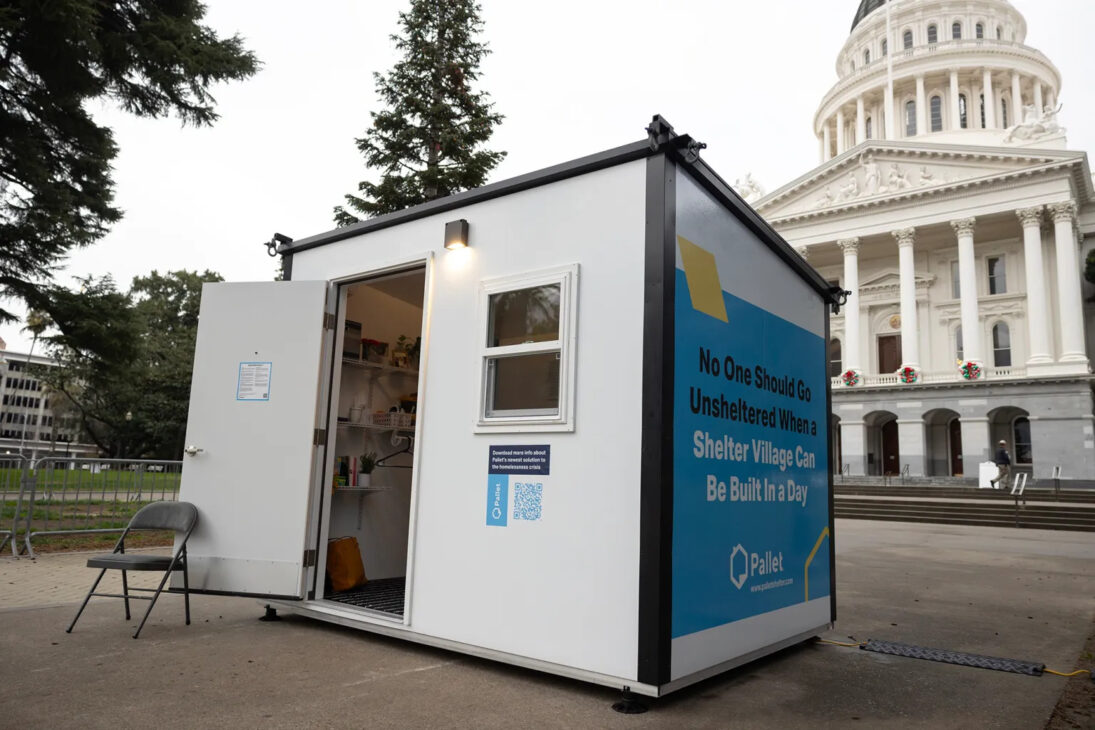
In this context, the Pallet tiny homes began to be sold as a quick response alternative. Instead of waiting for permanent housing that takes years to materialize, the state tried to create a more immediate gateway between the street and a temporary housing structure.
Pallet’s Model S2 costs US$ 18.9k and aims to offer privacy that collective shelters do not provide
The S2 line launched by Pallet in January 2024 includes two models. The Sleeper, with 70 square feet, about 6.5 m², costs US$ 18,900. Meanwhile, the EnSuite, with 120 square feet, about 11 m², includes a bathroom and costs US$ 48,500.
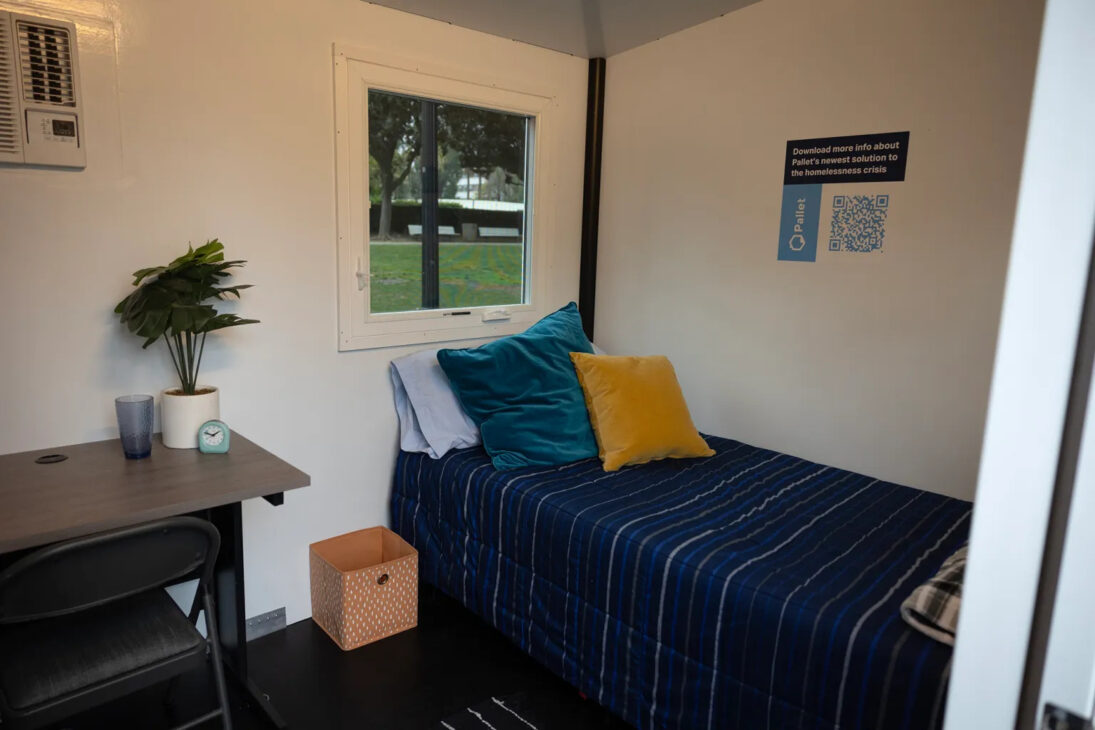
The central point of the proposal is to offer something that collective shelters rarely manage to provide: real privacy. The units have a lockable door, windows, internal storage space, electrical outlets, and an organization similar to a small dormitory. For those who have left the street, this detail represents much more than comfort.
Having a personal space means being able to sleep without watching over one’s belongings, storing items without fear of theft, and regaining a minimal sense of security. This is precisely why Pallet’s model attracted so much attention in the debate on temporary housing for the homeless.
Pallet tiny homes can be assembled in less than an hour and create villages on the same day
One of Pallet’s biggest arguments is the speed of deployment. The cabins are shipped in a flat pack system, disassembled into stacked panels, and can be assembled in less than an hour.
This feature changes the logic of public response. Instead of waiting months for foundations, traditional construction, and permanent structures, a city can transform an empty lot into a tiny home village in a single day, provided there is minimal infrastructure support, such as electricity, shared bathrooms, and waste collection.
Another important point is mobility. The units can be dismantled, stored, and removed with a forklift. This reduces the political risk of permanently occupying land with an emergency solution and gives local governments a flexibility that conventional housing does not offer.
The problem in California was not manufacturing the tiny homes, but finding where to place them
According to CalMatters, the initial enthusiasm with the announcement of the 1,200 tiny homes waned as the actual implementation began to face obstacles. In May 2024, more than a year after the initial announcement, none of the 1,200 units had been delivered.
The contracts with the six manufacturers were signed only at the end of October 2023, and still without a clear definition of how many units each company would supply, to which cities, or on what schedule. This already showed that the program was born with coordination problems.
But the main bottleneck was not in the production of the cabins. The biggest problem was finding viable land for the villages, a responsibility that fell to cities and counties. In Sacramento, the original plan to use the Cal Expo failed. In San Jose, costs exceeded state funding. The crisis showed that the biggest obstacle was not the tiny home itself, but the use of urban land.
Where the villages were implemented, Pallet showed more concrete results
In places where Pallet villages were effectively implemented, the model showed more concrete results. The logic is one of interim housing: the person enters a unit, stabilizes their routine with social services support, and then transitions to more permanent housing.


When this happens, the cabin does not disappear from the system. It becomes available to accommodate another person, creating a continuous flow of care. This point is central because it prevents the tiny home from becoming just an expensive and permanent residence without an exit strategy.
In Sacramento County, for example, Pallet was contracted for Safe Stay communities, and local authorities began to advocate the model as a more humane, quick, and viable solution to tackle the homeless crisis. This shows that where there was actual implementation, the system managed to generate political and institutional support.
The cost of tiny homes seems low when compared to public spending on the homelessness crisis
The economic argument also helped boost the visibility of Pallet. California has the highest number of homeless people in the United States and spends billions annually managing the effects of the crisis without eliminating its main cause, the lack of a stable place to sleep.
In this scenario, a Pallet S2 Sleeper unit costing $18,900, spread over a lifespan of up to 15 years, would have a relatively low annual cost. This helps explain why the model has gained so much attention in the discussion about temporary housing, public cost, and urban efficiency.

The political calculation behind the bet is simple. A quick, reusable solution that is cheaper than several traditional emergency responses seemed to offer a rational path for the state. What stalled the scale, however, was not the fiberglass cabin, nor its assembly in one hour. It was the structural difficulty of finding urban space, licensing, and public coordination to put it into operation: it costs less, lasts for years, and can be deployed quickly.
What continues to stall the scale is not the cabin. It’s the public policy to place it somewhere.


