






 Portuguese
  Spanish
  3 min of reading
  2 comments


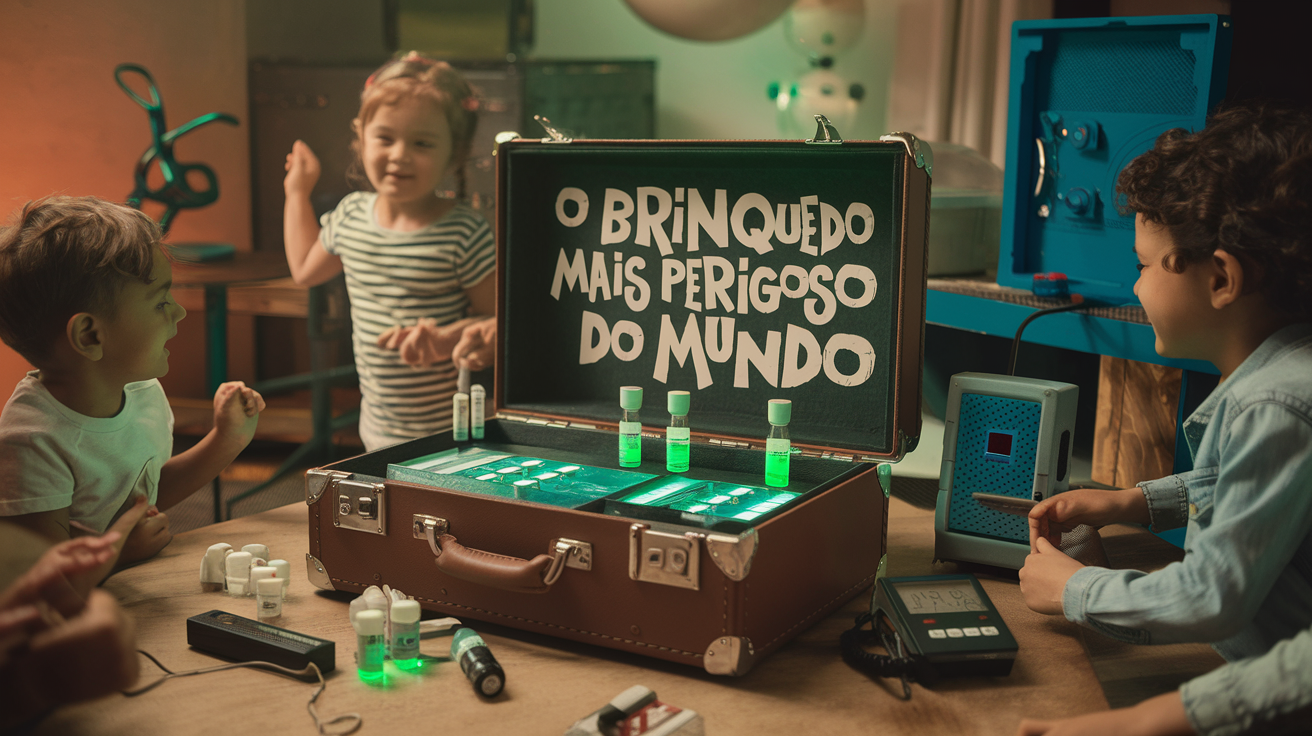


In The 1950s, The U-238 Laboratory Brought Nuclear Science To The Hands Of Children. The Toy Contained Uranium And Other Radioactive Materials, Promising Educational Fun. However, Today, It Is Remembered As One Of The Most Dangerous Ideas In Toy History.
In the 1950s, when nuclear energy was seen as the pinnacle of modernity and a symbol of progress, a bizarre toy was put on the market, challenging the limits of what was acceptable.
The Gilbert U-238 Atomic Energy Laboratory Promised To Transform Children Into Little Nuclear Scientists, but with a frightening detail: the kit contained real uranium.
This story seems straight out of a sci-fi script, but it is a true reflection of an era marked by the arms race and boundless curiosity about nuclear energy.
-
Survivor of 1966 SS Daniel J. Morrell Shipwreck in Lake Huron Recounts 38-Hour Ordeal in Extreme Cold

-
The Greatest Hoax in World Cup History? The Film That Denied Brazil’s 1958 Victory and Exposed How Fake Evidence Can Seem Convincing on TV
-
Fake South Korean Online Stores Offer Shopping Thrill Without Spending Money or Receiving Products
-
The War of Jenkins’ Ear: How a Severed Ear Sparked One of the 18th Century’s Most Unusual Conflicts


Created by the A. C. Gilbert Company, the toy aimed to educate and entertain but ended up being remembered as one of the most controversial in history.
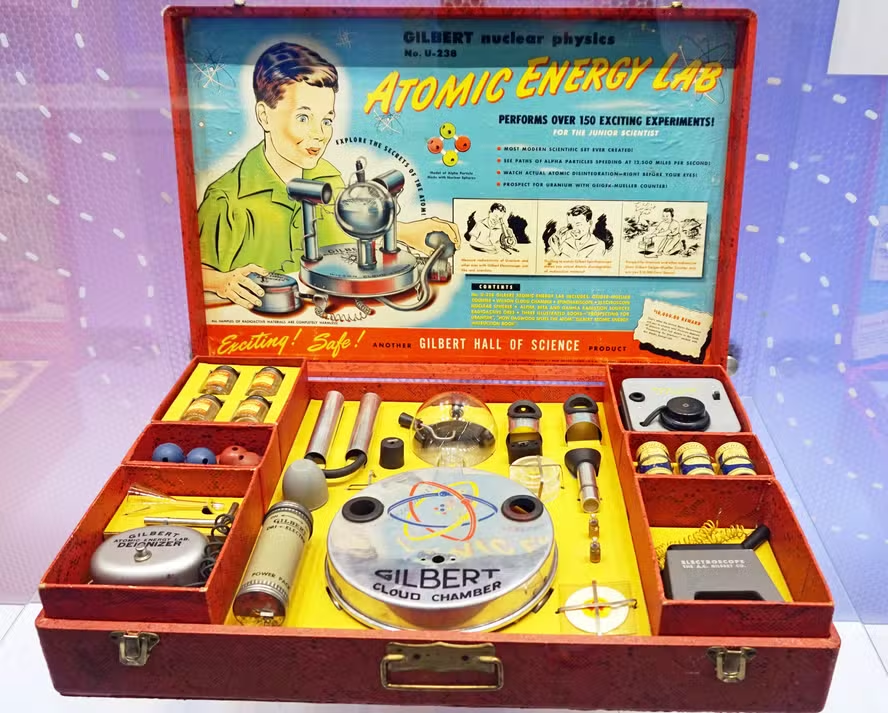
A Miniature Nuclear Laboratory
Marketed in 1950 for US$ 49.50, which today would be about US$ 600, the U-238 Laboratory included materials that would make any modern parent question the sanity of the manufacturers.
The suitcase contained glass vials with samples of radioactive minerals, such as autunite, torbernite, uraninite, and carnotite, as well as scientific equipment like a Geiger counter, used to measure radiation, and an electroscope, which detected electric charges.
Although the levels of radiation emitted by the materials were considered safe, experts warned that any damage to the containers could expose children to significant risks.
According to IEEE Spectrum, the radiation released during playtime was equivalent to a day of sun exposure. However, this safety depended on children following the instructions and not breaking the glass vials.
The toy’s intent was to allow young scientists to conduct real experiments.
The manual suggested activities such as locating hidden radioactive samples using the Geiger counter in an atomic “treasure hunt” game.
To complement the experience, the kit included a comic book featuring the character Dagwood from the popular series “Blondie”.
The most intriguing detail of this comic was its collaboration with General Leslie Groves, a key figure in the Manhattan Project — responsible for creating the first atomic bomb.
The idea of an educational toy with such close ties to a wartime milestone generated both fascination and criticism in equal measure.
The Toy Was A Commercial Failure
Despite its innovative proposal, the U-238 Laboratory was not a sales success.
The combination of a high price for the time and growing safety concerns resulted in the sale of fewer than 5,000 units.
In 1951, just a year after its launch, the toy was discontinued, becoming a rarity.
Decades later, the atomic laboratory became a collectible item.
Recently, a unit was auctioned in Boston by RR Auction, with initial bids of US$ 4,400, about R$ 26,600.
This value reflects not only the rarity of the product but also the ongoing fascination with its history.

Nuclear Energy In 1950s Culture
The Launch Of The U-238 Laboratory Was Only Possible In A Very Specific Context.
During The 1950s, Nuclear Energy Was Widely Promoted As A Solution To The World’s Problems, From Electricity Production To Medical Advances. The A. C.
Gilbert Company, Already Famous For Its Educational Toys, Saw An Opportunity To Capitalize On This Trend.
However, As The Years Went By, The Risks Associated With Radiation Became More Known.
Today, It Would Be Unthinkable To Market A Toy With Radioactive Materials, Even At Levels Considered Safe.
The Gilbert Laboratory Is, Therefore, A Symbol Of An Era When The Boundaries Between Education And Safety Were Much More Blurred.
Reflection And Curiosity
On One Hand, The U-238 Laboratory Offered A Unique Educational Experience, But On The Other, It Exposed Children To Dangers That Would Only Be Fully Understood Years Later.
The Story Of This Toy Is A Reminder Of How Innovation, Without Proper Regulation, Can Cross Ethical And Safety Boundaries.
Would You Let A Child Play With An Atomic Laboratory Today?





Na minha opinião, nós como seres civilizados nunca deveríamos ter permitido a exploração de certos ****.
Eu não deixo meus filhos brincarem nem com pilhas de controle remoto, porque criança tudo quê colocar na boca e a pilha tem materiais cancerígeno.