Portuguese
  Spanish


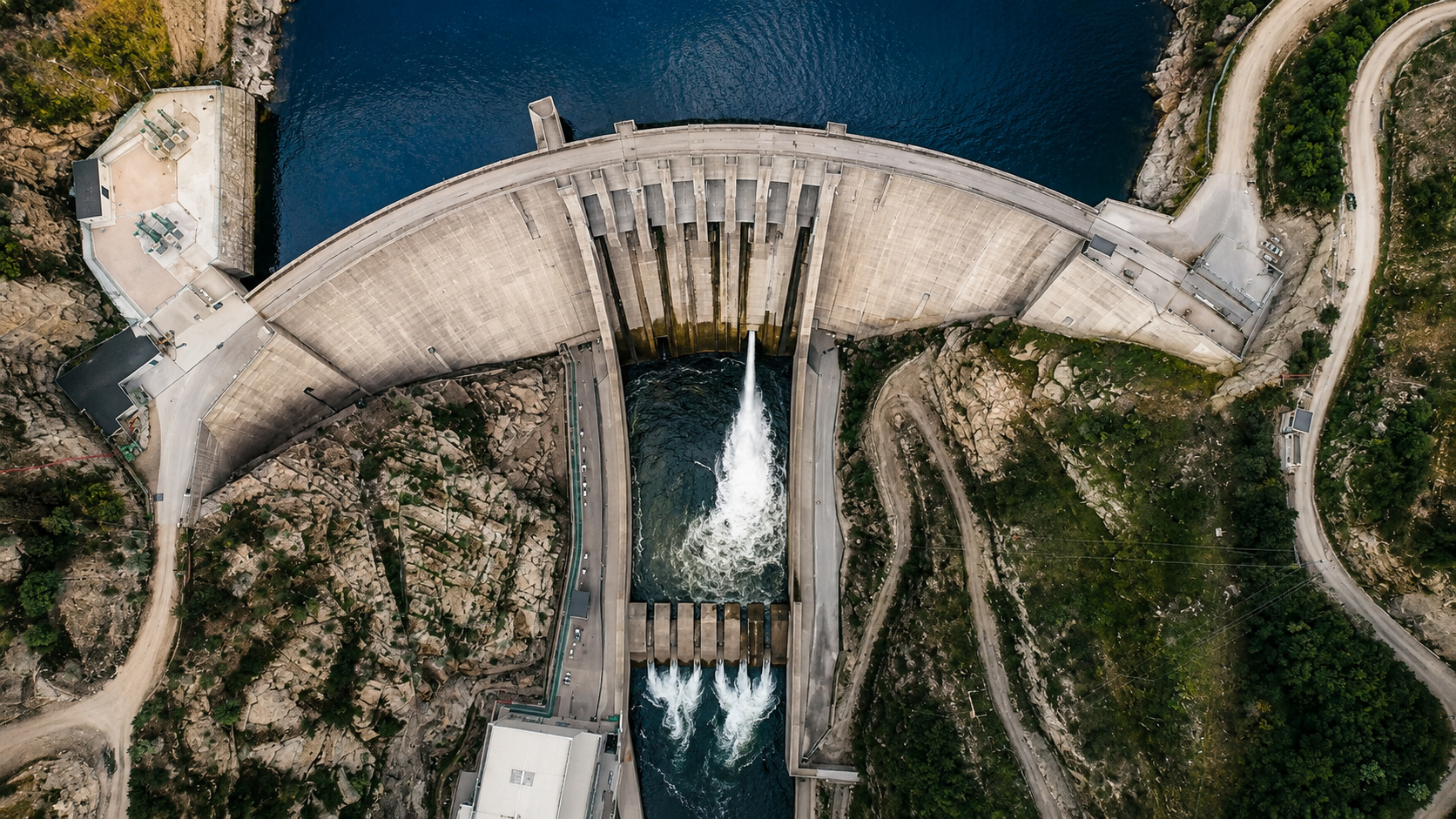


Tâmega Complex, in northern Portugal, uses water, height, and pumping to transform three dams into a Tâmega Portugal giga battery, capable of storing renewable energy and reigniting the debate about the future of reservoirs in Brazil
The Tâmega Portugal giga battery has become a powerful example of how water and mountains can be used to store renewable energy on a large scale. The complex brings together three dams and hydroelectric plants in the north of the country, with a total capacity of 1.15 GW.
The information was released by Power Technology, a portal specialized in energy projects. The project by Iberdrola received an investment of €1.5 billion and uses pumped-storage hydroelectricity to store energy.
The case draws attention in Brazil because the country is also discussing storage, reservoirs, and the advancement of solar and wind energy. The difference is that Portugal has put a concrete solution into operation using a known technology but applied strategically.
-
Axia Energia Invests $280 Million in Q1, Increases Investments by 36%, and Turns Loss into $740 Million Profit

-
California Project Aims to Store Heat Underground in Former Oil Reservoir to Generate 100 kW of Electricity for Over 12 Hours
-
French Port Harnesses Industrial Waste Heat to Power Up to 30,000 Homes
-
Belgian Port to Install Shore Power for Cruise Ships by 2027, Cutting Dock Emissions by Up to 5% and Meeting EU Regulations



Tâmega Portugal giga battery uses three dams to store renewable energy
The Tâmega complex functions as a large energy reserve. Instead of just generating electricity when water passes through the turbines, the system also helps store energy for later use.


The structure involves the plants of Gouvães, Daivões, and Alto Tâmega. They form a hydroelectric set installed in a mountainous region, where the natural elevation helps move the water.
This type of project is called a giant battery because it stores energy in a way that’s easy to understand. Electricity is transformed into water movement, and then this water generates energy again when it descends.
How water, mountain, and pumping become a 1.15 GW battery
The secret of the Tâmega Portugal giga battery lies in the pumping. Water is taken to a higher point and stored in reservoirs. When the system needs to generate energy, this water descends and moves the turbines.
This makes the hydroelectric plant work in a way similar to a battery. However, instead of storing energy in chemical equipment, it stores energy in water accumulated at height.
The total capacity of the complex reaches 1.15 GW, a figure that places the project in a prominent position when it comes to large-scale energy storage. For the Brazilian reader, the logic is straightforward: it’s not enough to produce clean energy, it’s also necessary to store this energy to use at the right time.
Portugal invested €1.5 billion in a solution that addresses the Brazilian challenge
Power Technology, a portal specialized in energy projects, provided the key numbers of the project. The Tâmega complex received an investment of €1.5 billion and was developed by Iberdrola.
The amount shows that energy storage is no longer a secondary topic. It has become part of major decisions about electrical security, energy transition, and the utilization of renewable sources.
In Brazil, this discussion is gaining momentum because solar and wind energy are growing, but they vary throughout the day. The sun doesn’t shine at night. The wind also changes. Therefore, storing energy has become an important piece to keep the system more stable.
Why this hydroelectric giga battery draws the attention of those following solar and wind energy
Renewable energy has a clear advantage: it uses natural resources and reduces dependence on more polluting sources. But it also presents a challenge that is simple to understand. Production doesn’t always occur at the same time that consumption increases.
This is where the Tâmega Portugal giga battery gains importance. The complex helps demonstrate how reservoirs and pumping can support the electrical system when there is variation in renewable production.

The solution does not eliminate the need for planning. On the contrary, it shows that the energy transition requires works, infrastructure, and long-term decisions. Clean energy needs to be accompanied by the capacity to better store and distribute this electricity.
Three dams in mountains show that geography can also become technology
The Tâmega complex shows that the nature of the terrain can be part of the energy solution. Mountains, reservoirs, and gradients help create the necessary movement to transform water into electricity.
This type of structure cannot be installed just anywhere. It depends on natural conditions, large works, and technical planning. Even so, the Portuguese example serves as a reference for countries that already rely on hydroelectric plants or are discussing new forms of storage.
The main lesson is in the intelligent use of water. Instead of viewing reservoirs only as a source of generation, the system also treats them as a strategic reserve of renewable energy.
What Brazil can observe from the example of the Tâmega giga battery in Portugal
Brazil has long experience with hydroelectric plants, but the current debate goes beyond electricity generation. The issue now involves how to better use reservoirs, integrate solar and wind energy, and create more security for the system.
Portugal shows that a smaller country can also invest in a sophisticated project to tackle a modern problem. The Tâmega giga battery in Portugal combines water, pumping, and three dams to address the intermittency of renewables.
This example does not mean that the same solution works everywhere. However, it reinforces a central idea: the future of energy depends not only on producing more but also on storing better.
The Tâmega giga battery in Portugal summarizes an important change in the electric sector. With three dams, 1.15 GW, and an investment of €1.5 billion, the project shows that renewable energy storage has become an essential part of the energy transition.
While Brazil discusses reservoirs, solar, and wind energy, the Portuguese case places a question at the center of the debate: should the country better use its hydroelectric experience to store clean energy or bet on other paths to protect the electric system?