Portuguese
  Spanish


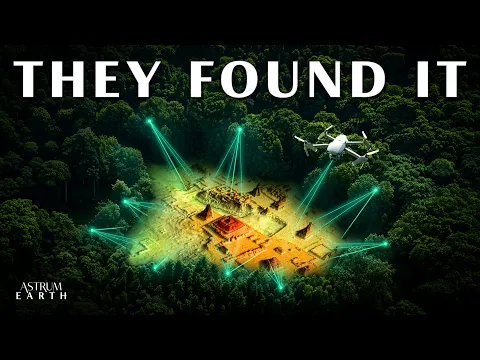
The technology is called LiDAR and works like an X-ray made of light: laser pulses pass through the canopy, reflect on the ground, and outline the hidden terrain. In the last three seasons of studies, it had already shown conical pyramids in Bolivia and a two-thousand-year-old metropolis in Ecuador, contemporary with the Roman Empire.
Firing lasers from helicopters over the Amazon, scientists managed to practically “digitally remove” the forest and revealed beneath it ancient cities with thousands of platforms, roads, and pyramids. The set of discoveries, published in journals like Nature and Science over the last four years, rewrites the history of the biome and disproves centuries of the idea that the region was too wild to host civilization on a large scale.
The breakthrough came with an instrument called LiDAR, an acronym for Light Detection and Ranging, which fires laser pulses from above and measures the return time of the reflection. From this data, it is possible to reconstruct a three-dimensional model of the terrain under the vegetation, as if the forest were digitally erased from the map. This is how archaeologists began to see platforms, ditches, elevated roads, and ceremonial centers that were there, hidden, for hundreds or thousands of years.
The discovery in Bolivia, in 2022

The first major leap was made by an international team led by German archaeologist Heiko Prümers, from the German Archaeological Institute, with researchers from the universities of Bonn and Exeter, among others. The study was published in May 2022 in the journal Nature and mapped 26 sites of the so-called Casarabe culture, which flourished in the Llanos de Mojos region, in the Bolivian Amazon, between approximately 500 and 1400 AD, covering a territory of about 4,500 square kilometers.
-
Indian Inventor, 58, Develops Steering Wheel-Free Agricultural Machine Operated by Levers, Offering Cost-Effective Alternative to Expensive Tractors

-
Scientific Breakthrough: Bacteria Found in a Rio de Janeiro Lagoon Guide Mars Research After Scientists Identify Similarities to Extreme Environments, Expanding Understanding of Extraterrestrial Life Possibilities

-
Brazilian Mechanic Wins Indian Presidential Award for Inventing Fuel-Efficient Agricultural Machine

-
Brazilian Polilaminin Reaches 100 Spinal Cord Injury Patients Through Compassionate Use, Shows Progress After 6 Months, Highlighting UFRJ’s Role in Experimental Regeneration Research



Among the findings, two centers stood out for their scale: the Cotoca site, covering about 315 hectares, and the Landívar site, covering about 147 hectares, together equivalent to hundreds of football fields. They featured stepped platforms, conical pyramids up to 22 meters high, moats and defensive walls, a four-level hierarchical system, and elevated roads connecting the settlements. It was, in other words, a tropical and unique form of low-density urbanism.
The Metropolis of Ecuador, in 2024

Just under two years later, in January 2024, a new study published in the journal Science and led by French archaeologist Stéphen Rostain from CNRS revealed an even older discovery in the Upano Valley, on the eastern slopes of the Andes Mountains in Ecuador. The team identified more than six thousand earth platforms and plaza structures in an area of about 300 square kilometers, connected by roads approximately 13 meters wide, surrounded by agricultural lands and drainage systems.
The settlement would have housed between 10,000 and 30,000 people, with estimated occupation from 500 BC to some point between the years 300 and 600 AD, making it a complex urban society contemporary with the Roman Empire. To arrive at this chronology, researchers used radiocarbon dating, a technique that measures the decay of carbon-14 in organic materials. It was, so far, the oldest record of a documented complex urban society in the Amazon.
The Brazilian Who Extrapolated to the Entire Biome

Another essential name in this turnaround is Brazilian geographer Vinicius Peripato, from the National Institute for Space Research, Inpe. In a study released in 2023, he and his team analyzed about 5,315 square kilometers of LiDAR data, originally collected for forest biomass research. In an area representing only 0.08% of the Amazon, they identified 24 previously undetected earthwork structures, hidden under the dense forest cover.
More importantly, by extrapolating these numbers to the rest of the biome, the team estimated that there may be between 10,272 and 23,648 large earthworks still hidden in the Amazon, with a strong concentration in the southwest. The study also found a correlation between these structures and the presence of 53 species of domesticated trees, indicating that the rainforest was, in part, shaped by ancient populations who selected and cultivated useful species over centuries.
El Dorado, the legend dismantled by science
This new portrait of the Amazonian past helps to understand why the old legend of El Dorado, the mythical “city of gold,” was never found. Decades of searches led explorers to disappear in the forest, like the British Percy Fawcett, on his eighth expedition in 1925, in search of what he called “city Z.” Modern science, however, shows that the problem was not the absence of civilization, but the type of civilization that existed there, distinct from European models.
The name El Dorado actually refers to the Muisca people, who lived in the Andes of present-day Colombia. In possession rituals, a new ruler was covered with gold dust and would go on a raft to the center of Lake Guatavita, about 75 kilometers from Bogotá, where gold offerings were thrown into the water. A votive raft in gold, found in a cave in Pasca, Colombia, depicts exactly this scene, concrete archaeological evidence of the ritual. Spanish accounts transformed the “golden man” into a fictitious city of treasures.
The “terra preta” and the ancient agricultural engineering
Another important mystery is how so many people managed to live in a region with soils historically considered poor. The answer is also surprising: the ancient inhabitants intentionally created a dark and fertile soil, known as Terra Preta de Índio, or Amazonian Dark Earth, in English. Instead of extracting, they accumulated food scraps, organic waste, charcoal, and ashes, forming compost piles that turned into highly fertile soil.
Modern indigenous communities, such as the Kuikuro, maintain versions of this practice to this day. This dark soil retains large volumes of carbon for centuries or even millennia, which makes Terra Preta also a historical example of carbon sequestration. For the reader following oil, gas, and energy, this detail is not just curious: it connects directly to the modern debate on carbon markets, energy transition, and the role of forests in global decarbonization.
The Amazon as a carbon sink at risk
Current numbers show the size of the challenge. The Amazon stores, according to scientific estimates, something between 150 and 200 billion metric tons of carbon in its vegetation and soils, an amount comparable to the global CO2 emissions of the last four to five years. When intact, the forest functions as a sink, that is, it removes more carbon from the air than it returns, helping to slow global warming.
The problem is that this sink is losing strength. In 2019, parts of the Amazon emitted more carbon than they absorbed, and deforestation exceeded 10,000 square kilometers per year between 2019 and 2021, before decreasing again in the efforts from 2023 to 2025. Forest fires further worsen the scenario, and the ongoing destruction threatens to permanently erase archaeological and environmental landscapes that are now finally beginning to be discovered.
Biodiversity still being discovered
The chapter of new species is also fascinating. The Amazon is home to about 10% of the known species on the planet, and yet new plants and animals continue to be identified at a rapid pace. A WWF survey identified 441 new species found in the biome in just four years, which is approximately one new discovery every three days. In 2024, for example, scientists recorded a new green anaconda in the northern forest.
A recent technique has helped expand these discoveries without disturbing the animals: the so-called environmental DNA, or eDNA, which collects genetic fragments directly from river water. In 2026, researcher Kaitlyn Romoser from Texas A&M University and her team used this method to map Amazonian manatees during filtering trips along the river, finding genetic material at various points without needing to directly spot the animals.
The forest of indigenous peoples
Finally, an important ethical caveat is worth mentioning. The Amazon includes territories of indigenous peoples in voluntary isolation, some of whom have never had contact with the outside world. Therefore, serious scientific studies usually avoid disclosing precise coordinates of the most sensitive sites, precisely to avoid attracting invaders, miners, or predatory tourism to vulnerable and culturally vibrant areas.
These discoveries, in the end, reinforce a central idea: the Amazon was never a green desert inhabited only by small isolated groups. For millennia, it was home to complex societies that shaped the landscape, created fertile soils, built low-density cities, and cultivated chosen trees. Current indigenous communities carry, in their oral histories, part of this knowledge that LiDAR is only now beginning to make visible to the rest of the world.
What lasers are finding beneath the Amazon canopy is, at the same time, cutting-edge science and historical justice. It shows that the forest was never a void waiting to be discovered, but rather a living, occupied, transformed, and cared-for territory by civilizations that Europe thought it could simply erase from the map. For the present, there is the dual challenge of continuing to discover what is still hidden while halting the deforestation that could destroy all this before it is even mapped, with severe consequences for the global climate and the cultural heritage of humanity.
And you, what impresses you the most about this Amazon revealed by lasers? Imagine what might still be hidden in the nearly 100% of the biome that hasn’t even been scanned? Leave your comment, share your thoughts on these discoveries, and share the article with those interested in archaeology, science, and the future of the largest tropical forest on the planet.