Portuguese
  Spanish


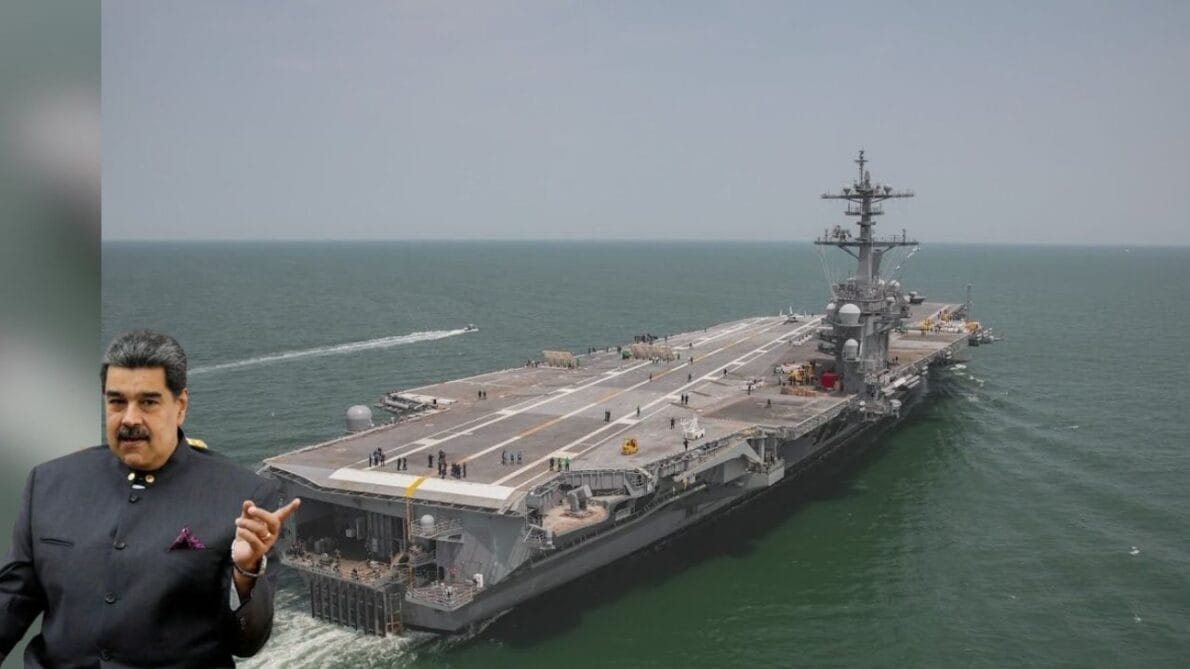

Nuclear Aircraft Carrier USS George Washington, of the United States Navy, Starring Two FA-18 Super Hornets, Perform Aerial Maneuvers Over the Capital of Guyana, Signaling a Direct Response to the Territorial Expansion Attempts of Venezuela Under Nicolás Maduro, Which Intensified Claims Over the Oil and Gas Rich Essequibo Region, Aiming to Prevent Conflicts in South America That Could Involve Other Global Powers Like Russia and China.
The nuclear aircraft carrier USS George Washington, belonging to the United States Navy, conducted significant aerial maneuvers over Georgetown, the capital of Guyana, this Thursday. The military exercise is a clear message to the expansionist efforts of Nicolás Maduro, president of Venezuela.
The American strategic movement is reminiscent of the historic “Big Stick” policy, implemented by former President Theodore Roosevelt in the early 20th century, which promotes diplomacy backed by unquestionable military force. This show of strength aims to deter Venezuela from advancing on the disputed Essequibo region, rich in oil and gas, which currently constitutes 70% of Guyana’s territory.
Tension Increased as Venezuela Seeks International Support


Since 2023, Maduro has intensified claims over the region, exacerbated by significant discoveries of natural resources. Tension has increased as Venezuela seeks international support, including from Russia, potentially attracting other global interveners like China and Iran to the conflict. The aerial maneuvers, starring two FA-18 Super Hornets, are a demonstration of the U.S. commitment to Guyana’s sovereignty and a direct warning against Venezuelan aggression.
-
Chinese Nuclear Submarine Launches Simulated Warhead Missile in Pacific, Heightening Regional Tensions Amid Naval Drills with Russia Near Qingdao; New Zealand and Papua New Guinea Warn of Persistent Chinese Military Presence

-
Ayatollah Ali Khamenei’s Funeral Draws 15 to 20 Million in Tehran, Calls for Revenge Against Trump After Joint Israel-U.S. Attack

-
U.S. Establishes Permanent Embassy in Jerusalem, Reigniting International Debate Over Israel’s Capital
-
The world has nearly 12,000 nuclear warheads, with the majority held by the United States and Russia; see the figures for China, France, and the United Kingdom.


Washington seeks, with these operations and the nuclear aircraft carrier, to ensure stability in South America, avoiding a battleground that could divert U.S. resources and attention from other critical areas of global interest. The continued presence of American forces in the region is a reminder of the might and strategic reach of the United States, which remains vigilant in defending democratic principles and the territorial integrity of its allies in the hemisphere.
International Relations Experts See This Movement as a Recovery of the “Big Stick” Policy
These maneuvers, with the nuclear aircraft carrier, occur at a moment when the eyes of the world are focused on other global tension points, including Ukraine, Israel, and Taiwan, where the United States is also deeply involved. The reinforced presence in Guyana serves not only as a reminder of American military power but also as a protective shield against the influence of powers like Russia, China, and Iran, which have shown interest in expanding their influence in Latin America.
Experts in international relations see this movement as a recovery of the “Big Stick” policy, which emphasizes diplomacy backed by a robust military position, essential for maintaining peace and order. Meanwhile, the international community closely watches developments in Guyana, hoping that American presence will help deter future aggressions and promote a peaceful resolution to the long territorial impasse.