






 Portuguese
  Spanish
  3 min of reading
  0 comments



During the Expoagro Afubra 2025, students from various cities in Rio Grande do Sul participated in another edition of the Green is Life Robotics Championship – Regional Stage.
The event took place at the Agriculture Innovation Space and promoted essential integration between education, technology, and sustainability.
In addition, the competition attracted students from public and private schools in Santa Cruz do Sul, Venâncio Aires, Sobradinho, Arroio do Tigre, Cachoeira do Sul, Candelária, and Agudo.
As a result, the practical tests stimulated skills such as programming, electronics, mechanics, and teamwork.
-
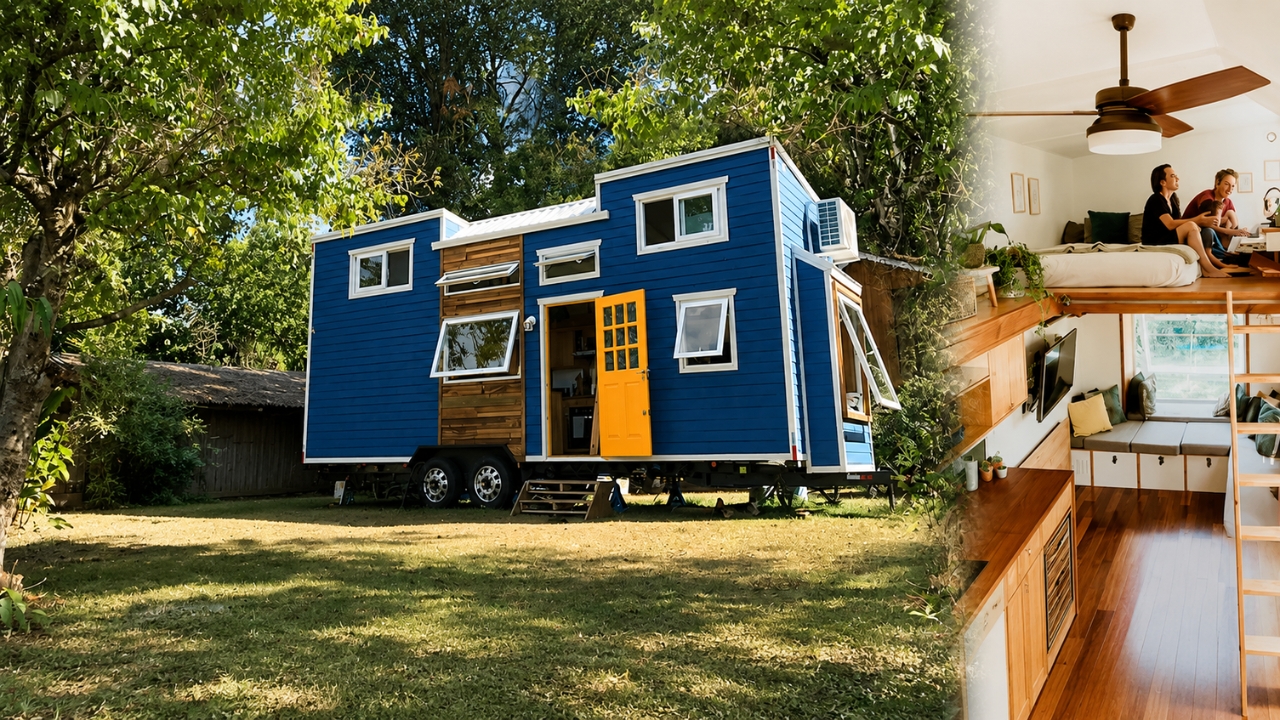
Facing high costs and limited expertise in Brazil, couple builds 27 m² tiny home on wheels for $36,000 using online resources.

-
Robot Works 900 Hours to Build World’s Tallest 3D-Printed Concrete Tower, 30 Meters High, in Swiss Village of 12 Residents

-
Brazilian Nuclear Science Uses Advanced Techniques to Combat Microplastics in Waterways and Food, Paving the Way for Innovative Environmental Solutions

-
German Collector Discovers New Mineral in Ancient Mine, Named After Him



Practical Tests Value Applied Knowledge
The participating teams faced five distinct challenges, with up to 300 seconds per round to execute their missions.
Thus, the robots needed to perform tasks such as collecting milk, waste, and agricultural objects, simulating common situations in the daily life of family farming.
In addition to the traditional stages, the championship included a robot battle, scheduled for Thursday of the event.
In this challenge, the goal was to push the opposing robot out of the arena, requiring strength, strategy, and agility from the competitors.
According to the educational coordinator of the Green is Life project, Professor José Leon Macedo Fernandes, the championship highlights the practical application of school content.
As he pointed out, the event makes learning more meaningful by connecting theory to the reality of the field and innovation.
Young People Already Plan Careers in the Technology Area
Among the participants, 13-year-old student Bernardo Pleentz represented Emef Vidal de Negreiros in Santa Cruz do Sul.
According to him, robotics has increased his interest in technology.
That’s why Bernardo wants to pursue a career as a programmer, studying Software Engineering.
Additionally, he noted that the after-school classes, three times a week, prepared him for the competition’s challenges.
Thus, the event reinforced his motivation to deepen his knowledge and seek new experiences.
Another enthusiastic participant was 12-year-old Laura Camara Marari, a student at Colégio Marista São Luís.
Although she is in the 7th grade, Laura has been studying robotics since her early years of elementary school.
According to her, robotics is more than a school activity: it is a passion that inspires future dreams.
Robotics as a Tool for Active Learning
According to Professor Fabrício José Noronha, responsible for the robotics project at Colégio Marista São Luís, teaching the subject directly impacts performance in mathematics, physics, and engineering.
Moreover, he emphasizes that robotics promotes creativity, autonomy, cooperation, and critical thinking.
Therefore, bringing students to a real environment like Expoagro allows them to put into practice the knowledge acquired in the classroom.
As a result, the event broadens students’ perspectives and brings them closer to areas with great potential for professional and social growth.
Furthermore, Noronha stated that experiences like this demonstrate how robotics can serve as a bridge between traditional education and the demands of an increasingly technological and dynamic market.


Be the first to react!