






 Portuguese
  Spanish
  6 min of reading
  0 comments


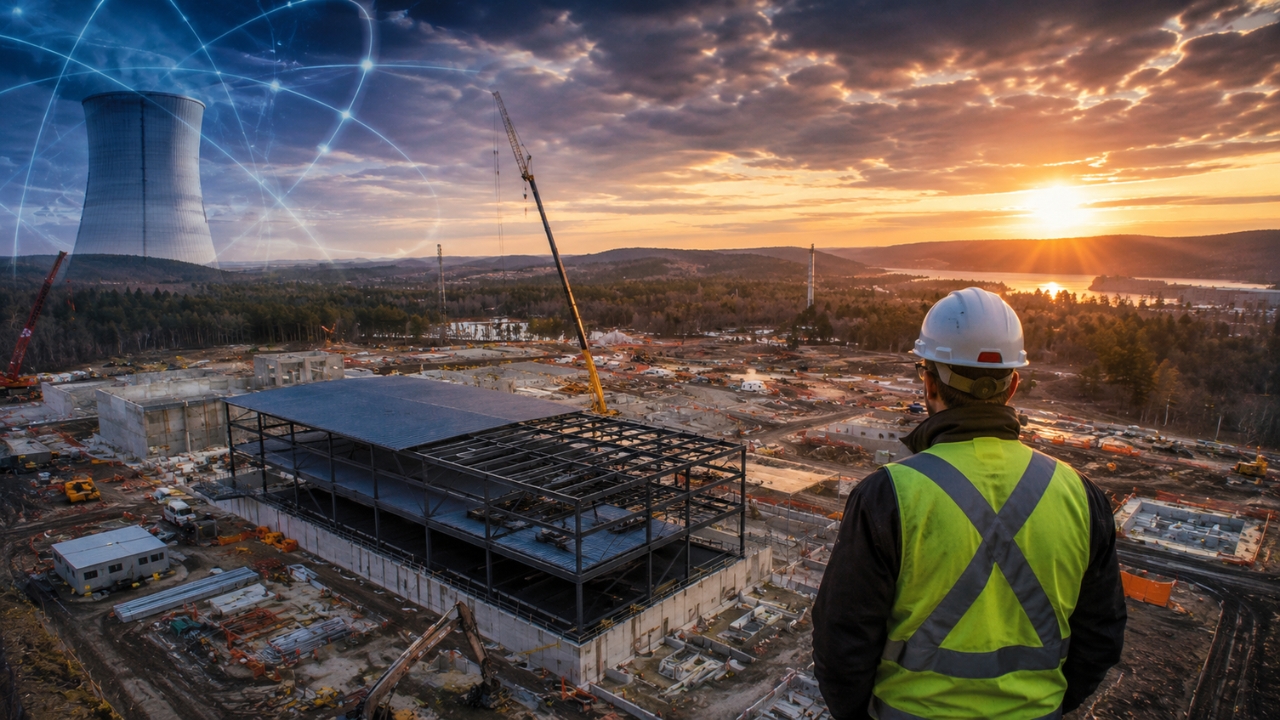
Canada has just taken a billion-dollar step in one of the most strategic areas of global energy. The government announced an investment of 2.2 billion Canadian dollars to revitalize the historic Chalk River Laboratories in Ontario, a nuclear complex with more than 70 years that will now be prepared for a new phase of the global atomic race.
According to the main source of the announcement, published by AECL, the federal commitment aims to transform Chalk River into a modern base for research in small modular reactors, the so-called SMRs, as well as advanced nuclear fuels, reactor life extension, nuclear safety, and waste management. The information was released by Renew Canada, based on the official announcement about the Chalk River revitalization program.
The amount is impressive not only for its size but for the political and technological message: Canada does not want to be left behind in a sector that has returned to the center of discussions on clean energy, energy security, and industrial independence.
-
American company drills a 1,830-meter hole in Kansas using oil well technology, places a nuclear reactor inside, and claims it will generate electricity without any cooling tower.

-
Nuclear company backed by Bill Gates partners with Hyundai for next-generation 345 MW nuclear reactor

-
Russia is sailing all 8 nuclear icebreakers of its fleet simultaneously for the first time in history, as the Arctic freezes two weeks earlier than expected.

-
With 39 years of halted construction and R$1 billion draining annually without generating a single watt, Angra 3 has become a ticking time bomb for Eletronuclear — while China put 20 new reactors into operation in the same period.



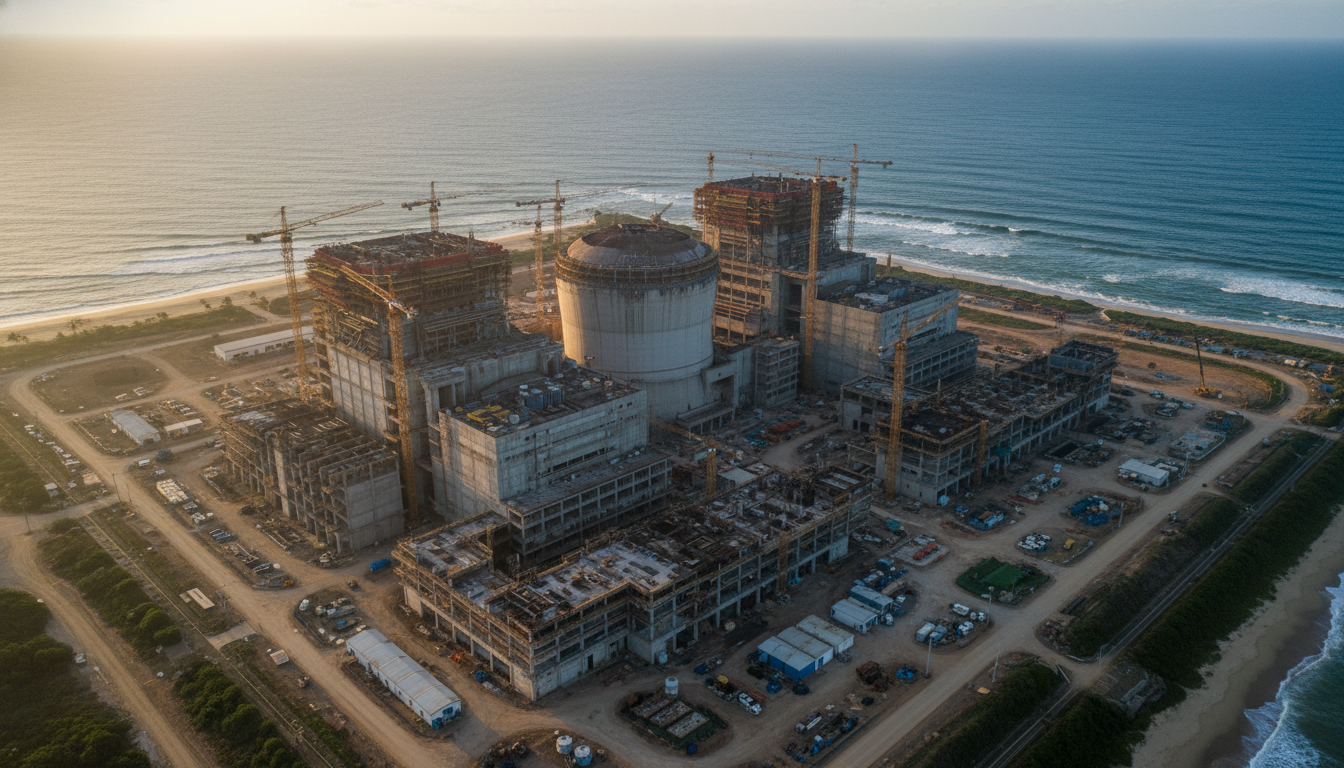

Historic nuclear laboratory becomes a key piece in the new energy race
The Chalk River Laboratories are considered one of Canada’s main nuclear research centers. The site carries decades of scientific history but also a challenging reality: a significant part of its infrastructure has aged and needs to be replaced, renovated, or modernized.
According to the information released, about 60 buildings and facilities on the campus are to undergo renovation. This includes structures above and below ground, showing that the investment is not limited to a simple visual makeover.
The idea is to transform an old complex into an environment capable of meeting the nuclear demands of the 21st century. And this change comes at a time when several countries are reassessing nuclear energy as an alternative to ensure stable electricity, reduce emissions, and depend less on fossil fuels.
The center that could change the future of SMRs in Canada
The most symbolic project of this new phase is the Advanced Nuclear Materials Research Centre, known as ANMRC. The center will be approximately 12,700 square meters and is expected to become one of the largest nuclear research facilities ever built in the country.
The planned structure includes 23 laboratories and 12 shielded hot cells, highly protected spaces used to examine irradiated nuclear materials and fuels. This type of facility is essential to understand how fuels and components behave after being exposed to extreme conditions inside reactors.
In practice, this means that Chalk River will be able to directly support the development of fuels for SMRs, next-generation nuclear fuels, and materials used in advanced technologies. For a country that wants to compete in this market, this technical capability is strategic.

Small modular reactors enter the center of the strategy
The SMRs are one of the major bets of the global nuclear industry. Unlike large traditional reactors, they promise to be smaller, more flexible, and potentially quicker to deploy in certain regions.
Canada sees these reactors as part of a larger strategy to provide clean energy to communities, industries, remote regions, and electrical systems that need stability. Therefore, investing in research, materials, and advanced fuels can be decisive.
In this scenario, Chalk River ceases to be just a historic laboratory and is treated as a kind of technological showcase. The campus can serve as a base for testing, developing solutions, and providing scientific support to future nuclear projects.
Advanced nuclear fuels gain billion-dollar prominence

Another central point of the investment is the advancement in next-generation nuclear fuels. This theme is crucial because new reactors require more resistant, efficient, and safe materials.
With the new facilities, researchers will be able to conduct detailed analyses of irradiated fuels, study their performance, and support projects that seek greater efficiency in the use of uranium and other materials. This can help both current reactors and technologies still in development.
In addition to SMRs, the investment is also connected to CANDU technology, one of the historical brands of the Canadian nuclear sector. The country wants to preserve knowledge, update capabilities, and maintain international relevance in an increasingly competitive market.
Government wants clean energy, security, and industrial advantage
The investment of 2.2 billion Canadian dollars is also linked to the future Canada’s Nuclear Energy Strategy, expected to be launched by the end of 2026. The declared objective is to strengthen the role of nuclear energy within the country’s energy transition.
The message is clear: for the Canadian government, nuclear is not just an old technology but a tool to meet the growing demand for electricity, reduce emissions, and maintain highly qualified jobs.
The investment can also strengthen industrial chains, attract nuclear technology companies, and position Canada as a provider of knowledge, infrastructure, and solutions for other countries interested in advanced reactors.
Modernization also targets the sustainability of the campus itself
The revitalization of Chalk River involves not only nuclear laboratories. Part of the resources will be used to improve the energy efficiency of the campus, including heating, cooling systems, roofs, facades, and support infrastructure.
The modernization seeks to align the laboratories with federal net-zero emissions goals. In other words, Canada wants the nuclear center itself to also advance in sustainability standards.
This detail reinforces the official narrative that nuclear energy should be seen as part of a low-carbon economy, even if the topic remains surrounded by environmental and political debates.
Controversies over nuclear waste remain on the radar
Despite the ambitious tone of the announcement, Chalk River is also the subject of delicate discussions. The campus is linked to nuclear waste management and storage projects, a topic that has already drawn criticism from environmental groups, indigenous communities, and local organizations.
This tension creates an important contrast: while the government presents Chalk River as a platform for the future of clean energy, opponents question environmental risks, public consultation, and long-term impacts.
Therefore, the investment of 2.2 billion Canadian dollars should not be seen merely as an infrastructure project. It also represents a political bet on a technology that has regained momentum but still faces resistance.
Canada sends a message to the world with billion-dollar nuclear bet
With this package, Canada signals its intention to compete in the new phase of global nuclear energy. By transforming a laboratory of over 70 years into a modern center for SMRs, advanced fuels, and materials research, the country seeks to unite scientific past and technological ambition.
The project places Chalk River at the heart of a strategy involving clean energy, energy security, national industry, advanced research, and international competition.
In the end, the billion-dollar investment shows that the 21st-century nuclear race will not be conducted solely with large plants. It will also involve laboratories, fuels, materials, small reactors, and countries willing to invest heavily to dominate the next generation of atomic energy.





Be the first to react!