






 Portuguese
  Spanish


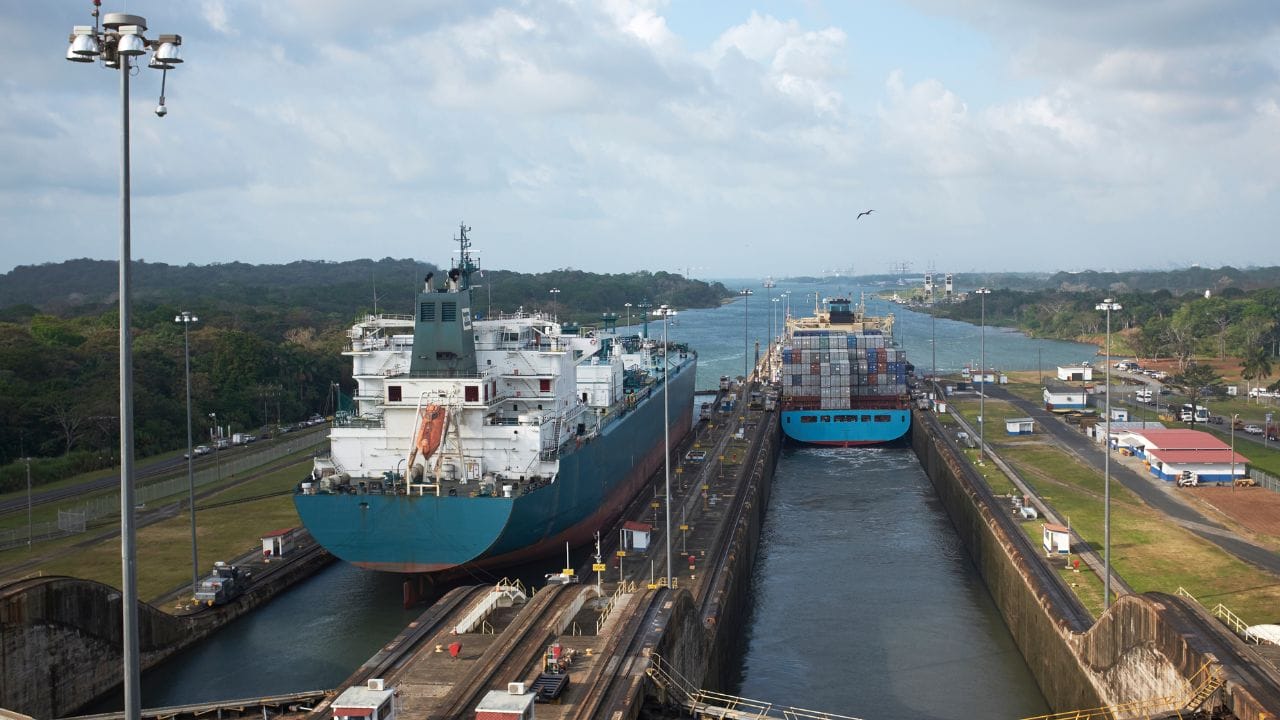

The Panama Canal, Essential for Global Trade, Faces an Unprecedented Crisis Due to Water Shortage Caused by Climate Change.
At a critical moment for global trade, the Panama Canal faces an unprecedented challenge: water shortage threatens its operation, putting billions of dollars in trade at risk and directly affecting the global supply chain. With reduced capacity, ships are faced with three options: long diversions, high fees for priority passage, or long waits, increasing transportation costs and consequently the final price of transported goods.
Climate Change

Built over a century ago, the Panama Canal was a engineering milestone that solidified the United States’ position as a global power. However, the ingenious project, designed to overcome the challenges of its time, now faces a modern threat: climate change. The reduction of rainfall, essential for the canal’s water supply, puts its functionality at risk, and the situation is only expected to worsen.
While there is a plan to mitigate the water shortage issue, the question is whether it will be implemented in time to avoid a devastating impact on Panama’s economy and global logistics. The construction of a new reservoir emerges as a viable solution but faces legal and political hurdles that need to be overcome.
-
The Port of Itaqui closes the best first semester in history with over 17 million tons and takes off as the locomotive of the Northern Arc.

-
Brazil’s North-South Railway to Auction Two Grain Terminals in Central Tocantins

-
AI-powered traffic cameras in São Paulo now issue fines for cellphone use and seatbelt violations around the clock

-
Free Upgrade to Professional Driver’s License Categories in Over 130 Locations in Brazil, Including Exams and Courses



The Panama Canal Is Vital for Global Trade
The Panama Canal is vital for global trade, with about 6% of global maritime transport passing through this route. The search for alternatives, including projects in other countries and revitalizing old routes, is gaining traction as the situation worsens. Projects such as Mexico’s interoceanic corridor and transportation tunnels in Colombia are mentioned as potential competitors, indicating a possible shift in the balance of logistical power.
The race to save the Panama Canal reflects the global urgency to adapt to climate change and protect critical infrastructure. The future of the canal, one of the world’s greatest engineering feats, is at stake. Will it maintain its central role in global trade, or will it be relegated to one of the many options in the era of logistical alternatives? Only time will tell, but one thing is certain: action is needed now to preserve this vital navigation route and avoid significant global economic repercussions.
History of the Panama Canal
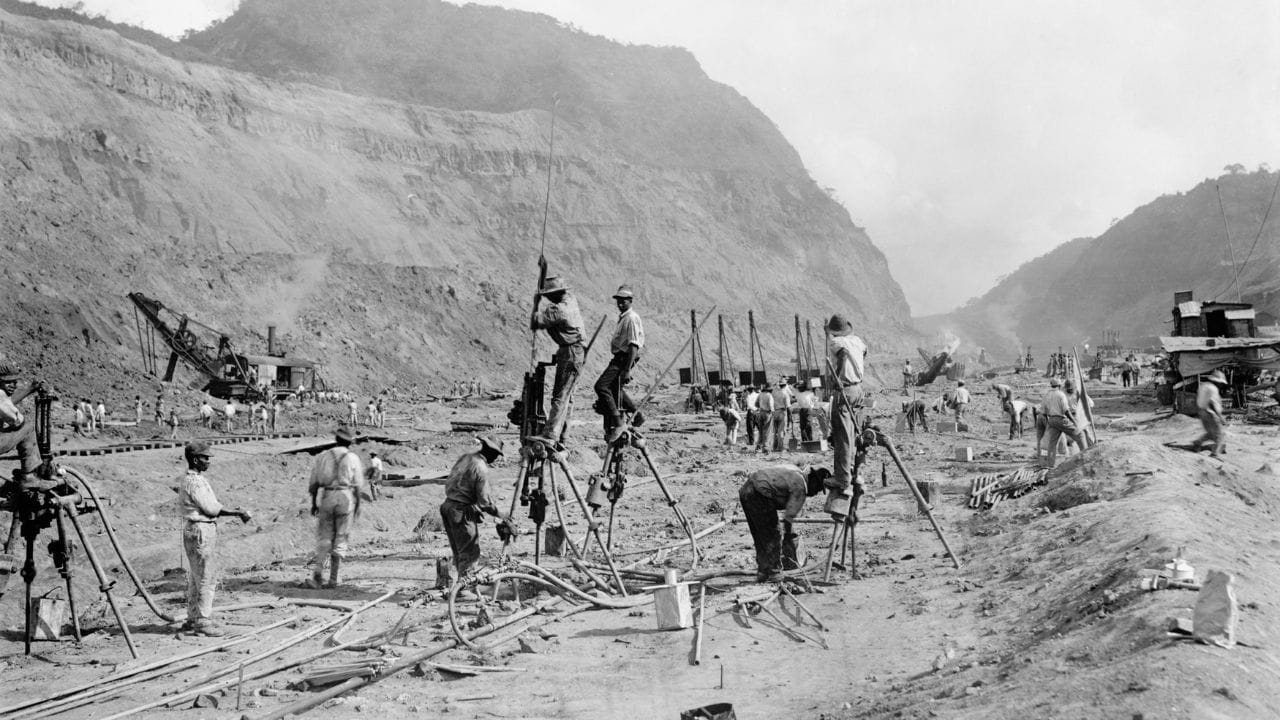
The Panama Canal, inaugurated on August 15, 1914, is an engineering marvel that connects the Atlantic and Pacific Oceans through the Isthmus of Panama. Stretching 77.1 kilometers, this artificial canal not only facilitated international maritime trade by reducing the travel time between the two oceans but also became a crucial component of the global economy.
The initial construction was undertaken by France in 1880, led by Ferdinand de Lesseps, known for the Suez Canal. However, it faced insurmountable challenges, including technical problems and outbreaks of malaria and yellow fever that decimated the workforce. Financial adversities led to the project’s abandonment by France in 1889.
Conclusion by the United States
In 1904, the United States took control of the project, propelled by Panama’s recent independence from Colombia. The American approach to completing the canal included innovations such as the creation of Gatun Lake, an artificial lake that served to minimize excavation and provide the necessary water for the locks. The completion of the canal was a monumental feat, requiring extensive excavations and a public health campaign to eradicate yellow fever from the region.
The inauguration of the Panama Canal revolutionized maritime trade by providing a faster and safer route between the Atlantic and Pacific Oceans. Before its existence, ships were forced to navigate the treacherous Cape Horn. The new route provided significant savings in both time and costs, reshaping the dynamics of global trade and strengthening the world economy.
Control and Expansion
Originally under American control, the canal was transferred to Panama on December 31, 1999, as agreed upon in the Torrijos-Carter Treaties of 1977. Under Panamanian administration, the canal saw a series of improvements and a significant expansion completed in 2016, allowing larger ships, known as “post-panamax,” to pass through.
The Panama Canal remains one of the seven wonders of the modern world, symbolizing humanity’s ability to overcome natural and technical barriers to unite the world in an unprecedented way. Its history is a testament to persistence, innovation, and global impact that continues to shape maritime trade today.








