





 English
  5 min of reading
  0 comments


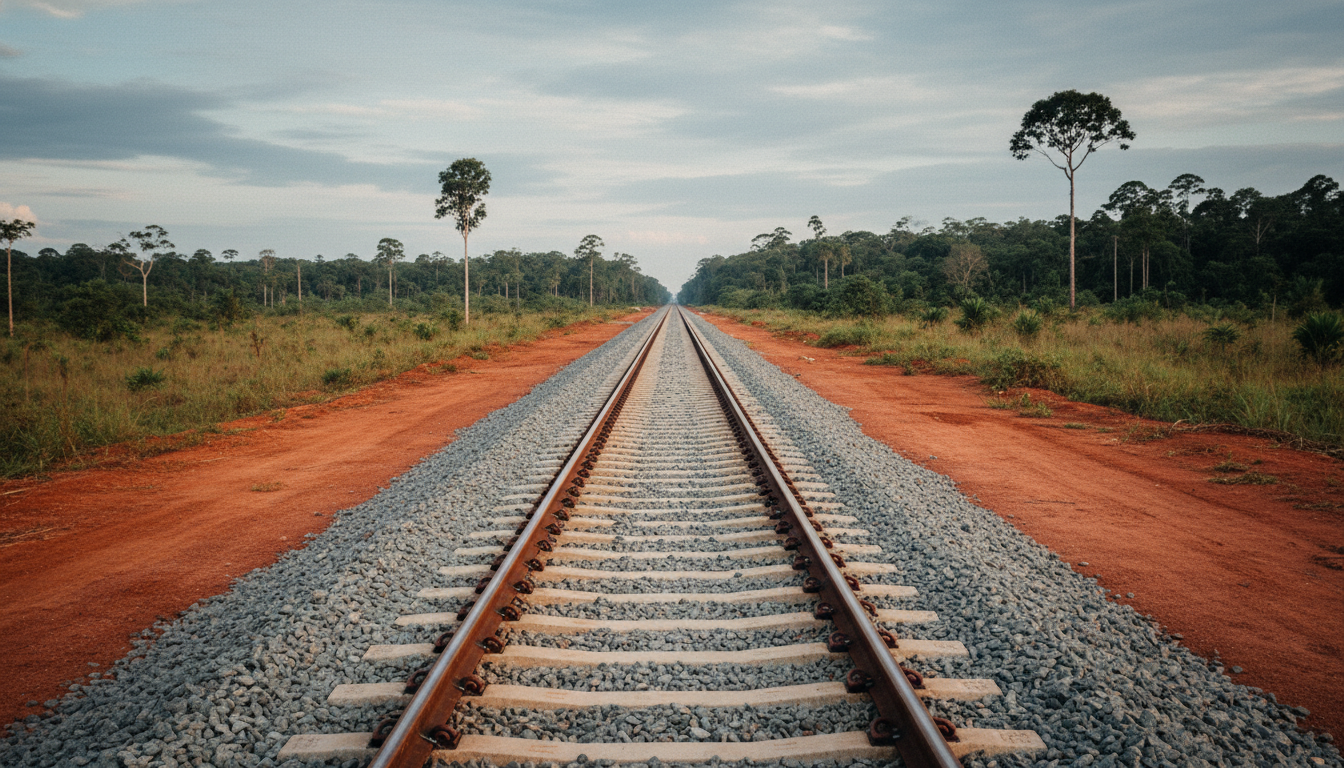
The Supreme Federal Court validated on Thursday Law 13,452 of 2017, and unlocked the Ferrogrão, a 933-kilometer railway projected between Sinop, in Mato Grosso, and Miritituba, in Pará. The project had been stalled for five years due to an injunction by the Court itself.
The decision was made by 9 votes to 1 in the judgment of the direct action of unconstitutionality proposed by PSOL. The party questioned the law that reduced an area of the Jamanxim National Park, in Pará, to make way for the railway route.
The majority was led by the rapporteur, Minister Alexandre de Moraes. The only dissenting vote came from the Court’s president, Edson Fachin, who found issues with the law’s procedure and uncompensated environmental impacts.
-
A robotic hand uses touch and vision to pick ripe fruits with nearly 100% accuracy. Researchers have built a flexible robotic claw that detects the ripeness point and gently picks fruits.

-
From 30 cooperators to an agro-industry that brings together 390 families, from the agrarian reform in Paraíba, embarking on a historic leap, the first goat milk powder industry from family farming in the Northeast, a R$ 3.75 million project to tackle the drought in the Semi-Arid region.
-
Mother and daughter face grief in the countryside, keep alive the dream started by five generations of beekeepers, and transform the rare white honey from Campos de Cima da Serra into a story of family succession, resilience, and work among the bees in the interior of Rio Grande do Sul.

-
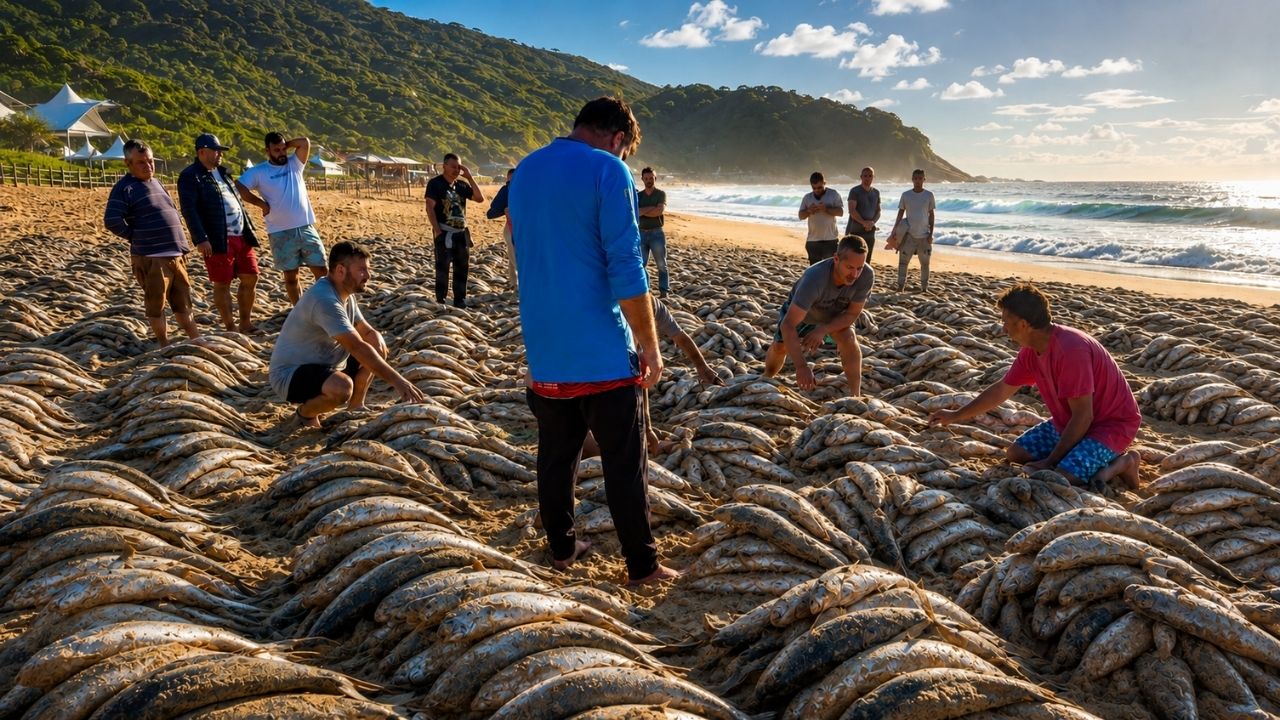
Federal government backtracked after protests in SC: suspended mullet fishing but released an additional 400 tons, reigniting the hope of fishermen who saw schools pass by without being able to work again while waiting to return to the sea safely.


In practice, what changes is the path to construction. The soy, corn, and cotton that the Midwest will harvest in the next crop still go down to the port by truck. But the legal stop sign has been removed.
The validated law came from the conversion of a provisional measure edited during Michel Temer’s government. The Ferrogrão project itself is older. It began at the end of Dilma Rousseff’s administration and gained technical identification as EF-170 within the federal concessions program.
Moraes supported three main arguments during the vote. The railway does not cross any indigenous land. The Munduruku, Praia do Mangue, and Praia do Índio Indigenous Lands are four and seven kilometers from the route. And the alternative of duplicating BR-163 would have a broader environmental impact, according to studies sent to the Supreme Court by the federal government.
“It does not pass through any indigenous land. The greatest recorded impact would be on the Praia do Mangue Indigenous Land, four kilometers away from the railway route,” Moraes stated in plenary, according to a report by Agência Brasil.
Minister Flávio Dino acknowledged the debate on impacts on the Tapajós River but noted that this point “is not the subject of these proceedings.” The environmental issue of the river, which runs parallel to part of the route, remains pending for future legal actions, outside the scope of Thursday’s judgment.
Five years is too long for a railway to be stalled within the Supreme Court. Here on the site we showed in May how the Brazilian project had already completed 16 years on paper at the time when Chinese engineers were drilling Asia’s largest railway tunnel. Looking back, it’s clear what the Midwest lost during this interval: the project didn’t even reach the bidding phase.
Even the ANTT, the regulatory agency for land transport, had already submitted an updated route to the Supreme Court months before the judgment. The idea was precisely to reduce the legal risk that was stalling the project. The current decision allows the use of this design.
How Ferrogrão changes grain transportation

The Ferrogrão is the key piece of the Northern Arc, a logistics corridor that is gaining ground over the Santos-south axis in grain transportation. The route connects Sinop, in the far north of Mato Grosso, to Miritituba and Itaituba, on the banks of the Tapajós River, in Pará. From there, the soy continues by barge down the river: the waterway set a record of 2.38 million tons in just the first two months of this year.
The planned investment is around R$ 9 billion, according to known technical modeling. The point that weighed most in the majority vote was this: two-thirds of the route coexist with already existing infrastructure because they pass through an area that BR-163 altered decades ago. In absolute numbers, the overlap reaches 635 kilometers.


The reduction of the Jamanxim National Park affects 862 hectares, which will be used by the railway bed and the right-of-way of the already existing road in the surroundings. The Supreme Court conditioned the validation to an environmental compensation in a minimum extension equivalent to the area removed from the park.
According to studies submitted to the Supreme Court, the CO2 emissions from Ferrogrão are 50% lower than the current road transport of grains. Anyone who has taken BR-163 during the soy and corn harvest knows what this number means in practice. Truck after truck, kilometer-long line, endless dust, accidents becoming routine.
The legal clearance, however, does not mean construction is starting. Now three parallel fronts open up. The environmental licensing, which needs Ibama and state agencies. The concession modeling, with deadlines, counteroffers, and auction rules. And a presidential decree that will detail the environmental restoration of the area removed from the park.
Aprosoja MT, the entity of soy producers in Mato Grosso, has already warned that this next phase is more complex than the judgment itself. And the Supreme Court, in the same decision, prohibited further reduction of the Jamanxim Park for Ferrogrão. Any route adjustment will have to stay within the already decommissioned area.
The project creator estimated completion by 2035 in recent interviews with the infrastructure sector. It is a horizon that depends on licensing, auction, and construction contracting. Each of these stages has its own timeline and history of delays in large Brazilian railways, from North-South to Transnordestina.
For the agribusiness of the Midwest, Ferrogrão arrives as a promise of freight reduction and competitiveness in exportation. Today, Brazilian logistical costs take a significant slice of the final price of soybeans at the end. Railways historically reduce this slice compared to trucks, especially over long distances like Sinop-Miritituba.
Mato Grosso is currently the largest soybean producer in the country. Production rises year after year and the current logistics have been lagging behind. Without railways, trucks need to cross more than a thousand kilometers to the river port, on the same stretch of road that receives buses, passenger cars, and residents of roadside towns.
I confess that I remain cautious about the schedule. Five years in the Supreme Court is just one stage of many. Now come the concession modeling, environmental licensing, and presidential decree, each with its own deadline. Do you believe that this time Ferrogrão will be off the drawing board before 2030? Comment below what you think.




Be the first to react!