Portuguese
  Spanish




Sustainable Initiative Shows How Biochar Can Revolutionize Agriculture With High Efficiency and Low-Cost Innovation
During the Inova Amazônia Summit 2025, held in Macapá (AP), an innovation caught attention for its direct impact on soil and field productivity.
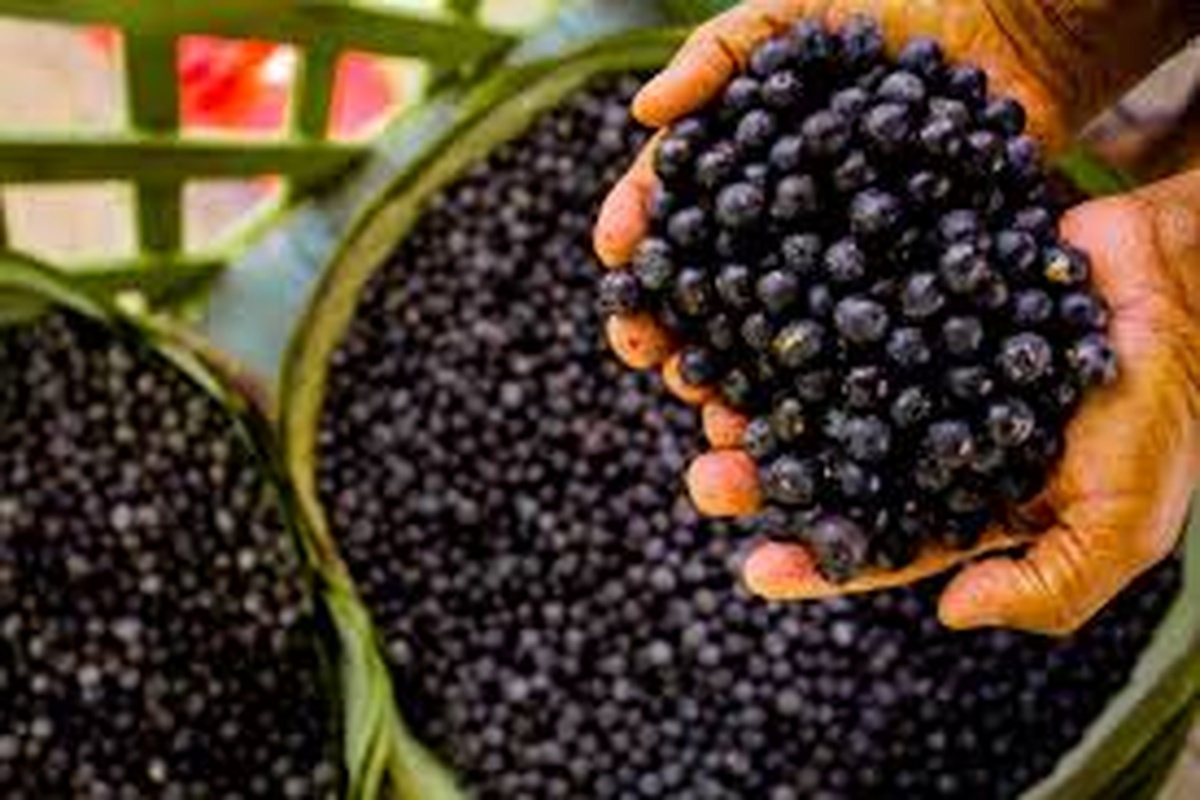
It is Fert Açaí, a sustainable biofertilizer developed by Amazon Biofert.
The presentation took place with the support of Sebrae/AP.
The carbon-rich biochar can return nutrients to the soil, increase its fertility, and reduce fertilization costs.
According to him, biochar acts as a true “fertilizer magnet”.
Through this capacity, it enhances the absorption of essential agricultural elements, such as nitrogen, phosphorus, and potassium.
According to the CEO, the idea arose from an urgent need.
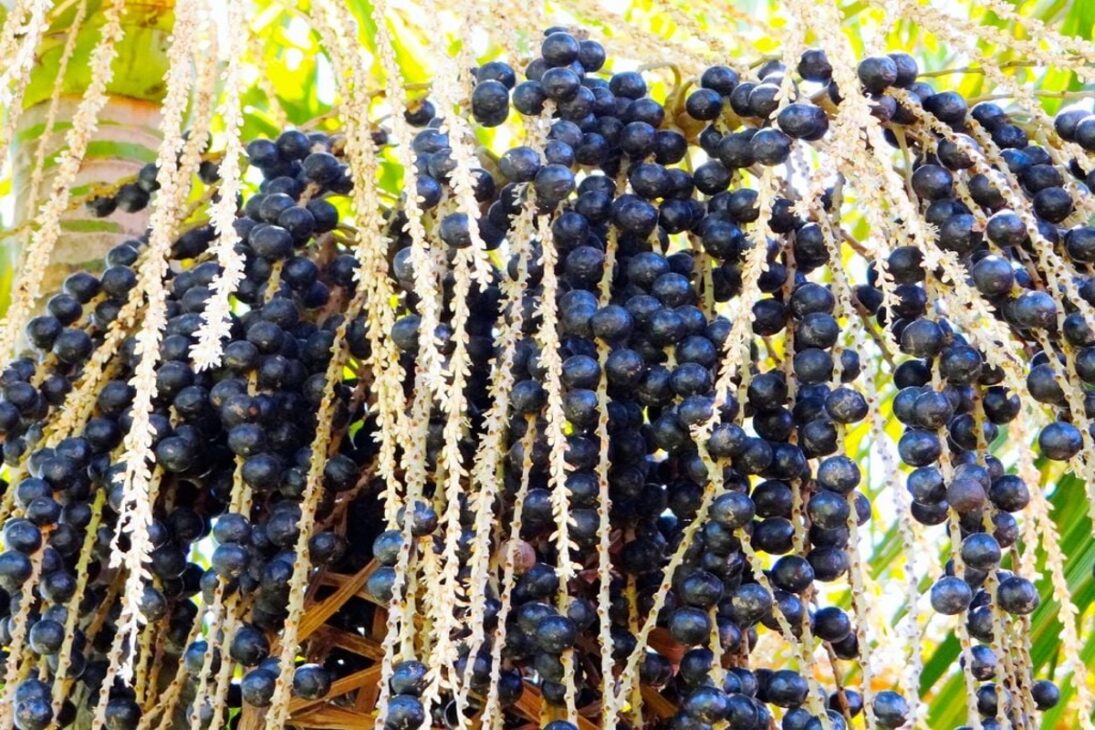
According to official data from IBGE, producers in the Amazon region discard more than 2 million tons of acai seeds every year.
However, it is estimated that this volume could be ten times greater.
This highlights the underutilized potential of this regional input.
Soil Fertility Is Boosted by Biochar’s Regenerative Action
The farmer applies biochar directly to the land.
It acts as a natural bioinput and performs various functions in the soil.
With its carbon-rich composition, it improves water retention capacity.
In addition, it decreases soil acidity and significantly contributes to pH increase.
As a consequence, the microbiological health of the soil is also strengthened.
Studies conducted by the company itself show that there is an increase of up to 40% in the activity of microorganisms essential for soil fertility.
The application of the product is not restricted to a specific type of agricultural crop.
Its chemical and biological characteristics allow producers to use it widely in plantations of various sizes and with different purposes.
This makes it an effective alternative for small, medium, and large producers.
They seek to reduce costs with traditional fertilizers, which are often imported and have high market value.
-
A Brazilian city decided to purchase a piece of the Atlantic Forest with more than 153,000 square meters, and owners of preserved areas will be able to submit proposals to transform the forest into a conservation unit.

-
Brazilian siblings aged 11 and 7 read 240 books in just one year and caught attention on social media: while many children spend hours on screens, they turned their family’s routine into an example of reading, discipline, and curiosity.
-
The legendary oak that, according to the story, hid Robin Hood from the Sheriff of Nottingham, died at the impressive age of 1,200 years in England, and the first chilling sign of its end was that no leaves sprouted on the tree this spring.

-
While the world looks at forests, the UN warns that the Earth is also threatened by the silent degradation of natural grasslands and savannas, ecosystems that cover half of the planet, support billions of people, and can exacerbate water, food, and climate crises.



Sustainability Inspires Solution Based On Scientific and Ancestral Knowledge
The team was inspired by the study of the so-called “terra preta de índio” to formulate Fert Açaí.
This is a type of extremely fertile soil found in specific areas of the Amazon rainforest.
This soil has extremely high levels of stable carbon, responsible for its ability to remain fertile for hundreds of years.
The Amazon Biofert team developed a solution capable of reproducing this stability.
It promotes continuous and lasting regeneration of cultivated land.
From this ancestral knowledge and combined with modern controlled pyrolysis technology, biochar remains permanently in the soil.
This means that the carbon fixed in the production process does not return to the atmosphere.
In addition, the process generates carbon credits.
This is an additional benefit for farmers who wish to comply with environmental goals.
They can also receive financial incentives for sustainable practices.
Product Adds Value to the Production Chain and Combats Irregular Disposal
In addition to direct gains in the field, Fert Açaí promotes profound changes in the acai production chain.
The industry manufactures the product from the seed, a waste that, until recently, companies disposed of irregularly.
Now, businesses transform what they once considered useless trash into a high-value input.
As a result, there is a cycle of economic, environmental, and social gains.
The rural producer saves, improves soil quality, and reduces reliance on external inputs.
At the same time, cooperatives, agro-industries, and extractive communities have an alternative to properly dispose of waste.
This enhances the sustainability of the Amazon production system.
Amazonian Innovation Gains National Recognition and Boosts Regional Agriculture
Although Brazilian universities faced numerous challenges, they managed to participate in the event in the U.S. thanks to strategic decisions and student perseverance.
Although resources were lacking and there were legal restrictions, the teams overcame barriers by seeking creative solutions to import specific materials and enable projects.
For this reason, many teams opted for “sugar motors,” an accessible, efficient, and above all, legally permitted alternative in Brazil.
As these motors are made with potassium nitrate and sorbitol, they became the most viable choice given the limitations faced by universities.
Although they were previously viewed with suspicion, the motors demonstrated reliable performance, especially in the 2025 edition when their use became consolidated among the teams.
Additionally, students had to seek funding through campaigns, raffles, and private partnerships, as institutional support was still limited.
Even with precarious structures, Brazil managed to grow and stand out in the international competition.
While in 2024 the country had only two teams, in 2025 that number jumped to six, showcasing significant progress.
Despite the adversities, Brazil’s growth at the event demonstrates the national scientific potential and simultaneously reinforces the strength of public education.
With the approval of the General Space Law in 2024, the country gained a regulatory framework that finally encourages space activities in the academic environment.
Since then, this legislation has been stimulating the participation of universities and companies in the sector, creating new opportunities for national innovation.
Thus, the Brazilian achievements at IREC 2025 demonstrate that, even with obstacles, the country is capable of standing out in the international aerospace race.