






 Portuguese
  Spanish


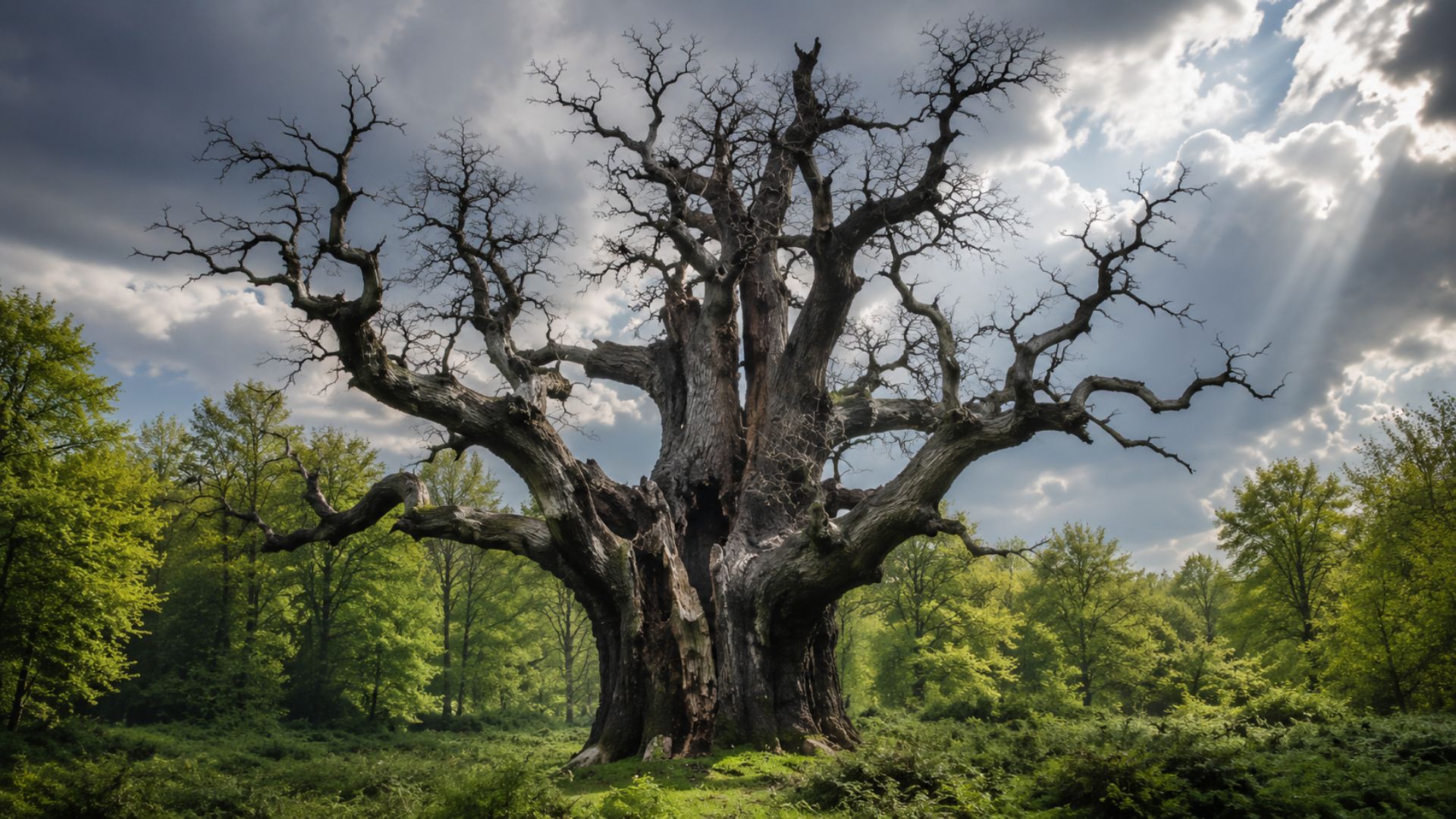

The Major Oak in Sherwood Forest has died after about 1,200 years. The death was confirmed on June 18, 2026, by the RSPB. The absence of leaves in spring was the first sign, and tourism and climate change are among the causes pointed out.
One of England’s most famous symbols has just disappeared. The oak known as Major Oak in Sherwood Forest has died after about 1,200 years of existence, according to confirmation released on June 18, 2026, by the Royal Society for the Protection of Birds (RSPB), responsible for the conservation of the area. The most evident sign that the tree had come to an end was chilling for those who know its history: no leaves sprouted during this year’s spring in the northern hemisphere.
The tree was not just any tree. According to local tradition, the giant is said to have served as a hideout for Robin Hood and his companions during the pursuit by the Sheriff of Nottingham. The death was attributed to a combination of factors, including decades of intense tourism and the effects of climate change. The information was released by g1, based on a statement from the RSPB itself and the Associated Press agency.
The first sign that the tree had died
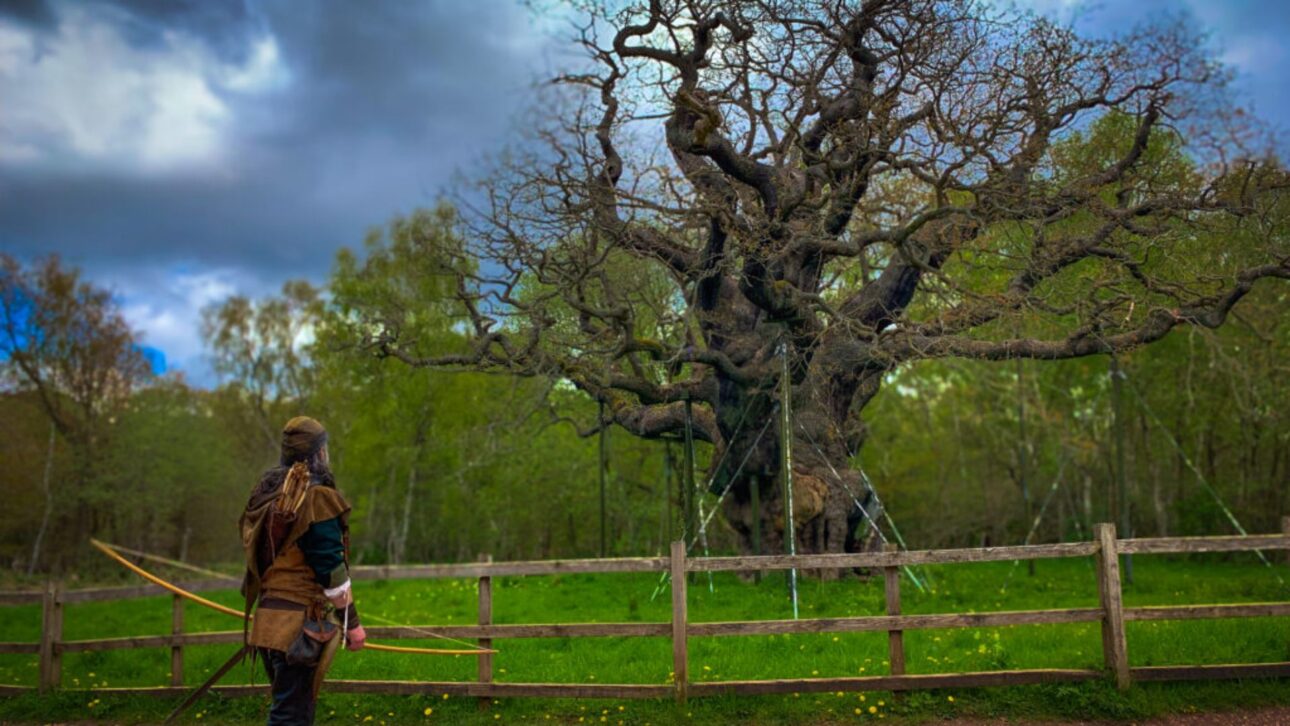
The clearest indication appeared with the arrival of spring in the northern hemisphere when the oak simply did not produce leaves. For a tree that spanned centuries, the total absence of sprouts served as a silent certificate of its end.
-
Real Estate Agent Buys Marvel Movie Subway Car for $5,000 and Converts It into Themed Airbnb
-
Real Estate Agent Buys Marvel Movie Subway Car for $5,000 and Converts It into Themed Airbnb
-
Former Roma and Fiorentina Player Filipe Gomes Returns to Brazil to Found Empório do Galeto, Aiming for $10 Million Revenue by 2026
-
Canada Builds 6.2-Hectare Containment Box to Trap 615,000 Cubic Meters of Toxic Sediment in Lake Ontario


The reaction of those who closely follow the history of the place was one of sadness. A representative of the RSPB stated that it was heartbreaking to see that the tree had not produced leaves this year. The Major Oak is not just an ancient plant but an emotional and cultural landmark, and therefore its death was received with the weight of a collective loss by residents and visitors.
The Connection with the Legend of Robin Hood
The Major Oak is one of the most well-known landmarks of Sherwood Forest, a setting directly linked to the stories of Robin Hood, a character from English folklore who supposedly lived in the 13th century, stealing from the rich to help the poor. The legend tells that the group led by him took refuge in the forest to escape the sheriff of Nottingham’s persecution, and over time the oak came to be pointed out as one of the hero’s hideouts.
Behind the nickname, there is also a documented origin. The name Major Oak emerged in 1790, after the tree was mentioned in a work about oaks written by the British naturalist and military man Hayman Rooke. It was this combination of folklore and historical record that helped transform the tree into an attraction capable of drawing crowds over the centuries.
What Killed the 1,200-Year-Old Oak
Despite the natural curiosity for a single answer, experts say it is not possible to point to one sole cause for the oak’s death. What exists is a sum of factors that, over time, weakened the tree’s structure. Decades of intense visitation are at the center of this list of suspects.
Millions of people have passed through the region in the last two centuries, and this flow has taken its toll. The constant trampling compacted the soil around the trunk and made it difficult for rainwater to reach the roots. Recent assessments showed that the root system was compromised and already had difficulties absorbing water and nutrients, a situation aggravated by old age and the need to support huge branches with posts and cables for decades.
The Role of Climate Change


Besides the direct human impact, there is an underlying factor that has been affecting ancient trees across the continent. Climate change appears among the causes pointed out by experts for the oak’s decline. More frequent heatwaves and prolonged drought periods have been pressuring aged plants in various regions of Europe.
For a tree already weakened by soil compaction and the weight of its own branches, this extra stress may have been decisive. The combination of compromised roots and an increasingly hostile climate helps explain why not even such a resilient organism could continue. The case of the Major Oak thus serves as a warning about the vulnerability of natural heritage in the face of environmental changes.
A Historical Heritage Beyond the Legend
The importance of Sherwood Forest to the United Kingdom goes far beyond the figure of Robin Hood. The oaks of the region provided wood for the British Royal Navy’s ships in the 18th and 19th centuries and were also used in the structures of St. Paul’s Cathedral in London. This material contribution helped consolidate the historical value of the forest over the centuries.
The Major Oak had a different fate than many trees around it. It escaped the logging that affected other areas of the forest and has been protected by fences since the 1970s. This care extended its life and allowed entire generations to closely know the oak associated with the most famous English legend of popular justice.
What happens to the tree now
Even dead, the story of the oak is not over. The tree will continue to play a significant role in the local ecosystem, serving as a shelter for insects, fungi, birds, and other species that depend on the wood to survive. Instead of simply disappearing, the trunk begins to nourish a new network of life around it.
The RSPB reported that the oak will remain in the forest as a natural monument and as part of the legend that made Sherwood known worldwide. Thus, the Major Oak ceases to live as a tree, but remains standing as a symbol. The memory of Robin Hood and the image of the old oak will continue attracting visitors who want to touch, even from afar, a piece of this history.
And you, did you already know the story of the oak that supposedly hid Robin Hood? Tell us in the comments if you would take a trip just to see this symbol of Sherwood Forest up close.


