Portuguese
  Spanish


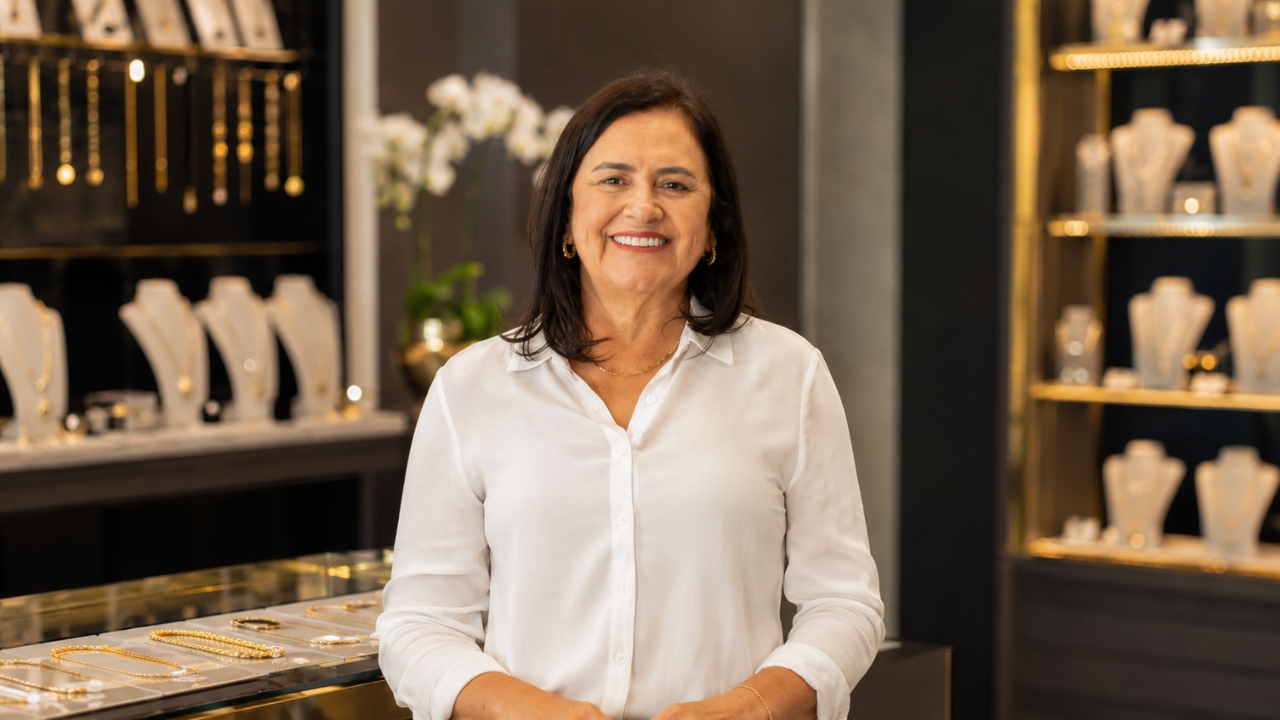

Founded by Solange Coelho in 1988, Rahra moved from direct sales to clients and established itself as a family brand of semi-jewels, with presence in several states, million-dollar revenue, and a goal to grow in the Brazilian franchise market.
Before emerging as a network with more than 70 stores in Brazil, Rahra was born from a simple routine in Minas Gerais. Solange Coelho, a mathematics teacher, started selling semi-jewels directly to clients, door-to-door, after borrowing money from her brother to buy the first pieces.
The story was told by Seu Dinheiro and shows how a small sale, made by recommendation and without great structure, turned into a family brand based in Pouso Alegre, in the south of Minas. Decades later, Solange’s children took on strategic roles in the business, which now aims for national expansion and appears in a franchise sector that continues to grow in the country.
A Minas Gerais teacher turned direct sales into a family business
Rahra was founded in 1988 by Solange Coelho. Before that, according to Seu Dinheiro, she balanced her work as a mathematics teacher with the production and sale of handmade items, such as knitting and crochet.
-
$75 Million Bridge in Brazil Opens to Connect Cities, Create Jobs, and Cut Travel Time from 30 to 2 Minutes; Spanning 1.24 km, It’s Among the Country’s Largest and Ends Decades of Ferry Queues.

-
Brazilian Farmer Builds 8-Ton Tractor from Army Truck Engine, Plants Over 100 Hectares of Soybeans
-
11-Year-Old Entrepreneur Turns Fear of Bees into Honey Lemonade, Wins $60,000 on Shark Tank, Secures Whole Foods Deal, and Expands Brand Across U.S. Stores

-
9-Year-Old in Brazil Sells Homemade Sweets to Support Grandfather with Parkinson’s, Family Dreams of Buying Candy-Making Machine




The entry into the semi-jewel universe happened after suggestions from close people, who saw potential in the resale of accessories. The beginning had no store, showcase, or large capital. It involved direct contact with clients, recommendations, and a willingness to sell personally.
With little money available, Solange turned to her brother to buy the first pieces. From there, she began visiting clients and building a sales network based on trust. In about a year, approximately ten people were already reselling products linked to the brand.
This detail helps to understand why the story works beyond the business case. Rahra did not start as a ready-made operation. It was born from a common sale, repeated many times, until it gained scale.
The children grew up within the operation and took over the expansion
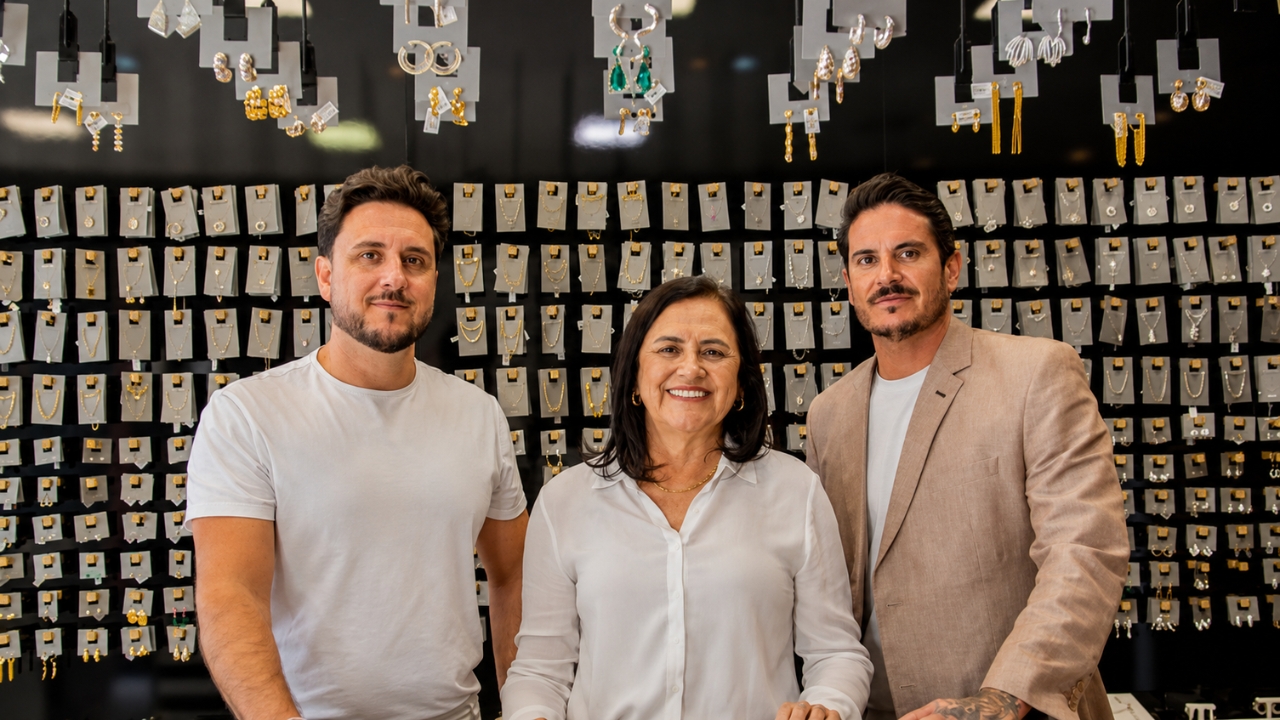
The business took on a different pace when the second generation officially joined the company. According to Seu Dinheiro, Jonathas Coelho, now CEO of Rahra, began formally working in the business in 2007, after gaining experience as a franchisee in a telecommunications company.
Thomas Coelho, responsible for the product area, officially joined in 2011. Before that, the children were already familiar with the brand’s routine, helping with tasks such as organizing merchandise and labeling.
The generational transition changed the company’s ambition. Rahra tested its own units outside the city of origin between 2011 and 2018, a period used to adjust operations, logistics, and management before accelerating expansion through franchises.
Today, Solange appears more connected to the brand’s legacy, culture, and inspiration, while the children lead management, products, and the growth plan.
More than 70 stores and plans to reach 500 units
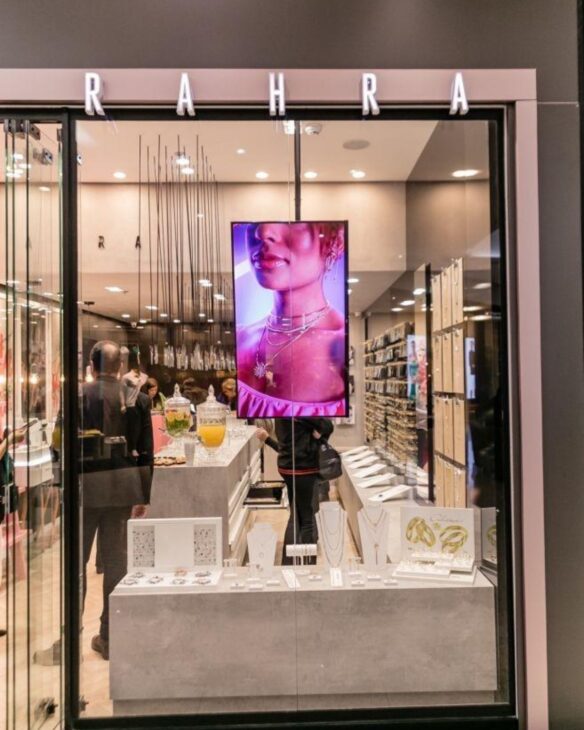
The strongest data in the current story is the scale. The latest note from Seu Dinheiro, published in May 2026, reports that Rahra already has more than 70 stores in Brazil.
This number updates previous data. In 2025, Diário do Comércio cited 67 operations in six states, with Minas Gerais concentrating 46% of the stores. The presence in Minas Gerais remains significant, but the brand is already appearing in different regions of the country.
Rahra’s official website lists units in states such as Minas Gerais, São Paulo, Ceará, Rio Grande do Norte, Paraíba, Distrito Federal, and Goiás. The network appears in cities like Pouso Alegre, Belo Horizonte, Poços de Caldas, Campinas, Santos, Fortaleza, Natal, João Pessoa, Campina Grande, Brasília, and Valparaíso de Goiás.
According to Brazil Economy, Rahra earned R$ 44 million in 2024, a 25% increase compared to the previous year. The same source cites the plan to reach 500 stores and achieve R$ 400 million in annual revenue when this operation is in full swing.
Diário do Comércio also recorded the goal of 500 franchises and mentioned a projection of around R$ 500 million by 2028. As the numbers appear in different sources and contexts, the central point is that the company has started to operate with national ambition.
Franchises, kiosks, and direct sales connect past and present


Rahra maintained a bridge between its origin and the current model. Diário do Comércio points out that the company works with physical stores, franchises, online commerce, and direct sales by resellers.
In other words, the logic that started with direct contact with the customer has not disappeared. It was incorporated into a larger operation, with different sales formats and physical presence in cities of various sizes.
According to Seu Dinheiro, opening a store of the brand requires an investment of R$ 190,000, with R$ 150,000 for structure and R$ 40,000 for the franchise fee. A kiosk requires R$ 115,000, with R$ 75,000 for implementation and R$ 40,000 for the fee.
The official franchise site presents an estimated payback of 18 to 30 months, expected profitability of 12% to 18%, and projected annual revenue of R$ 1 million for a store and R$ 640,000 for a kiosk.
Among the attractions cited by the company itself are zero royalties, financed initial stock, exchange of initial stock after six months, frequent launches, support, training, and monitoring for franchisees.
The franchise market helps explain the turnaround
Rahra’s expansion also occurs in a favorable context. According to the Brazilian Franchising Association, ABF, the franchise sector in Brazil earned R$ 301.7 billion in 2025.
The entity also recorded 202,444 operations, 3,297 networks, and about 1.762 million jobs in the sector. These numbers show that franchising has become one of the main ways to multiply businesses in the country.
In Rahra’s case, this scenario helps explain how a regional brand, born in Pouso Alegre, found space to grow in different markets. Diário do Comércio also points out that the company uses data and artificial intelligence to study city profiles and choose new sales points.
Semi-jewels, frequent launches, and a brand with a familiar face
Rahra sells products such as earrings, bracelets, necklaces, rings, sets, and charms. Brazil Economy cites pieces plated with 18K gold, finished with nanotechnology varnish, up to 10 years warranty, and hypoallergenic items.
The brand also bets on frequent launches. According to Brazil Economy, the portfolio can reach up to 900 new models per year, while the official franchise material highlights the constant arrival of new items in stores.
The strength of the story is not just in the numbers. It lies in the contrast between the first sale made without structure and an operation that now speaks of hundreds of stores. Rahra’s journey shows how family businesses can span generations, professionalize management, and transform door-to-door sales into a national brand.