






 Portuguese
  Spanish
  3 min of reading
  0 comments


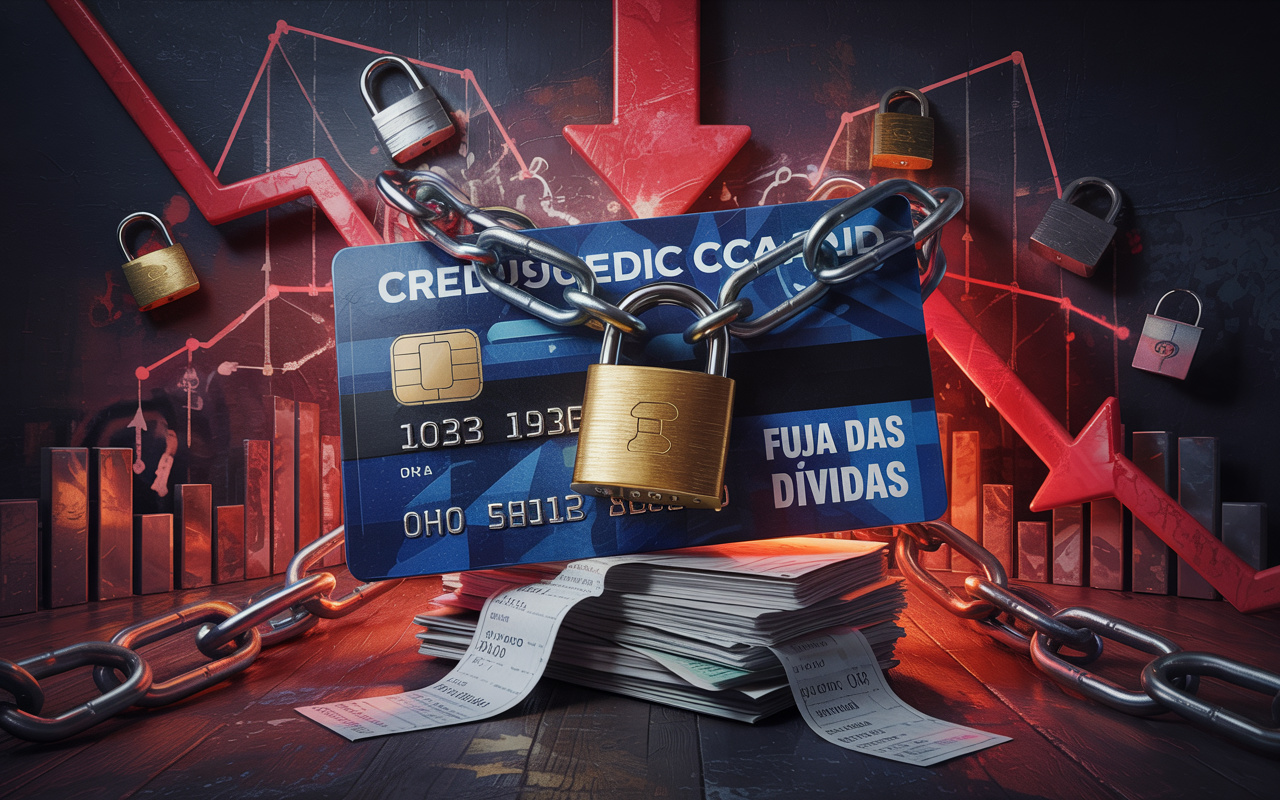
Credit Card Leads Ranking of Debts in Brazil, Accounting for 23% of Defaults. Understand the Risks and How to Avoid the “Snowball Effect.”
The credit card, one of the most used payment methods by Brazilians, also leads the ranking of debts that lead to payment delays. According to a survey by the National Confederation of Shopkeepers (CNDL) in partnership with SPC Brazil, 23% of default cases in the country are directly linked to unpaid card bills — a figure that exceeds other types such as loans (16%) and financing (12%).
The data raises an alarm not only for consumers but also for the financial system, as the card carries high interest rates and, in many cases, ends up pushing users into the dreaded revolving credit, whose average annual rate exceeds 450% per year at traditional banks.
Credit Card Leads Comfortably Among the Most Common Debts
The study reveals that, among defaulters, most accumulate more than one type of debt, but the card is the most common in financial arrears. This is explained by two main factors: easy access, with quick approval and initial limits even for people without a robust history, and the tendency to use it for everyday expenses, which has increased with the rise of contactless payments.
-
Brazilian Joins Homeownership Consortium, Faces Decade of Dual Payments Totaling $141,000, Surpassing Traditional Mortgage

-
Land Rover to Halt Production in July, Putting 371 Jobs at Risk, as Chinese Automaker Negotiates to Convert Factory to 100,000 Vehicles Annually by 2027

-
Mexican Pest Threatens U.S. Cattle Herds at Historic Lows, Potentially Boosting Brazilian Beef Exports as Burger Prices Soar

-
Brazilian Freight Bill Progresses in Congress with $5,000 Minimum Wage, 70% Advance Payment, and Fines Up to $1 Million, as Agriculture and Industry Warn of Rising Costs and Legal Uncertainty




According to the research, unpaid bills have become a common problem not only among low-income families but also in the middle class, especially in light of rising living costs and the difficulty of maintaining a balanced budget.
The Effect of Revolving Credit and the Risk of the “Snowball”
When the bill is not paid in full, the remaining balance goes into revolving credit, considered the most expensive on the market.
Although recent rules from the Central Bank have limited the maximum time in revolving credit to 30 days, after this period, the balance must be paid in installments with lower interest — still, the average rate is extremely high.
This dynamic creates a “snowball” effect, in which the amount of debt grows month by month and becomes increasingly difficult to settle. The result is that many consumers end up needing to renegotiate the debt or join programs like Desenrola Brasil to clean their name.
Change in Behavior in Credit Card Usage
In addition to default, there is an interesting phenomenon observed in recent years: the card has stopped being used solely for larger purchases and has become a tool for daily expenses, such as groceries, pharmacy, and basic bills. This is due to convenience, cashback programs, and points, but also to the attempt to “gain breathing room” in the budget by pushing payments to the next month.
However, experts warn that this strategy is dangerous, as it creates a false sense of available income and increases the risk of falling into revolving credit.
How to Avoid the Credit Card Becoming a Problem
Economists and financial educators point out some essential measures:
- Always pay the full bill amount, avoiding revolving credit.
- Use the card only for planned purchases and within the budget.
- Reduce the number of active cards to avoid losing control.
- Prioritize using debit or PIX for recurring expenses.
A Challenge That Goes Beyond the Consumer
The leadership of the credit card as a cause of defaults shows that the issue is not just individual but also structural. High limits, lack of transparency in rates, and absence of consistent financial education create a favorable environment for indebtedness.
Meanwhile, banks and issuers continue to profit from high interest rates, even in a scenario of lower Selic rates. The question remains: to what extent is the financial industry willing to reconsider its practices to reduce default — or will it continue to benefit from it?





-

-

2 people reacted to this.