






 Portuguese
  Spanish


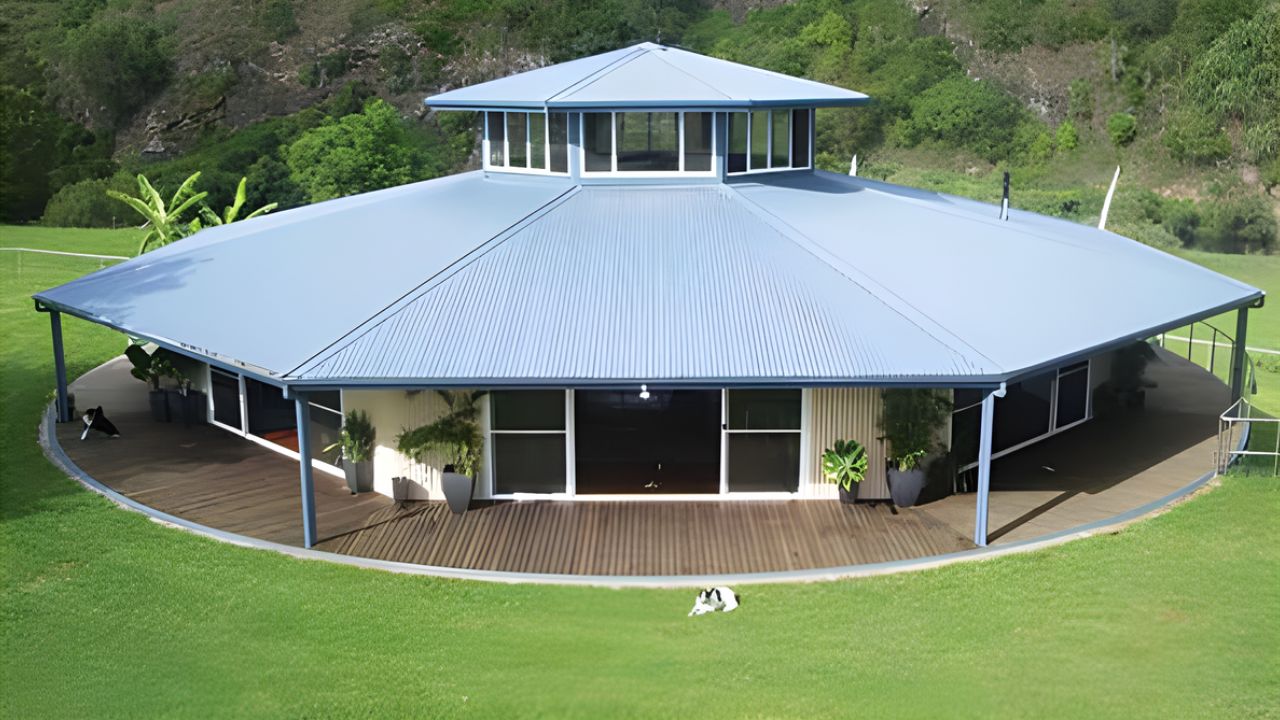


Know The House That Turns 360º In Australia, Designed By Luke Everingham, Which Allows Changing The Window View With A Touch And Transforming Daily Life.
In the New South Wales, Australia region, a residence challenges the traditional idea of home. The 360º turning house allows residents to adjust their window views throughout the day with just a touch on a panel, offering a completely dynamic experience.
At first glance, the residence seems ordinary, but its differentiator lies in the foundation: the octagonal structure rests on a motorized circular platform, which allows the entire house to rotate on itself safely and quietly.
How Rotation Transforms Routine
Two compact motors, the size of washing machines, are responsible for the movement of the house.
-
U.S. City Builds Tiny Home Village on Water Company Land to House 136 Homeless People: Inside the Social Housing Units

-
Woman Turns Shipping Container into Home, Embraces Rural Life to Cut Monthly Expenses to Just Over $330
-
France Revamps 530 Social Housing Units with Large Balconies and Glass Facades Without Demolishing Existing Buildings

-
Facing high rent, couple transforms parents’ garage into a fully functional apartment, creating a complete home at a fraction of the market cost.




The rotation can take between 30 and 120 minutes, depending on the resident’s preference, who controls the speed and timing of the rotation via a screen in the living room.
In this way, each room of the house can reveal new landscapes — whether the garden, the street, or the natural horizon — making each day a different visual experience.
The Idea That Gave Rise To The Rotating House
The project emerged from a conversation between Luke Everingham, a sound engineer, and his neighbors, who expressed interest in changing the position of their own residences.
As Everingham explained: “The conventional rectangular prism would not be appropriate. After experimenting with designs at different scales, I was pleasantly surprised by the octagonal shape.”
The octagonal design not only allowed for efficient rotation but also provided stability and a harmonious appearance.
Materials, Construction, And Cost
For rotation to be viable, the house was built with lightweight and durable materials.
Weighing approximately 50 tons, the residence combines glass and steel in its exterior walls, ensuring transparency, durability, and modernity.


The project was completed in March 2006, at a cost of A$ 888,000 (about R$ 3 million).
Before arriving at this result, Everingham dedicated years of research to develop a functional, safe, and accessible system.
Living In A House That Turns 360º
Living in this residence is transforming routine into something dynamic.
The constant rotation changes the lighting, creates new perspectives, and makes every moment inside the house offer a different experience.
It is a home that not only adapts to the landscape but also brings residents closer to nature and the surrounding environment in a completely innovative way.
The 360º turning house in Australia shows that technology, design, and sustainability can unite to create a unique living experience.
With practical operation, adjustable views, and total integration with the environment, the residence transforms every moment into an opportunity to discover something new.
Source: ND+









Este conceito é bem antigo….
Yes, the world’s first rotating house from what I’ve seen was actually in Canada in 1968 (if you don’t count the morphing castle in Europe which doesn’t quite “rotate” and isn’t quite a house) & there have been about a dozen built since then.