






 Portuguese
  Spanish


Modular Homes in Dome Shape, Made with Recycled Materials, Automation and Quick Assembly, Start to Gain Attention in Brazil and Attract Growing Interest, Especially in Belém (PA), Driven by the Holding of COP 30.
Dome-shaped homes made with reused materials, starting price from R$ 60 thousand, quick assembly and voice command automation are beginning to gain ground in the country.
In Belém (PA), the demand increased with the visibility of the COP 30, boosting the business created by architect Tuane Costa and administrator Thales Barca, who specialize in modular constructions known as geodesic domes.
What Are Geodesic Domes
The geodesic dome is a dome-shaped construction formed by various triangles that fit together precisely.
-
Brazil’s 2026 Tax Refund: Record 9.58 Million Filers in Largest Payout Ever, But a Key Detail on Priority Recipients Draws Nationwide Attention

-
Itaú Alters Hybrid Work Model, Increasing Office Days from 2028, Prompting Employees to Adjust to New Routine
-
Facing Labor Shortage, Japan Plans to Invest $34 Million to Attract Foreign Workers in Construction, Healthcare, Industry, and Commerce

-
Brazilian City Makes Remarkable Leap, Becomes 4th Wealthiest in the Country with GDP of R$ 134.1 Billion




This arrangement creates a lightweight and resilient structure, capable of distributing loads evenly.
At first glance, it resembles an igloo; however, the design combines sustainable design with energy efficiency solutions and comfort.
By prioritizing the use of industrialized and modular components, the domes reduce waste on site and have a cleaner worksite.
Furthermore, the dome geometry promotes natural ventilation and lighting, factors that, combined with insulation, help reduce energy consumption over time.
Price and Quick Assembly
The models manufactured by Tuane Costa’s and Thales Barca’s company start at R$ 60 thousand and arrive at the customer with electrical and plumbing systems pre-installed.
This advanced factory stage shortens the time on the land Bioceânica and standardizes the quality of the systems, which facilitates future maintenance.
The assembly occurs in stages, with numbered components to expedite fitting the pieces together.
Depending on the design, there are versions with acoustic insulation, voice command automation features, and digital locks.
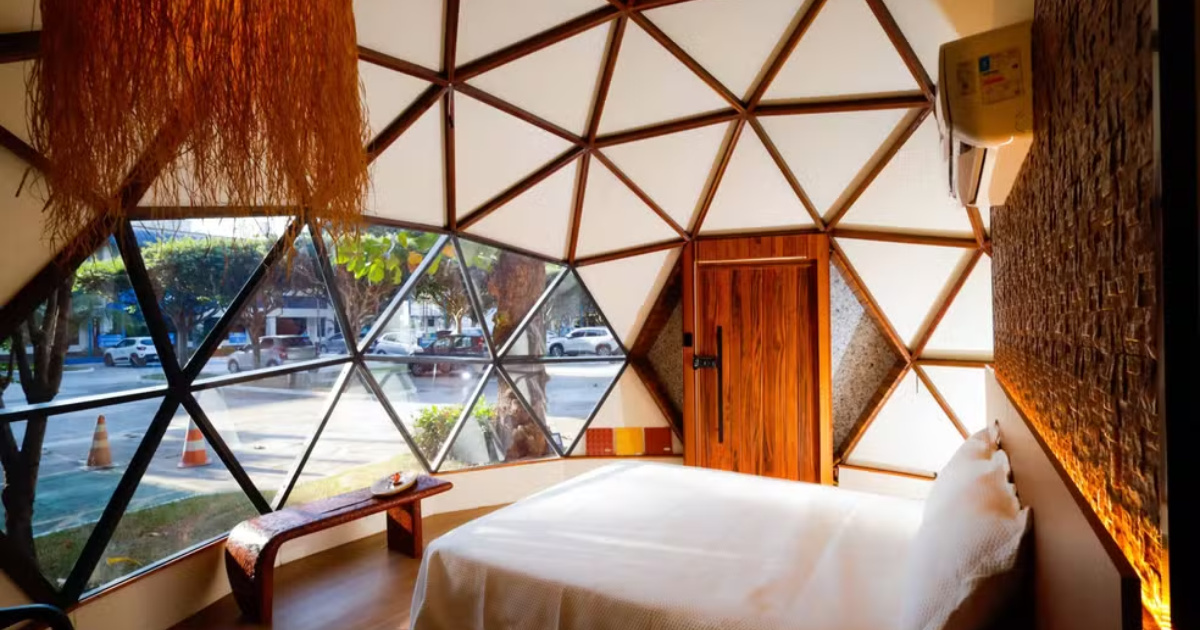
These items make the interior more functional, maintaining the proposal for comfort in integrated environments with a view of the sky, a feature often explored in the zenith openings of the domes.
Sustainability in Materials
The raw material is chosen to combine performance and sustainability.
The domes can combine sustainably sourced wood, recycled plastics, and other reused materials.
In the finishing, there are solutions such as recycled plastic with lunar texture and panels that highlight local materials, such as pressed açaí waste.
In addition to structural panels, elements of regional design reinforce Amazonian identity.
Tiles with themes from Pará’s culture and carpentry with sustainably sourced wood give personality to the interiors.
The set aims to ensure thermal and acoustic insulation, combined with the durability of materials selected for hot and humid climates.
COP 30 Drives Demand
With the confirmation of Belém as the host city for COP 30 in November, the demand for sustainable structures has increased in the capital of Pará.
The movement has opened new opportunities for the two entrepreneurs’ company, who see the domes as a versatile alternative for housing, lodging, and experiential spaces.
According to the partners, the product development is the result of a continuous process.
In an inspirational tone, they state that, with determination, “the sky ends up being the limit,” emphasizing that the current results did not arise suddenly, but from work that began years ago and gradually matured.
The strategy now is to consolidate production and scale offering to other regions in Brazil, taking advantage of the showcase created by the international climate calendar.
Applications in Housing and Tourism
Although housing is a possible use, the format has attracted lodging and immersive outdoor experience projects.
Circular architecture, the possibility of integrating the interior with the surroundings, and the flexibility of deployment in various terrains help explain the interest from tourism entrepreneurs.
At the same time, the modular nature facilitates future expansions and layout adaptations without major interventions.
Meanwhile, the standardization of kits and mass production tends to reduce deadlines and indirect construction costs.
In remote areas, logistics also benefits from lighter components compared to conventional systems, as a significant part of the work occurs in a factory environment.
What Are the Domes Like
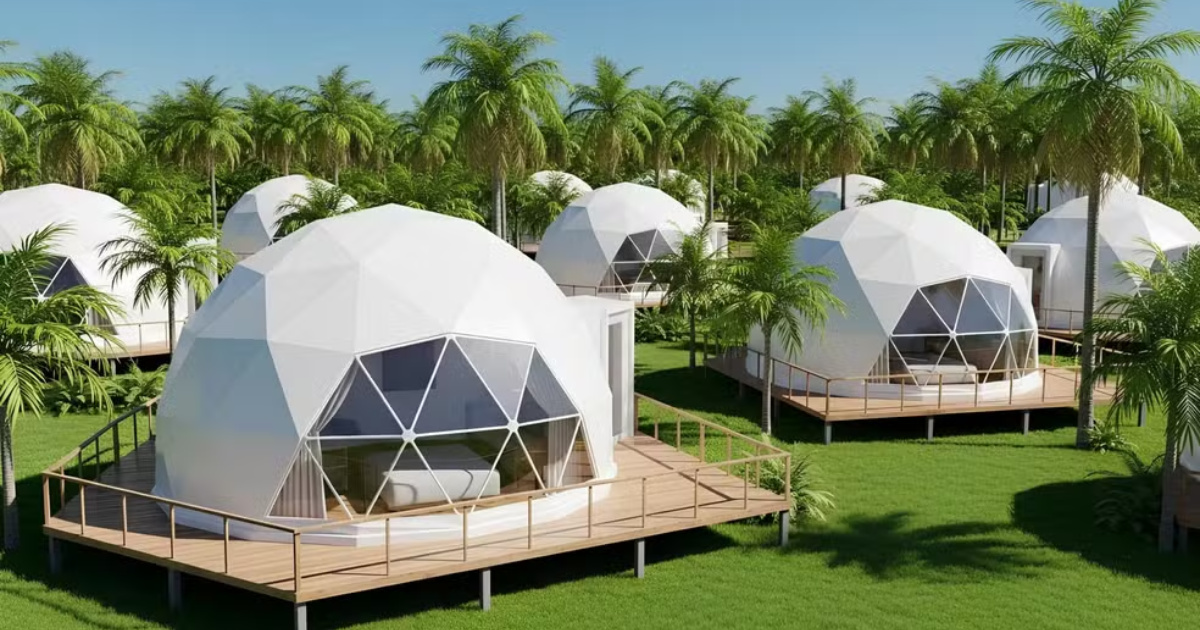
The models prioritize cozy environments, with centralized circulation and seating areas that explore the curvature of the dome.
Zenith lighting and strategically positioned openings enhance the feeling of spaciousness.
In line with the sustainable proposal, the projects can incorporate rainwater harvesting and passive thermal comfort solutions when specified.
For those interested in visiting or requesting a quote, operations are based in Belém.
Amazônia Domos is located at Av. Municipalidade, 985, Umarizal neighborhood, Belém (PA), ZIP 66050-350. Contact can be made by phone at (91) 98149-2136 or by email contato@amazoniadomos.com.br.
The company also provides the website amazoniadomos.com.br and the Instagram profile @amazoniadomoseciaof.
Expansion Perspectives
The founders plan to take the product to other markets while maintaining a focus on modularity, quick assembly, and custom finishes.
The intention is to serve clients ranging from residential customers to hospitality and leisure ventures, with catalogs that combine insulation, automation, and efficiency solutions for daily operations.
On the other hand, expansion depends on steps such as increasing production capacity, certifications, and logistical partnerships.
Even so, the greater national visibility generated by COP 30 strengthens market perception of low environmental impact construction alternatives, a scenario in which the domes intend to position themselves.
In a context of seeking cleaner buildings, industrialized components, and the use of recycled materials, the pressing question arises: would you live, invest, or host your clients in a sustainable geodesic dome?








