






 Portuguese
  Spanish


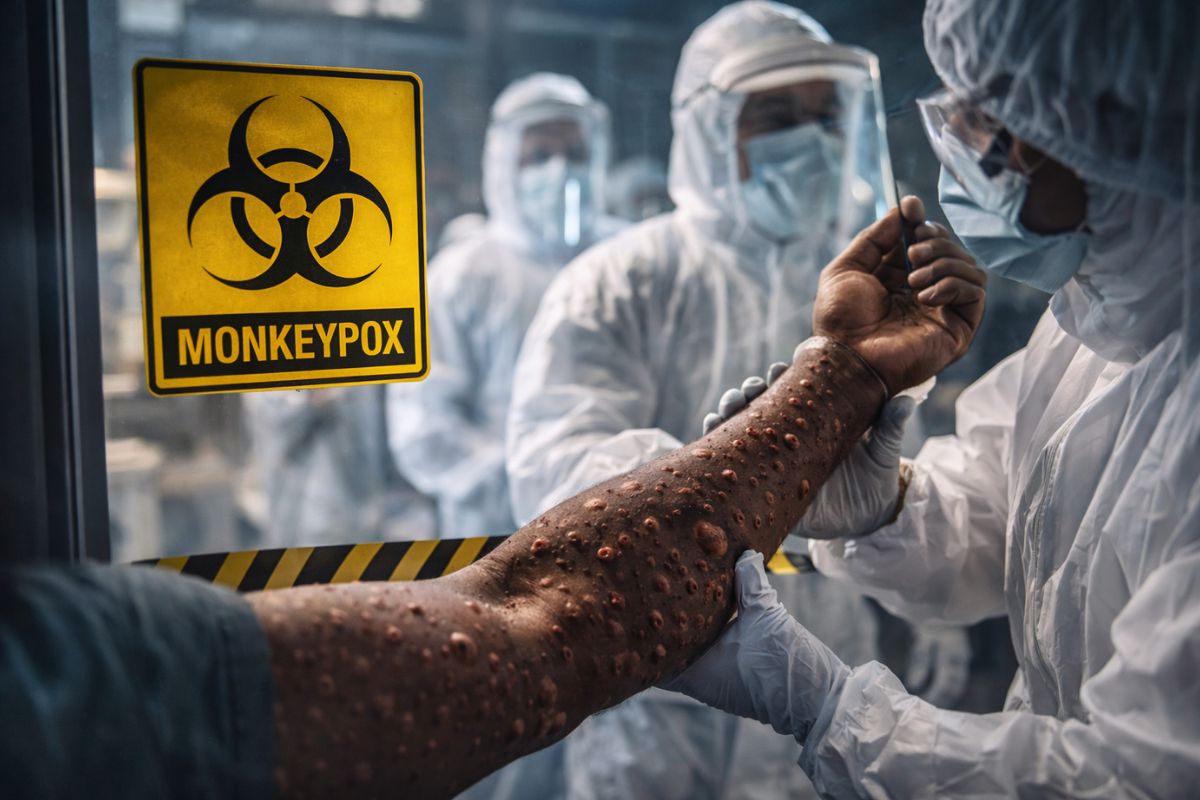

The Confirmation of Mpox in Porto Alegre This Tuesday Reignites the Yellow Alert in Brazil, with Infection Attributed to Exposure Outside the Municipality. Without Variant and Health Status Disclosed, Epidemiological Surveillance Observes São Paulo and Remembers 2024, When the WHO Raised the Global Alert Again.
The Municipal Health Department of Porto Alegre confirmed on Tuesday (17) a new case of Mpox in a resident of the capital. The epidemiological surveillance reported that the infection would have occurred outside the municipality, but did not detail where, nor explained at what point in the transmission chain the patient was exposed.
The absence of public data on variant and health status places the case at the center of a recurring dilemma in outbreaks: how to calibrate transparency without generating disproportionate alarm. In 2026, Mpox reappears in local bulletins while the country still holds recent memory of the global peak associated with the WHO in 2024.
What Is Known and What Is Not Known About Mpox in Porto Alegre
The confirmed point so far is the official notification of Mpox in Porto Alegre, indicating that the contagion occurred outside the capital.
-
Xiaomi 18 Pro and 18 Pro Max May Debut with Snapdragon 8 Elite Gen 6 Pro, Featuring Dual 200 MP Cameras and 8,500 mAh Battery, Ahead of Competitors

-
ispace Pays SpaceX $50 Million to Hitch a Ride on Starship, Aiming for a Shared Commercial Route to the Moon by 2030

-
Solar-Powered Cell Tower to Connect 10,000 Residents on Remote Brazilian Island, Reducing Diesel Dependence
-
Snowman-shaped asteroid captured by Hayabusa2 probe during flyby just 10 km away


This information, in itself, already shifts the focus of tracing, as the investigation usually follows the reverse route of the patient’s movement, looking for the likely site of exposure and close contacts.
What is missing is the part that usually guides public debate more precisely.
Without an identified variant and without disclosed clinical conditions, the epidemiological surveillance has fewer elements to explain severity, evolution, and risk of transmission within the patient’s circle.
When silence is greater than data, speculation fills the space.
São Paulo as a Gauge for 2026 and the Interpretation of Increased Notifications
The report in Porto Alegre is not the first for 2026.
In January, São Paulo confirmed 43 cases of Mpox after 161 suspected notifications, with confirmations in municipalities such as Campinas, Ribeirão Preto, Santos, São José dos Campos, Sorocaba, and the São Paulo capital.
These numbers alone do not define the magnitude of the problem, but help to understand why epidemiological surveillance treats the topic as a yellow signal rather than an automatic emergency.
What emerges is a pattern of detection and confirmation, with municipal distribution, and not a picture of a sanitary collapse.
The difference between alert and panic usually lies in the details that have yet to emerge.
The Role of the WHO in 2024 and What the Suspension of Status in 2025 Suggests
In 2024, the WHO declared Mpox a Public Health Emergency of International Concern, the highest alert level of the entity.
At that moment, Brazil ranked second in the global case count, trailing only the United States, and the topic ceased to be peripheral on the agenda.
The emergency status was lifted in September 2025 after a consistent reduction in the number of infections in the most affected countries.
This does not erase the disease, but changes the framing. In 2026, when Porto Alegre confirms a new case of Mpox and São Paulo records dozens of confirmations, the WHO becomes a historical reference to compare intensity, speed of dissemination, and institutional response.
Not every new case is a restart, but every new case requires method.
How Mpox Transmits and Why Direct Contact Weighs More Than Fear
Mpox is caused by the monkeypox virus, from the same family as the smallpox virus.
Transmission occurs primarily through direct contact with skin lesions, bodily fluids, or contaminated objects, as well as through close and prolonged exposure to respiratory secretions from infected individuals.
There is also the possibility of contagion through infected animals, especially rodents.
This combination explains why epidemiological surveillance usually insists on tracing contacts and shared environments, and not just counting cases.
When the route is contact, prevention is behavior and service organization.
Symptoms, Incubation, and What Usually Triggers Clinical Alert
The most frequently reported symptoms include skin rashes, fever, headaches, body aches, chills, weakness, and swollen lymph nodes.
The incubation period ranges from three to 21 days, with an average of ten to 16 days, which creates a window long enough to confuse origin and movement, including in cases attributed to exposure outside Porto Alegre.
In practice, this incubation range is a reason for caution in communication and self-care.
The presence of lesions and fever does not automatically mean Mpox, but it is the kind of combination that leads services to advise seeking evaluation, especially when there is a history of close contact.
The timeline of symptoms is as important as the symptom itself.
What Epidemiological Surveillance Does When Pieces Are Missing and Why It Matters
When a confirmation of Mpox reaches the system, epidemiological surveillance tends to work in layers: notification, investigation of the likely site of infection, identification of contacts, and monitoring of evolution.
In the case of Porto Alegre, the indication that exposure occurred outside the municipality enhances coordination with other locations and increases the importance of consistent data, including regarding variants.
In treatment, according to the Ministry of Health, the approach is based on clinical support measures to alleviate symptoms and prevent complications, without any specific approved medication to date.
This detail avoids easy promises and reinforces the essential: attention to the situation, proper guidance, and rapid response from the service.
In contact diseases, the speed of care is as valuable as technology.
A new case of Mpox in Porto Alegre in 2026, with infection attributed to outside the capital and no disclosure of variant and health status, places pressure on public communication and response routines.
At the same time, São Paulo already provides a background with 43 confirmations in January, and the memory of the WHO alert in 2024 serves as a ruler to measure what constitutes a peak and what is re-entry.
If you lived in Porto Alegre or São Paulo, what information would make you feel safer right now, the variant, the health status, or the map of possible exposures? And, looking at what the WHO did in 2024, do you think that epidemiological surveillance in Brazil should disclose more details even when the case seems isolated?


