






 Portuguese
  Spanish


Brazil recorded two earthquakes in the early hours of this Thursday (21). The first, with a magnitude of 2.8, occurred at 12:42 AM in Gurupi, Tocantins. The second, with a magnitude of 3.3, was detected at 5:31 AM in the sea, about 100 kilometers off the coast of Maricá, Rio de Janeiro. According to G1, neither was felt by the population, but both were captured by the Brazilian Seismographic Network and analyzed by the Seismology Center of USP. Experts explain that tensions in the Earth’s crust frequently cause these tremors in the national territory.
Brazil woke up this Thursday (21) with two earthquakes recorded in the same early hours in regions far apart. The first tremor, with a magnitude of 2.8, hit the city of Gurupi, in southern Tocantins, at 12:42 AM. A few hours later, at 5:31 AM, the Brazilian Seismographic Network captured a second tremor with a magnitude of 3.3 in the sea, about 100 kilometers off the coast of Maricá, on the coast of Rio de Janeiro. Until the last update, there were no reports of residents who had noticed any of the events. The coincidence of two tremors on the same night drew attention, but experts state that there is no connection between them.
The tremors were detected by monitoring stations that make up the Brazilian Seismographic Network and analyzed by the Seismology Center of the University of São Paulo. The network is coordinated by the National Observatory, with support from the Geological Service of Brazil, and operates with almost 100 stations spread across the national territory. Seismologist Gilberto Leite, from the National Observatory, explained that Brazil records small tremors with some frequency due to the tensions that act on the Earth’s crust. According to him, in most cases, these tremors have low magnitude and go unnoticed.
What caused the tremor off the coast of Rio de Janeiro
The seismic tremor of magnitude 3.3 recorded off the coast of Maricá was classified as shallow, with an estimated depth between 0 and 10 kilometers, although additional data is still being processed. The epicenter was in the sea, about 100 kilometers from the coast of Rio de Janeiro, in a region that concentrates the main band of submarine seismic activity in Brazil.
-
Scientists Develop System to Turn Seawater into Drinking Water Using Only Sunlight, No Electricity Needed

-
Brazilians Spend Over 52 Years Online, Leading Global Internet Usage Rankings Ahead of Mexico and South Korea

-
German Printing Machine Manufacturer Dominates Over 40% of Global Offset Press Market

-
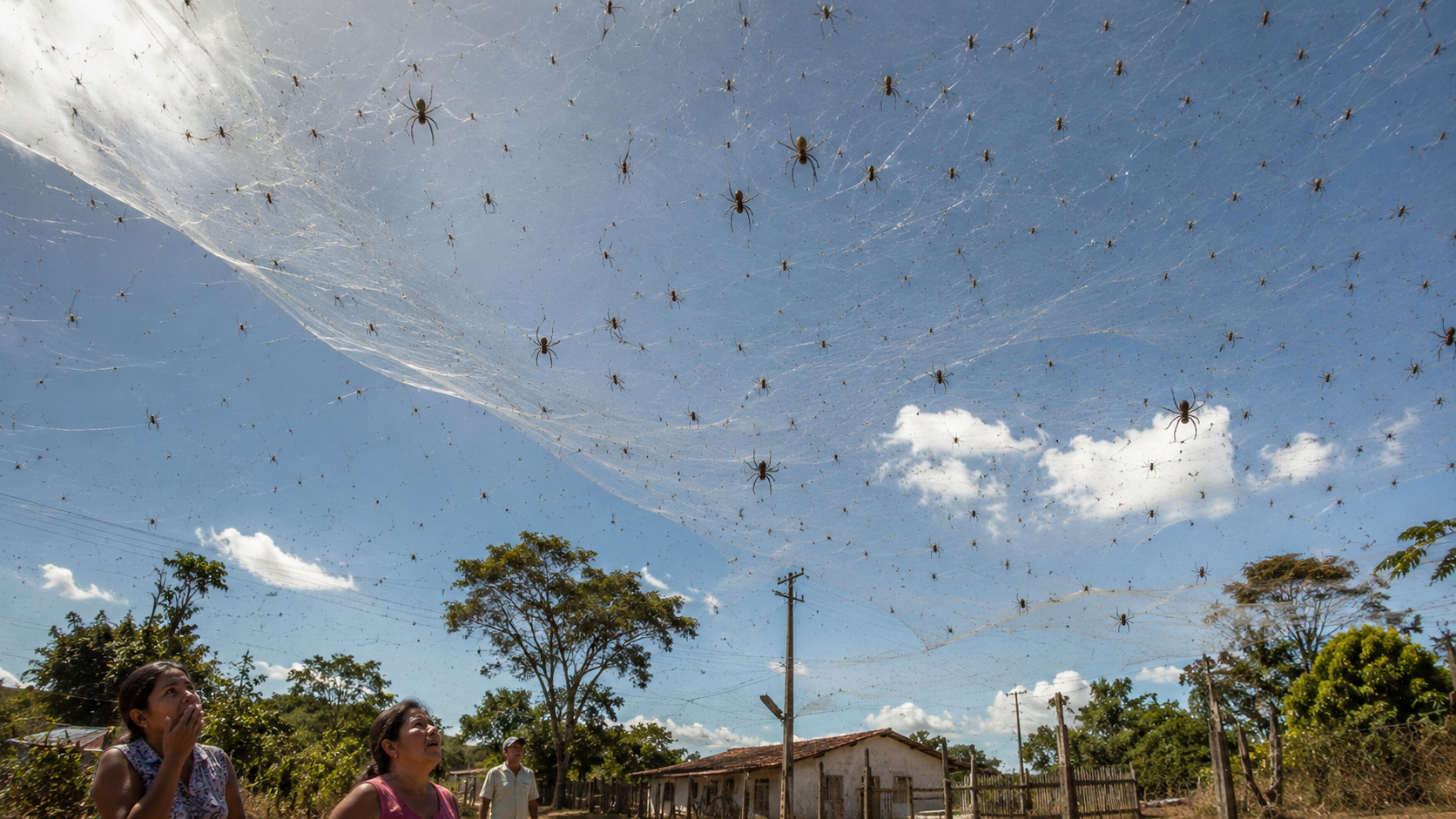
Rare Phenomenon in Brazil: Hundreds of Spiders Appear Suspended in the Sky, Astonishing Residents with Giant Webs


The southeastern Brazilian margin is monitored with special attention precisely because it shows recurring records of small tremors on the ocean floor. Gilberto Leite explained that these tremors are caused by the accommodation of internal geological structures of the Earth’s crust. Unlike the large earthquakes that occur at the boundaries between tectonic plates, like the Pacific Ring of Fire, Brazilian tremors happen within the South American plate, in zones where old fractures and faults are reactivated under tension.
The Gurupi tremor and the seismicity of Tocantins
The magnitude 2.8 tremor recorded in Gurupi, in the south of Tocantins, was the first seismic event in the state in 2026. Throughout 2025, Tocantins recorded only two tremors: one of magnitude 2.5 in Formoso do Araguaia, in July, and another of 2.7 in Dianópolis, in May. The state is not a region traditionally associated with seismic activity in the popular imagination, but records show that small tremors occur with some regularity.
Gurupi, with about 87,000 inhabitants, is 240 kilometers from Palmas and is located between the Araguaia and Tocantins rivers, in a region of fertile soil over rocks that are part of ancient geological structures. The tremors in this area are attributed to stress adjustments in the Earth’s crust, unrelated to volcanism or the subduction zones that cause devastating earthquakes in countries like Chile and Japan.
Why Brazil has tremors if it is far from tectonic plates
There is a common perception that Brazil does not have earthquakes because it is in the middle of the South American plate, far from the boundaries where the large plates meet and collide. This perception is partially correct, but incomplete. Brazil records dozens of tremors per year, the vast majority of low magnitude, caused by internal tensions in the Earth’s crust that reactivate ancient geological faults.
Seismologist Gilberto Leite explains that the Brazilian continental crust has fractures and discontinuities inherited from geological processes that date back hundreds of millions of years. When the accumulation of tension reaches a critical point, the rock breaks and releases energy in the form of seismic waves. This is what the instruments of the Brazilian Seismographic Network capture. In most cases, the energy released is so small that only seismographs record the event. The largest tremor ever recorded in Brazil occurred in January 2024, with a magnitude of 6.6, in Acre and Amazonas, without causing damage.
The role of the Brazilian Seismographic Network
The Brazilian Seismographic Network operates with almost 100 stations distributed throughout the national territory, functioning 24 hours a day. The data captured by the seismographs are sent in real-time to the USP Seismology Center, which analyzes the location, depth, and magnitude of each event. The network is coordinated by the National Observatory, linked to the Ministry of Science, Technology and Innovation, and has technical support from the Geological Service of Brazil.
For the two tremors recorded this morning, the stations functioned as expected: the events were detected, located, and analyzed within minutes. The information was published on the Seismographic Network’s website and on the USP Seismology Center’s channels. Although neither of the two tremors posed a risk to the population, each record contributes to the mapping of Brazilian seismicity and to the understanding of how stresses are distributed across the country’s continental crust and oceanic margins.
Did you feel any tremor in your region or know someone who did? Did you know that Brazil records dozens of tremors per year, even though it is far from tectonic plate boundaries? Share in the comments.


