






 Portuguese
  Spanish


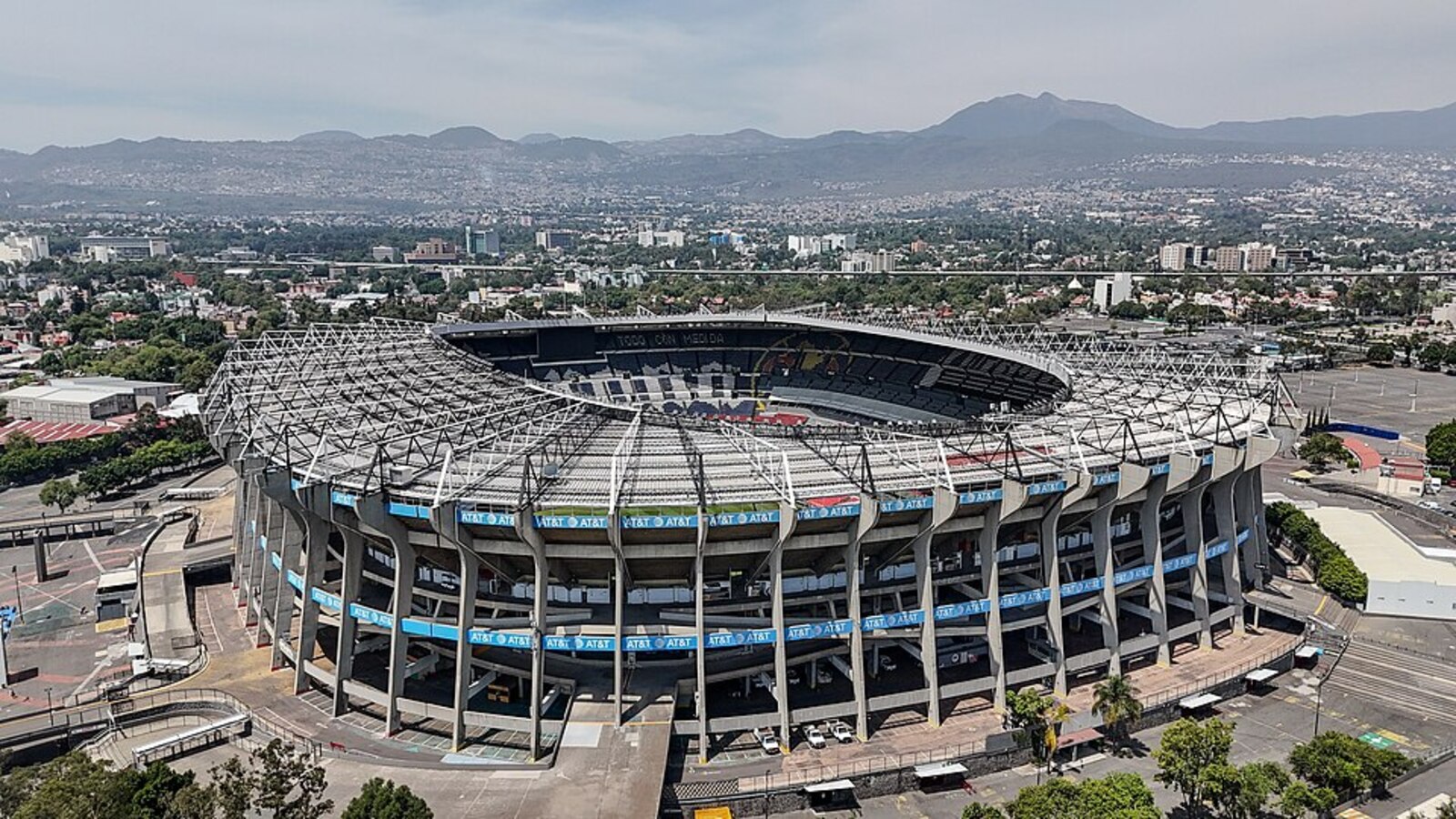


Videos taken during a Liga MX game showed loose concrete fragments in areas of the Azteca Stadium, reopened in March, while Mexico City faces ground subsidence monitored by NASA
Less than a month before the 2026 World Cup, the Azteca Stadium in Mexico City drew attention again after videos showed small loose concrete fragments in areas of the structure. The stadium, reopened in March after 22 months of work, will host the tournament’s opening on June 11, while the Mexican capital faces ground subsidence monitored by NASA.


Azteca Stadium to host World Cup opening amid visual alert
The opening game of the 2026 World Cup is scheduled for June 11 at the Azteca Stadium, also known as Estadio Banorte.
The venue has over 60 years of history and underwent a major renovation to host the tournament.
-
Brazil’s Highly Anticipated Highway Progresses with 8 Lanes, 24 Overpasses, and 2 Escape Ramps; Project Reaches 70% Completion, Set to Transform Traffic for 390,000 Vehicles Monthly

-
Siblings Leave Retirement and Decades in the Energy Sector to Rank Among Top 10 Efficient Poultry Farms, Plan Expansion in São Paulo
-
Man Compensated After Being Charged Property Tax for Over 30 Years Post-Sale, Court Upholds Decision in Southern Brazil

-
Mediterranean Storm Uncovers 1,800-Year-Old Roman Marble Columns Near Israel, Revealing Ancient Shipwreck and Insights into Imperial Architecture


Concern arose after images shared on social media during the Liga MX Clausura quarter-finals showed small pieces of loose concrete in different parts of the stadium.
The footage includes areas of the stands that underwent recent renovation. In one of the videos, a fan picks up a fragment that allegedly came loose and comments, ironically: “I have a souvenir from the game.”
Despite the images’ impact, there are no reports of injuries. There has also been no official statement from authorities on the matter so far.

Mexico City has subsidence of up to 2 centimeters per month
The alert about the Azteca Stadium occurs in a broader scenario of ground subsidence in Mexico City.
According to NASA analyses, different areas of the capital show records of subsidence of up to 2 centimeters per month.
It is unclear if the observed damages in the stadium are directly linked to this process. The available material does not confirm a connection between the concrete fragments and the ground subsidence.
Even so, the situation increases attention on the region on the eve of the 2026 World Cup, especially because the stadium will host the first game of the competition.
NASA monitors the region with high-precision radar
NASA has started monitoring the Mexico City region, including the area around the Azteca Stadium, with high-precision radar satellites.
The monitoring uses the NISAR system, capable of detecting extremely small displacements on the Earth’s surface.
The technology can also operate under clouds or dense vegetation, which enhances the terrain observation capability.
This monitoring is relevant because it allows for the identification of soil changes with a high level of detail, in a city where subsidence is already a recorded concern.
Renovation lasted 22 months and maintained the original silhouette
The Azteca Stadium was reopened in March 2026, after about 22 months of continuous work. The renovation focused on modernizing the infrastructure, with improvements in access, internal areas, public services, and technical adjustments required by the tournament organization.
The streets and sidewalks around the stadium were also upgraded. At the time of the reopening, FIFA stated that the work represented the first major renovation since the stadium’s inauguration.
The entity stated that the project prioritized the fan experience, sustainability, and the quality of the pitch. It also highlighted that the original silhouette was maintained, but with lighter and more modern materials.
This article was prepared based on information from FIFA and NASA, as well as material provided about the videos recorded at Azteca Stadium, with data, numbers, and statements preserved as per the consulted material.


So it sounds like NASA is spying on Mexico. Sponsored State spying.