






 Portuguese
  Spanish


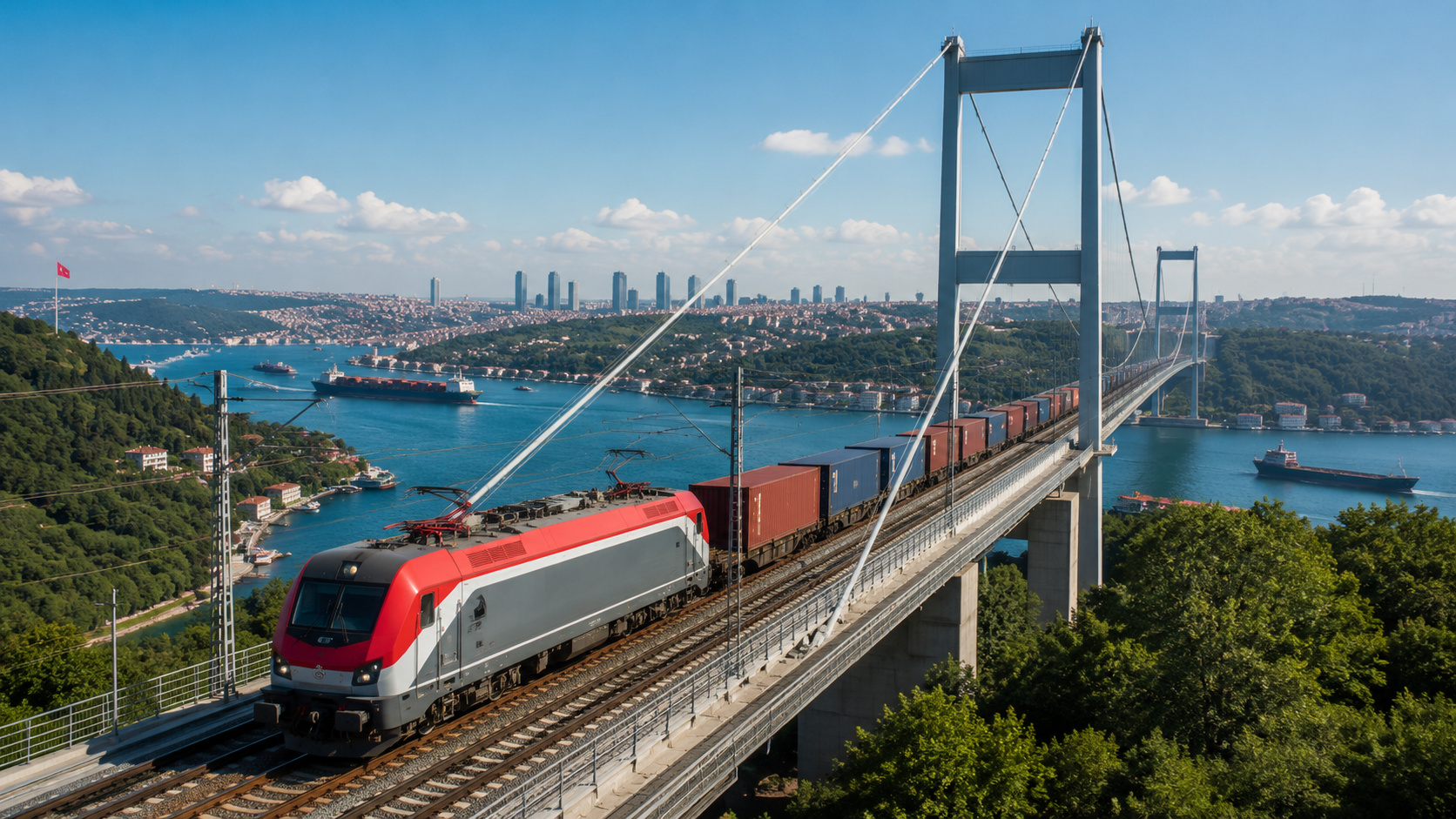


Turkey has just taken one of the biggest steps in its railway infrastructure history after the World Bank approved a $2 billion financing for the INRAIL project, considered strategic for connecting Europe, Asia, and the Middle East through the Bosphorus Strait.
The initiative promises to eliminate one of the biggest logistical bottlenecks on the planet and transform the country into one of the main international transport corridors.
Additionally, the project foresees the construction of an electrified railway with high capacity of approximately 127 kilometers, using the Yavuz Sultan Selim Bridge to create a new railway crossing over the Istanbul Strait. Experts say the work could drastically multiply transport capacity between the continents and accelerate international trade.
Project aims to eliminate historic bottleneck in the Bosphorus
The Bosphorus Strait is considered one of the most congested points in global railway logistics.
-
Astronauts Returning from Space Show Reduced Immune Cells and Thymus Suppression, Highlighting Potential Risks for Long Mars Missions

-
Indian Teens Win National Geographic Award at Google Science Fair for Using Common Sour Fruit to Naturally Coagulate Rubber in 6 Hours, Reducing Production Time by 10 Hours
-
Morocco Sinks 148 Giant Concrete Coffins in the Mediterranean to Build a 4.3 km Breakwater for a Megaport Competing in Global Container Routes Near Nador
-
Simple Home Exercise Can Enhance Stability and Balance for Those Over 60


Moreover, currently the railway transport capacity in the region is extremely limited given the growing international demand.
Experts say that the new railway will allow for a much more efficient flow of goods between Europe and Asia.
In this context, Turkey seeks to consolidate its strategic position in global trade.
Railway capacity could grow more than 15 times
According to World Bank estimates, the new structure could increase transcontinental railway capacity from about 3 million to up to 50 million tons per year.
Furthermore, the increase is expected to significantly accelerate international freight transport.
Experts say this could reduce logistical costs and increase the economic competitiveness of the region.
Therefore, the project is already considered one of the most important in the global railway sector.
Turkey wants to become an international logistics hub
The Turkish government intends to transform the country into a gigantic connection platform between Europe, Asia, and the Middle East.
Additionally, the project strengthens strategic corridors like the “Middle Corridor,” a route that connects China and Europe through Central Asia and the Caucasus.
Experts state that Turkey’s geographical location offers a huge international logistical advantage.
In this scenario, the country expands its influence in global trade.

World Bank bets on sustainable transport
The financing is also part of the international strategy to encourage railway transport.
Moreover, railways are considered more sustainable alternatives compared to traditional road transport.
Experts claim that the change can reduce carbon emissions and improve energy efficiency in freight transport.
Therefore, the project received strong international financial support.
New railway could generate thousands of jobs
Projections indicate a direct impact on the Turkish economy.
Additionally, estimates point to the potential creation of up to 414,000 jobs along the railway corridors linked to the project.
Experts state that logistical infrastructure usually stimulates sectors such as industry, commerce, and services.
In this context, the construction could generate strong regional economic growth.
Yavuz Sultan Selim Bridge will be a key piece
The new railway crossing will use the Yavuz Sultan Selim Bridge, one of Turkey’s largest structures.
Furthermore, the bridge was previously designed with space reserved for railway systems.
Experts claim that this will reduce implementation costs and accelerate part of the construction.
Therefore, the structure has become central to the INRAIL project.
Corridor connects Europe, Asia, and the Middle East
The railway project has strategic geopolitical importance.
Moreover, it will enable integration with trade routes passing through Central Asia, the Caucasus, and the Persian Gulf.
Experts state that the new connection could strengthen global supply chains.
In this scenario, Turkey gains an even more significant role in international trade.
Rail transport returns to the center of the global economy
In recent years, several countries have increased investments in railways.
Furthermore, the sector is seen as a strategic solution to reduce logistical costs and increase efficiency in international transport.
Experts state that new railway routes are redefining the global economic flow.
Therefore, billion-dollar projects are rapidly growing.
Trade between China and Europe is expected to benefit
The railway corridor will also have a direct impact on routes between China and Europe.
Moreover, the so-called “Middle Corridor” has gained strength as a strategic alternative to traditional maritime transport.
Experts state that the new infrastructure can accelerate exports and reduce international delivery times.
In this context, global companies are closely monitoring the progress of the works.
Infrastructure reinforces Turkey’s geopolitical position
The new railway also has political and strategic relevance.
Furthermore, the country strengthens its position as a link between different regions of the world.
Experts state that large logistical corridors increase the economic and diplomatic influence of the countries involved.
Therefore, the project has gained international prominence.
Total investment may exceed US$ 6 billion
Although the World Bank has approved US$ 2 billion, other international institutions are also expected to participate in the financing.
Moreover, the total estimated cost of the project could reach approximately US$ 6.75 billion.
Experts state that the magnitude of the work places the project among the largest railway investments in the region.
In this scenario, the global infrastructure sector is closely following the next steps.
What specialists expect now
Analysts believe that the project could profoundly transform Eurasian logistics.
Additionally, investors are monitoring the economic and commercial impacts of the new railway route.
Among the main points observed are:
- Expansion of railway transport
- Growth of international trade
- Reduction of logistical bottlenecks
- Europe-Asia integration
- Expansion of the “Middle Corridor”
All these factors can significantly change the global flow of goods.
Turkey wants to lead a new global trade route
The billion-dollar financing approved by the World Bank shows how Turkey intends to assume a central position in commercial connections between continents.
Moreover, the railway project reinforces the growing importance of railways in the modern global economy.
As the works advance, specialists believe that the new corridor could redefine part of the global trade routes and transform Istanbul into one of the largest logistics centers on the planet.


