






 Portuguese
  Spanish
  3 min of reading


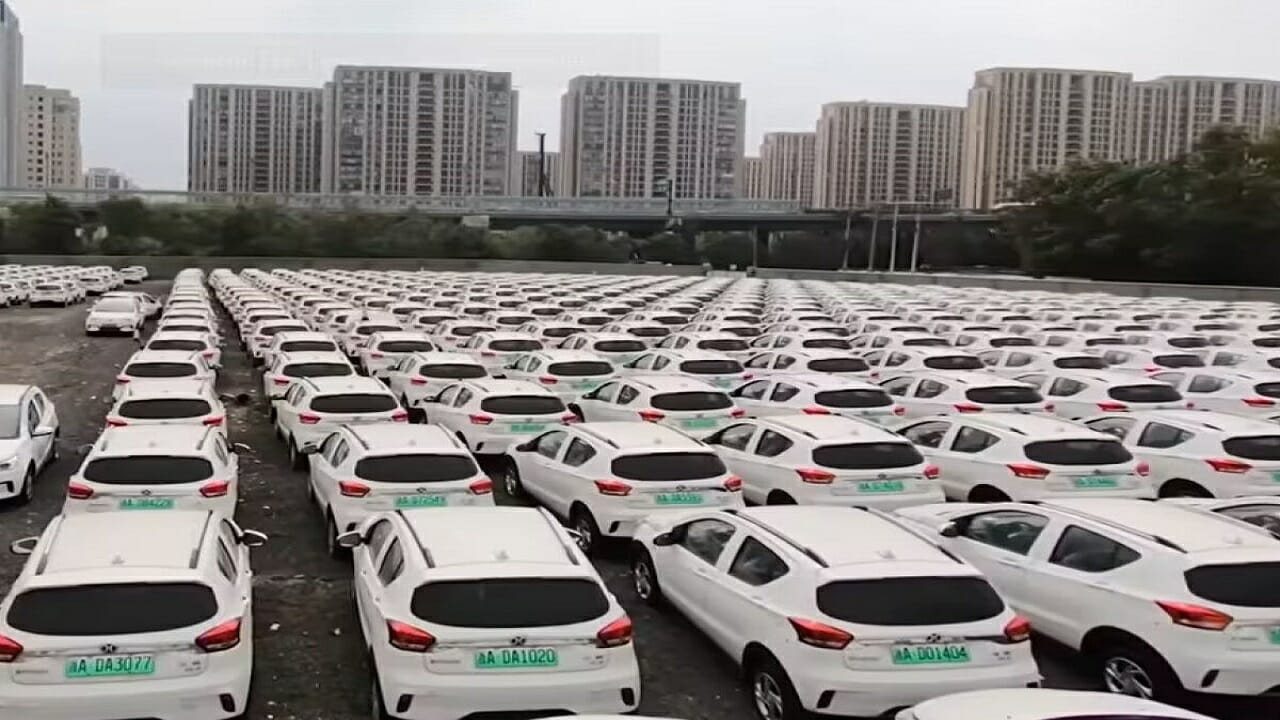
Abandoned Electric Car Graveyard In China Is Found And Draws Attention. The Most Intriguing Part Is That The Site Houses Recent Vehicles From BYD And Geely.
China has become a major power when it comes to the manufacturing and sales of electric cars. However, the significant increase in this production has generated a negative and visible effect in various locations across the giant Asian country: the creation of graveyards for abandoned electric cars in China, including vehicles from BYD and Geely.
Understand The Reason Behind The Creation of The Electric Car Graveyard In China
Images that went viral on social media show thousands of cars, some even in great condition, left in large open-air depots.
According to reports, these are recent electric cars manufactured in China, such as the Geely Kandi K10 EV, the Neta V, and the BYD. According to the photo, most of the electric vehicles are white, and some even have plastic covering the seats, indicating extremely low mileage or even that these vehicles never had an owner.
-
Uber Faces Shareholder Scrutiny as Board Accused of Ignoring Safety, Compliance, and Harassment Warnings Amid Over 3,500 U.S. Lawsuits

-
Ferrari’s First Electric Car Divides Fans, Priced at $630,000, Amid Concerns Over Limited Editions; Brand Clarifies It’s Not Just for Future Perks
-
BYD Dolphin Mini: The Electric Car That Defies Depreciation, Losing Only 3.58% in a Year and Becoming the Best-Selling Retail Model Under $22,000

-
Electric Car JAC E-JS4 Loses $19,000 in Value in One Year, Leading Record Depreciation of Used Cars in Brazil Due to Expensive Battery and New Models




The theory of some “experts” is that the abandoned electric cars in China were produced as part of an inflated sales scheme. The higher the production, the more cars are reported in the documents sent by companies to the Chinese government for receiving subsidies.
Beijing has a series of incentives for various sectors, especially in technology. It is believed that many of these false sales are conducted for the manufacturers themselves.
The result is that these abandoned electric cars in China never reach the stores, given that the demand for electric vehicles is not as high in the country. Thus, they end up being transported to electric car graveyards, which include models from Geely and BYD.
Were BYD And Geely Models Found In The Electric Car Graveyard?
The situation also raises a significant alert regarding environmental issues. Electric cars are more sustainable than conventional ones and do not harm the environment like those powered by fossil fuels.
However, the degradation of these abandoned electric cars in China can have a negative impact on the planet. Furthermore, the vehicles contain batteries that are highly harmful to nature when exposed to the open air. So far, neither manufacturers like Geely or BYD nor any Chinese government authority has commented on the matter.
The new graveyard was discovered by a youtuber named Serpentza. In the video, it is possible to see models from Geely covered in dust, such as the Kandi K10V and the Neta V mentioned above. However, the curious fact is that the youtuber even found more recent vehicles, such as units of the BYD e3 from the year 2021.
Other Graveyards Are Found In China
This is not the first record of abandoned electric cars in China. In 2021, records of a yard that gathered thousands of Lifan 330 EV 01 units leaked on social media. This is an electric version of the 320, also known as the Chinese Mini Cooper. The models were owned by Pand-Auto, a kind of Uber in China that managed Lifan’s fleet. The company operated in 12 cities in the country and had a fleet of 20,000 vehicles.
However, Lifan Motors began to go through a crisis, which worsened even more during the Covid-19 pandemic. Consequently, it went bankrupt with an estimated debt of US$ 4.6 billion. Thus, the Chinese automaker came under the control of Geely and Manjianghong Fund. As a result, sidelined in the story, Pand-Auto had to sell its fleet as a means of compensating its users.





-

1 person reacted to this.