






 Portuguese
  Spanish
  4 min of reading
  0 comments



In Meeting In Detroit, Ford CEO Warned About The Loss Of US Competitiveness, Compared The Industrial Strategy With China And Advocated Large Investment In Training And Valuing Essential Labor.
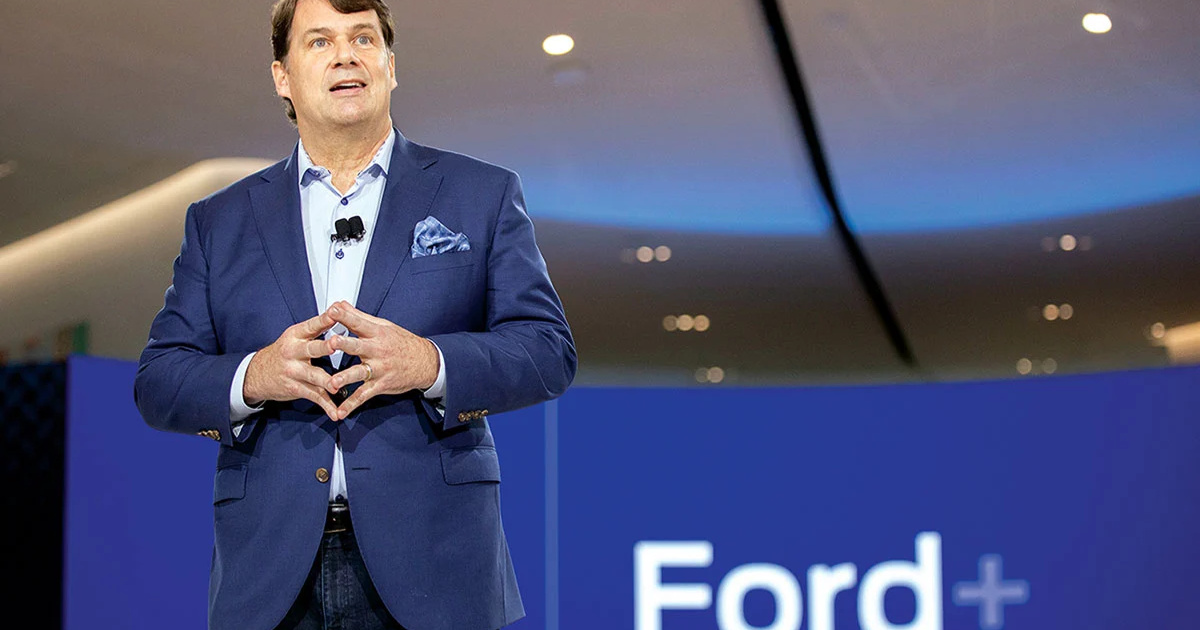
On Tuesday, September 30, Ford CEO Jim Farley gathered around 300 executives and authorities at Ford Pro Accelerate, held at Michigan Central Station in Detroit, and made a direct warning: the so-called “essential economy” of the United States — which includes construction, manufacturing, transportation, energy, and maintenance — has fallen behind China.
“We are very far behind… it’s quite humiliating,” he said, comparing the performance and industrial organization of Americans with Asian competitors.
The speech set the tone for the meeting, focused on discussing labor, productivity, and policies to regain competitiveness.
-
Brazilian Joins Homeownership Consortium, Faces Decade of Dual Payments Totaling $141,000, Surpassing Traditional Mortgage

-
Land Rover to Halt Production in July, Putting 371 Jobs at Risk, as Chinese Automaker Negotiates to Convert Factory to 100,000 Vehicles Annually by 2027

-
Mexican Pest Threatens U.S. Cattle Herds at Historic Lows, Potentially Boosting Brazilian Beef Exports as Burger Prices Soar

-
Brazilian Freight Bill Progresses in Congress with $5,000 Minimum Wage, 70% Advance Payment, and Fines Up to $1 Million, as Agriculture and Industry Warn of Rising Costs and Legal Uncertainty


What Is At Stake In The Essential Economy
Farley argues that the US has neglected for years the sectors that build and maintain the country’s infrastructure.
Without enough electricians, plumbers, welders, and automotive technicians, he claims, factories and data centers do not come to fruition, deadlines are missed, and costs rise.
In a recent interview, he summarized the problem: there is an intention to reindustrialize, “but there is nothing to support this ambition.”
Meanwhile, productivity in these sectors stagnates.
Studies cited by Farley show a disconnect with office areas, which have been capturing gains from digitalization and AI.
The gap, he emphasized, pressures business margins and erodes family purchasing power, an effect that is already reflected in wait times for repairs and construction and in housing prices.
China And The Advantage Of Scale And Coordination
When comparing models, the executive points out that China combined continuous public and private investment, stable industrial policies, and integration between technical education and company demand.
The result, according to him, is a cycle of innovation and lower costs that pressures Western rivals — especially in batteries, electrification, and lean manufacturing.
In a recent interview, Farley admitted that the electric market in the US is expected to be “much smaller” than originally projected and that Chinese competition has raised the bar for efficiency and pricing.
On stage in Detroit, Michigan Governor Gretchen Whitmer reinforced the diagnosis.
“China will dominate,” she stated, arguing that the US cannot underestimate competitors who combine state funding and long-term industrial goals.
She mentioned her visit to the Munich Auto Show in September, where the Chinese presence visibly increased — a trend confirmed by data from the fair and industry consulting firms.
Labor Shortage And The Cost Of Omission
The shortage of skilled workers is currently one of the main knots of American competitiveness.
Surveys compiled by Farley indicate a need for hundreds of thousands of additional professionals just in manufacturing, construction, and automotive services.
Without rapidly expanding technical training, the executive warned, reindustrialization will stall.
Hence the focus of the meeting on enhancing practical learning and partnerships between companies, unions, schools, and local governments to increase job openings and update curricula with robotics, augmented reality, and high-complexity maintenance.
One data point that captured attention was the level of public spending on professional training.
Experts estimate that the US allocates about 0.1% of GDP to active employment and training policies — a level lower than that of various advanced countries.
The contrast with the amount dedicated to traditional higher education illustrates the asymmetry in prioritizing technical careers.

Tariffs, Industrial Policy And Predictability
The debate also touched on trade policy.
Amid discussions about tariffs and incentives during the Trump administration, Farley advocated for regulatory predictability and shorter licensing timelines to unblock projects.
According to him, tariff changes without simultaneous strengthening of training tend to raise costs and create delays, undermining the intention to “bring back” production chains.
Governor Whitmer, in turn, has criticized the effect of erratic trade measures on integrated chains with Canada, reminding that such fluctuations paralyze investments in the automotive industry of the Great Lakes region.
Concrete Signs From Michigan
Besides the diagnoses, the meeting presented commitments.
The State of Michigan, Ford, and the local development agency announced the expansion of digital manufacturing labs and partnerships with public school networks, reaching thousands of elementary and high school students in Detroit and Marshall.
The goal is to bring youth closer to technical careers and create direct channels for internships and jobs.
Ford itself described the Accelerate as a first step towards a national action plan focused on productivity and training in the “essential economy.”
Farley has also advocated for a redesign of the automaker’s electrification strategy, focusing on lower costs and simplified engineering to compete in price ranges pressured by Chinese rivals.
In recent interviews, he admitted to missteps in the early electric models and said he is betting on cheaper platforms and hybrids as a technological bridge to the American market.





-

-

-

3 people reacted to this.