






 Portuguese
  Spanish
  4 min of reading
  0 comments



Brand Celebrates GM’s Centennial in Brazil with Restoration of Icons and Promises Charitable Auctions
Chevrolet is about to revolutionize the classic car market in Brazil. The automaker announced the return of four icons from its history still in 2025: Monza 500 EF 1990, Omega CD 1994, Opala SS 1979, and S10 Rally 2004. This initiative is part of a larger strategy to honor the 100 years of General Motors in Brazil, transforming automotive memories into unique collector’s items.
What differentiates this project from simple restorations is the official restoration and restomod program created by GM. According to available information, each project required at least a year of work to complete, reflecting the level of technical dedication involved in the endeavor.
Faithful Restoration vs. Modern Technology in Restomod
The Vintage program operates on two distinct fronts, allowing collectors to choose between historical preservation and functional modernization. The Monza 500 EF and the Omega CD received restorations that seek to accurately replicate the original factory models.
-
Caoa Changan CS75 arrives for R$ 199,990 with 4.77 m in length, a trunk of up to 1,620 liters, 8-speed Aisin transmission, 180 hp, 37.2 inches in screens, and Zero Gravity seat with massage.

-
Cheaper than a brand new Fiat Cronos, this used SUV offers a giant 516-liter trunk, a 1.0 Turbo 200 flex engine, CVT automatic transmission, and six airbags; the 2023 Fiat Fastback Impetus positions itself as a more complete alternative than the entry-level Cronos for those seeking more for the same budget.

-
The Ford Ranger plug-in hybrid, the same rugged pickup that handles 800 mm of water, becomes a plug-in pickup with a flex-fuel ethanol engine and is chosen as the International Pickup of 2026.
-
New 0km electric car costs less than R$ 50,000 with an 18 hp engine, carries up to 6 people, travels over 100 km per charge, recharges in a regular outlet, and surprises by dispensing with airbags and limiting speed to 50 km/h in Mexico.


In the case of the Omega, the engine was updated with an Irmscher 3.6L kit while maintaining the original aesthetics. The Opala SS 1979 follows the restomod concept, where its 4.1 six-cylinder engine was upgraded with direct injection and paired with a five-speed Tremec transmission, while the suspension received Bilstein shocks, and the steering and disc brakes were modernized.
The S10 Rally 2004, born for competition, underwent adaptations for urban use, transforming a rally machine into a vehicle accessible for the streets. Every detail, according to GM, was worked on meticulously: the body was completely disassembled and repainted, screws finished with original factory zinc plating, and the engine rebuilt with genuine GM stock parts.
Limited Edition and Charitable Auctions Bring Exclusivity
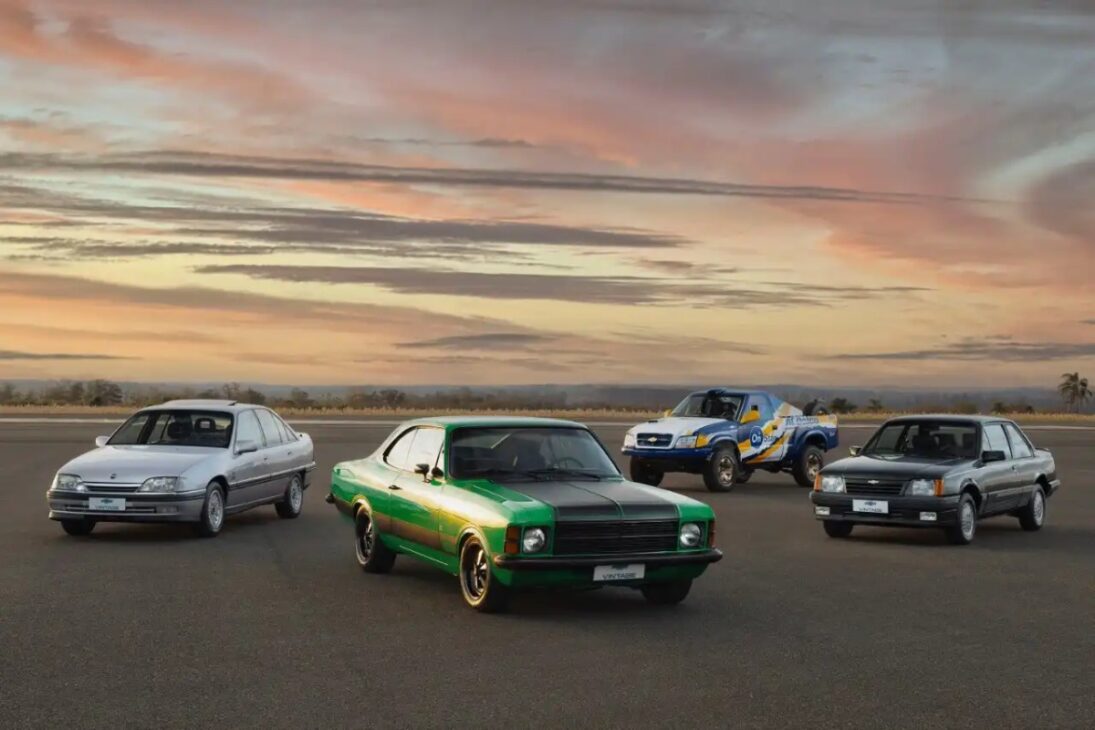
Access to these restored classics will be extremely limited. Chevrolet intends to offer 10 vehicles at auction, with the first one occurring in 2025; two cars will be offered, and the bid can be made in person or virtually. This exclusivity ensures that only truly committed collectors will manage to acquire one of these machines.
A noble aspect of the project is the social commitment. Part of the proceeds will be allocated to the General Motors Institute (IGM), which supports social projects across the country. This transforms each purchase into an investment that goes beyond automotive heritage, contributing to community initiatives.
The Rigor of GM Engineering in Restoration
What legitimizes all this effort is the direct involvement of General Motors engineering. Each Vintage model was developed under rigorous technical supervision, utilizing the brand’s vast historical archive. Restorers had access to original manuals, finishing samples, and a complete bank of technical images, ensuring authenticity in every component.
This precision is remarkable down to the smallest details: the zinc tone of the screws and the texture of the metal finishes were reproduced according to period standards. It is not just about assembling a functional car, but reconstructing a time machine with historical accuracy.
The Phenomenon of Neoclassical Cars and Their Valuation
The Vintage program arrives at a strategic time for the Brazilian automotive market. There is significant growth among collectors and enthusiasts of the so-called neoclassics — models from the 1990s and 2000s that are gaining cult status among generations. Monza, Omega, Opala, and S10 are not just cars; they represent eras, lifestyles, and deep emotional connections for those who grew up following these machines on Brazilian streets.
According to specialized information, the choice of vehicles was based on their relevance in the classic market, gathering beloved cars such as the Opala and Chevette, as well as emblematic pickup trucks. The Opala, in particular, remains an absolute symbol of Brazilian automotive prestige and sophistication.
A Milestone in Brazilian Antiques Automobilism
The Chevrolet Vintage project positions Brazil on par with established markets like the United States and Europe, where automakers maintain official programs for restoration and reissue of historic vehicles. This initiative marks a new phase for antique automobilism in Brazil, elevating the local collector’s experience to international standards.
The combination of historical preservation and functional modernization offers flexibility to buyers, while technical precision ensures lasting investment value. For many, it will be a unique opportunity to own a tangible piece of Brazilian automotive history — not just a car, but a living document of memorable eras.
And you, would you dare to bid on one of these auctions? Which of these classics marked your journey on the streets of Brazil? Leave your comment telling which model would awaken the machine lover in you.





-

-

-

-

-

20 people reacted to this.