






 Portuguese
  Spanish


The tropical forest of Palmyra Atoll has regained strength in the Central Pacific, with the advancement of native trees, the recovery of vegetation in degraded areas, and clear signs of ecological restoration five years after the removal of rats that pressured the island’s ecosystem.
The native vegetation of Palmyra Atoll, in the Central Pacific, has shown a surprising recovery in a few years, with significant growth of trees, the return of seedlings to the forest floor, and the advancement of ecological restoration on a remote island. The effect was recorded by researchers five years after the removal of rats that pressured the ecosystem’s balance.
The operation took place between June 1 and 30, 2011, at the Palmyra Atoll National Wildlife Refuge, about 1,000 miles south of Hawaii. The work brought together the U.S. Fish and Wildlife Service, The Nature Conservancy, and Island Conservation, with technical support and environmental monitoring.
Remote atoll became a laboratory for ecological restoration
Palmyra Atoll is made up of tropical islets in the Central Pacific and hosts one of the most preserved rainforests in the region. Despite its isolated appearance, the ecosystem had been altered by introduced black rats, probably during World War II.
-
Architecture Students Design 8×12-Foot Microhouse for Homeless in Newark, Proposing Compact Shelter as Urban Solution Amid Housing Crisis

-
From Humble Beginnings to Industry Leader: The 30-Year-Old Scrap Dealer Transforming Brazil’s $1.8 Billion Metal Recycling Sector

-
From Hotel Porter to CEO: Brazilian Entrepreneur Leads Travel Agency Serving Major Brands and Generating $270 Million in Revenue

-
From Selling Cleaning Products in Vans to Over 300 Franchises: Entrepreneur Targets $30 Million by Expanding into Professional Cleaning Services and Laundries




The aim of the intervention was not just to remove an invasive species. The goal was to allow the forest to regenerate, protecting native trees, soil, seabirds, land crabs, and reefs linked to the atoll’s ecological balance.
Operation mobilized two helicopters and 41 people
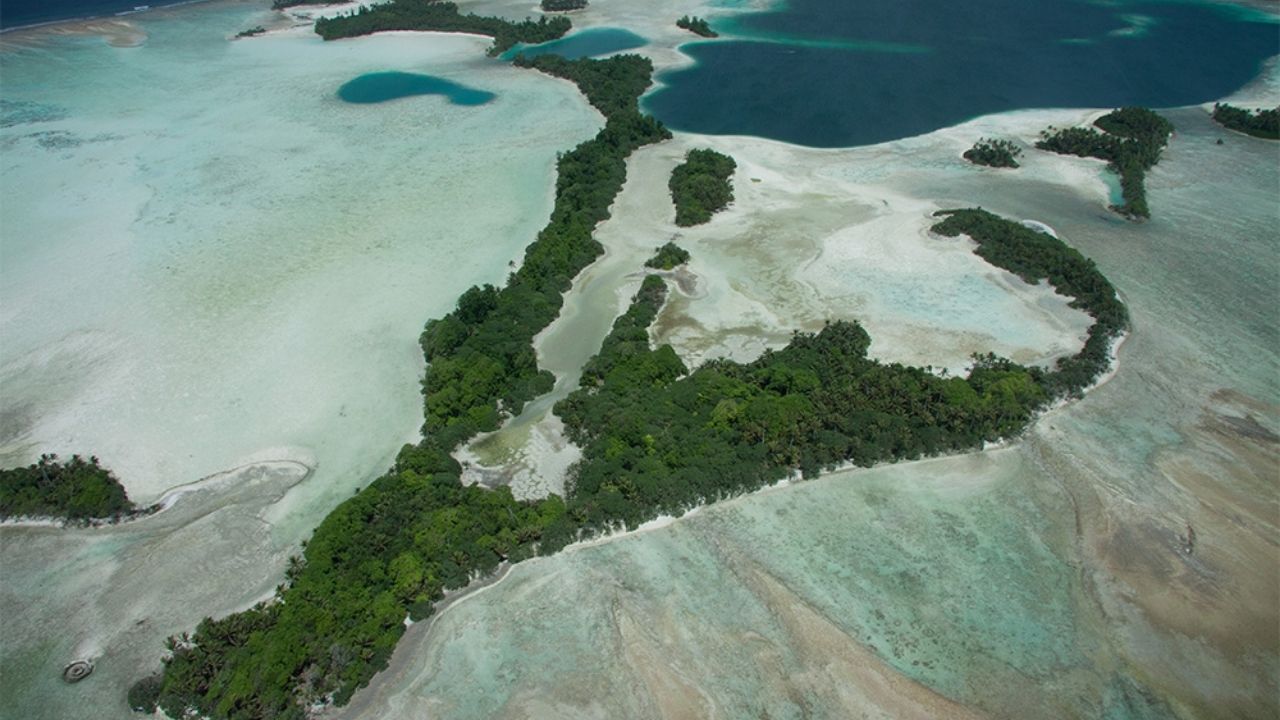
The removal of the rats required an unusual operation for a remote island. According to the technical study, 41 people from five countries participated in the action, using two helicopters, 10 slingshots, 148 bait stations, and manual distribution.
In total, 38,561 kg of bait were applied for rodent control on the 235 hectares of emerging land in Palmyra. The logistics show how restoring a tropical island can require precision planning, especially when the terrain mixes dense forest, coconut trees, flooded areas, and coastal edges.
Technique needed to adapt to the tropical forest
Palmyra presented rare challenges for this type of restoration. Frequent rain could quickly degrade the bait, while land crabs consumed part of the material before it became available to the rats.
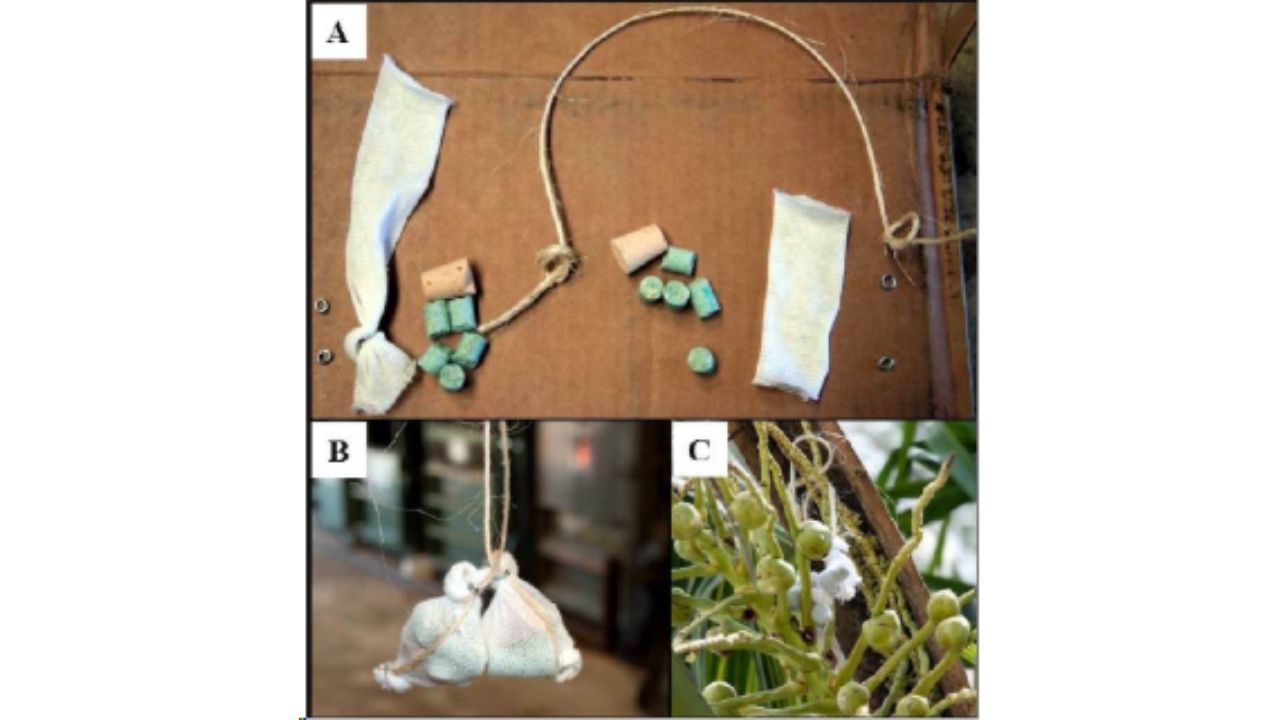
Another problem was the canopy of the coconut trees. As the rodents used the palm trees and elevated areas, the team developed specific methods to deliver bait to the tops of the trees, including structures called “balls,” designed to reach coastal vegetation without spreading material into the marine environment.
Forest responded with thousands of new seedlings
The most striking change appeared in the vegetation. Before the removal of the rats, researchers did not find Pisonia grandis seedlings in study plots. After the operation, the species began to sprout on the forest floor.
For five species of native trees, including Pisonia grandis, fewer than 150 seedlings were counted while the rodents were present. Five years after the removal, monitoring recorded more than 7,700 seedlings. The jump was described as an increase of about 5,000% in native regeneration.
Pisonia grandis returned to occupy the forest floor
The Pisonia grandis is an important tree for the tropical forest of Palmyra. It forms shaded areas, contributes to the structure of the forest, and provides resting and nesting sites for seabirds.
With rats consuming seeds and seedlings, the natural renewal of the species was compromised. When the pressure on seeds and sprouts decreased, the soil began to receive a layer of small growing trees again. This return is a direct sign of ecological recovery.
Native trees support more than the landscape
The restoration of the forest not only changes the appearance of the atoll. Native trees influence temperature, humidity, soil nutrients, and provide shelter for species that depend on tropical vegetation.
When seabirds use the trees, they bring nutrients to the soil through guano. These nutrients feed plants and can reach the marine environment, benefiting nearby reefs and fish. Therefore, the recovery of vegetation can have a chain effect, from the forest floor to the ocean.
Seabirds gained habitat, but they are not the center of the story
The removal of rats also benefited seabirds, as they consumed eggs and chicks. However, the central point of the Palmyra case is broader: the forest once again had conditions to grow.
The birds appear as part of the system, not as the sole focus. What makes the case strong is the connection between vegetation, soil, islands, reefs, and ecological restoration, showing that an action like this can reorganize the entire environment.
Monitoring followed the change for years
Researchers conducted monitoring before and after the operation. The assessments took place before the removal, in 2004 and 2007, and then in 2011, 2012, 2014, and 2016.
This monitoring is important because it prevents treating recovery as a visual impression. The data shows that forest regeneration was measured in the field, with counts of seedlings in transects and plots scattered across the atoll.
Palmyra was confirmed rat-free after the operation
The 2011 operation was described as successful, and the atoll was confirmed rat-free after monitoring. From then on, biosecurity rules became essential to prevent reintroduction.
On remote islands, reinvasion can undo years of work. Therefore, restoration does not end when they disappear. It depends on continuous surveillance, access control, monitoring, and maintenance of the recovered ecosystem.
The project also brought unintended effects
Besides the response of the trees, the removal of the rats had an unexpected effect: the local elimination of the Asian tiger mosquito, Aedes albopictus, according to Island Conservation. This result opened new discussions about indirect relationships within island ecosystems.
Terrestrial crab species were also observed on islets where they had not been recorded before. These signs reinforce that ecological restoration can reveal responses that are difficult to predict before intervention.
Restoration does not end with the removal of the rats
Despite the positive results, Palmyra still faces challenges. Island Conservation itself points out that coconut trees from old plantations have become invasive in parts of the atoll and are part of a later stage of restoration.
This shows that removing rats was just the first phase of a larger process. The rainforest needs continuous management to recover its native composition, reduce unwanted dominant species, and enhance the ecosystem’s resilience.
Islands respond quickly when the pressure decreases
The case of Palmyra draws attention because it shows how islands can react quickly when ecological pressure is removed. The absence of the rats allowed seeds that were previously consumed to have a chance to germinate.
This response does not mean that every island recovers in the same way. Each environment has its own climate, species, usage history, and challenges. Still, Palmyra has become an example of how ecological restoration can yield visible results when there is planning and monitoring.
Reborn forest reinforces debate on remote islands
Islands concentrate a large portion of the planet’s threatened species and are very vulnerable to invaders. Therefore, restoration actions in places like Palmyra tend to have a greater ecological impact than small interventions in continental areas.
In the Pacific atoll, the rats affected seeds, seedlings, birds, and ecological processes. When they were removed, the forest began to show a recovery capacity that had been blocked for decades.
The great lesson comes from the vegetation
The story of Palmyra is not just about eliminating an invasive species. It’s about what happens afterward: trees starting to grow again, soil receiving new seedlings, the rainforest gaining structure, and the entire ecosystem breathing better.
The data of a 5,000% increase in native trees transforms the atoll into a rare case of measurable ecological restoration. It shows that vegetation can respond strongly when the right pressure is removed.
When an island takes root again
Palmyra Atoll shows that a forest can be reborn when the problem hindering its regeneration is tackled with science, logistics, and monitoring. The operation was large, costly in human effort, and complex, but it made room for natural recovery.
The removal of the rats did not erase all the challenges of the atoll, but it allowed the forest to take root again.
Do you think ecological restoration operations on remote islands justify mobilizing helicopters, international teams, and tons of bait when the result can recover an entire forest? Leave your opinion in the comments.






Outstanding work 👏 👌