






 Portuguese
  Spanish


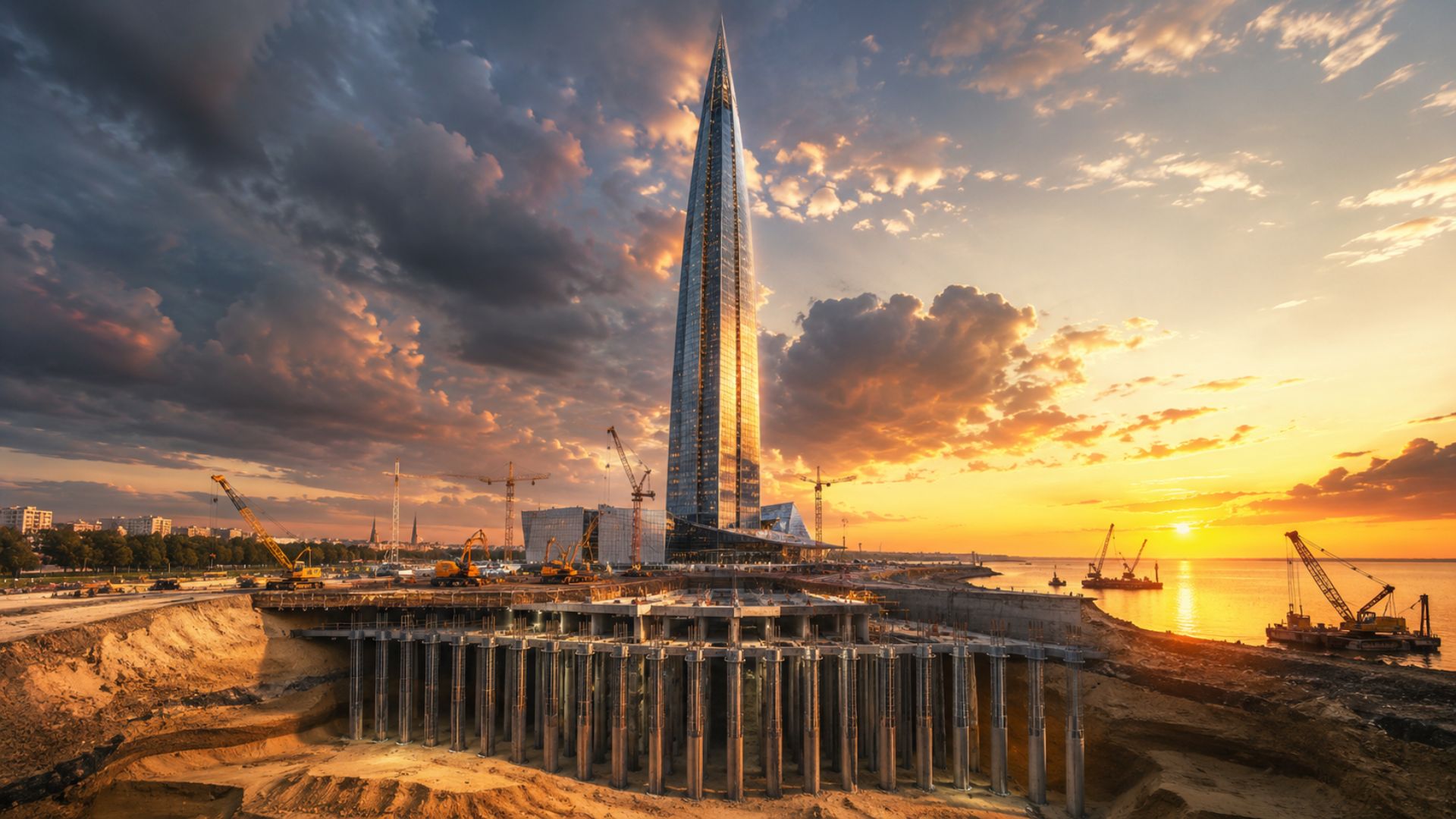


At 462 meters tall, the Lakhta Center is the new headquarters of Gazprom and twists almost 90 degrees from base to top. Built between 2012 and 2018 for around US$ 2 billion, the tallest building in Europe required foundations anchored 25 meters deep.
Russia has erected the tallest building in Europe, the Lakhta Center, on ground as soft as quicksand, on the edge of the Gulf of Finland in St. Petersburg, using 264 piles of 25 meters, 30,000 tons of steel, and about 16,500 glass panels curved one by one. At 462 meters tall, the tower is not only the tallest in Russia: it is officially the tallest structure in the entire European continent.
Behind the glass facade is a project that needed to invent solutions at every stage. The Lakhta Center is the new global headquarters of Gazprom, the largest natural gas company in Russia, and was built between 2012 and completed in December 2018, at a cost close to US$ 2 billion. Designed by British architect Tony Kettle (by the RMJM office), and later detailed by the Russian company Gorproject, the building twists almost 90 degrees from base to top, in a shape inspired by the sails of Baltic ships and the flame of a natural gas flare, and erecting the tower on the unstable ground of St. Petersburg required deep foundations and pieces designed one by one.
A twisted tower on the edge of the Gulf of Finland
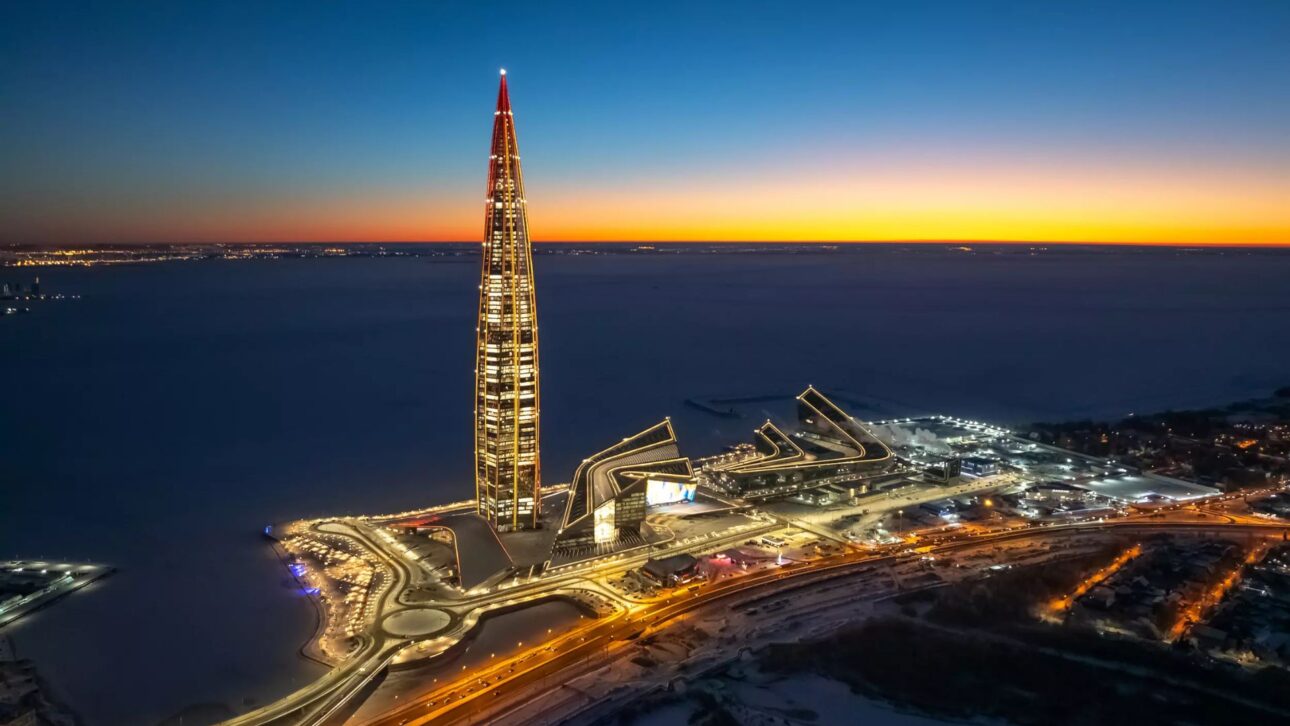
image: © Slava Korolev/
According to information released by the portal Idealista, erecting the tallest building in Europe was, from the start, an almost impossible challenge. The chosen site, on the edge of the Gulf of Finland, has soft ground that resembles quicksand, sea winds that have already toppled entire structures, and a climate where the temperature drops to 20 degrees below zero for months on end.
-
They exchanged the idea of a large house for a 35 m² warehouse, spent US$ 12,000 on the structure, and created a tiny house in Colorado with space to live and work.

-
A newly opened terminal in the middle of the Amazon has begun transporting soy and corn through Amapá, eyeing the queue of ships that is congesting the ports in the South.

-
Goodbye to old tiles: renovation technique without construction transforms bathrooms in a few hours, eliminates debris, and reduces costs with coverings using special paints, high-resistance adhesives, and modern finishes that completely renew the space.
-
Goodbye to the traditional clay brick: Indian startup transforms burnt straw into a carbon-negative brick that costs half, insulates better, and even removes CO2 from the air.


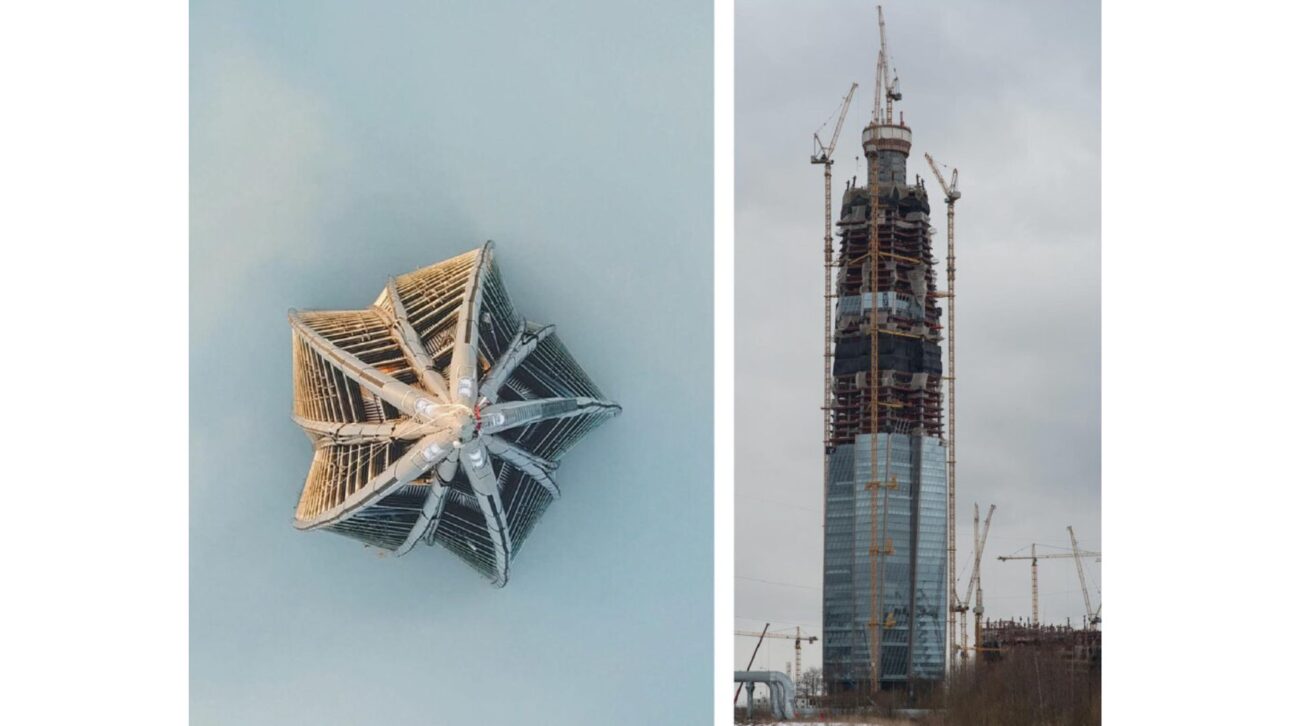
As if that wasn’t enough, the tower couldn’t be straight. It needed to twist 90 degrees from the ground to the top, as if being twisted by an invisible hand. Designed by a British architect, the Lakhta Center gained this shape from two images, the sails of ships crossing the Baltic Sea and the flame of a natural gas flare, an inspiration far from casual, as the tower is the new global headquarters of Gazprom, the Russian gas giant.
The battle against the unstable ground
Before any column could rise, the real battle was hidden underground. The soil of St. Petersburg is treacherous, with layers and layers of soft and unstable terrain, unsuitable for supporting a structure over 460 meters, and the foundations of the tallest building in Europe had to go much deeper to find firm support.
The solution was to drive piles down to a solid layer underground. Engineers installed 264 piles, drilling into the ground until reaching, about 25 meters deep, a geological layer called Vendian clay, almost as rigid as solid rock and capable of functioning as a natural anchor for the entire building. Before that, a massive reinforced concrete diaphragm wall was erected, an underground shield preventing seawater from invading the excavation, and concrete was pumped into the drill holes using the tremie pipe method, which injects it directly at the bottom of the hole to prevent bubbles and flaws. When tested, the piles proved to be two and a half times stronger than the project anticipated.
A foundation that entered the Guinness
On top of the piles, one of the most robust foundations ever made in Russia was born. Engineers built a gigantic caisson foundation, covering 5,600 m² and 16.5 meters high, the base upon which the tallest building in Europe would stand.
The heart of this base set a world record. The structure is formed by an upper slab, a lower slab, and 10 radial concrete walls, in a double T shape that distributes the enormous weight of the central core, and at the center is a base slab 3.6 meters thick. The concreting of this slab entered the Guinness World Records as the largest continuous pour ever made for a super tall building, a feat that, in the Russian winter, risked cracking from the heat of curing, and so engineers erected gigantic temporary shelters over the work and installed heating systems to control the temperature centimeter by centimeter.
Climbing 462 meters with millimetric precision
According to the lakhta portal, With the foundation ready, the most daunting part for the engineers began. It was necessary to climb more than 460 meters in an almost straight line, amidst the Baltic winds. The structural heart of the tallest building in Europe is its central concrete core, the backbone that supports everything, erected with a self-climbing formwork system.
Instead of dismantling and reassembling the forms on each floor, the system rose by itself. It used hydraulic jacks guided by rails fixed to the already concreted structure and was divided into two independent fronts, one to the north and another to the south, to speed up the work, while other teams installed the 15 main structural columns and steel beams. As the tower approached 462 meters, precision became a matter of life and death: a deviation of a few millimeters on the lower floors could leave the top displaced by several meters, so the engineers set up a 24-hour monitoring system, with high-precision sensors and satellite positioning.
The 90-degree twist and custom-made steel
Seen from above, the floor plan of the tallest building in Europe has the shape of a five-pointed star. These points slowly rotate around the central axis, making the entire building complete a turn of almost 90 degrees between the base and the top.
To support this movement, the designers abandoned conventional columns. They opted for composite columns, each with a structural steel core encased in reinforcement and high-strength concrete, the first time the technology was applied on such a large scale in Russia. Since each floor has a different geometry from the previous one, most of the steel pieces are unique, individually designed for a single exact point, totaling 189,000 metal components and 30,000 tons of steel.
The spire and the largest cold-bent glass facade in the world
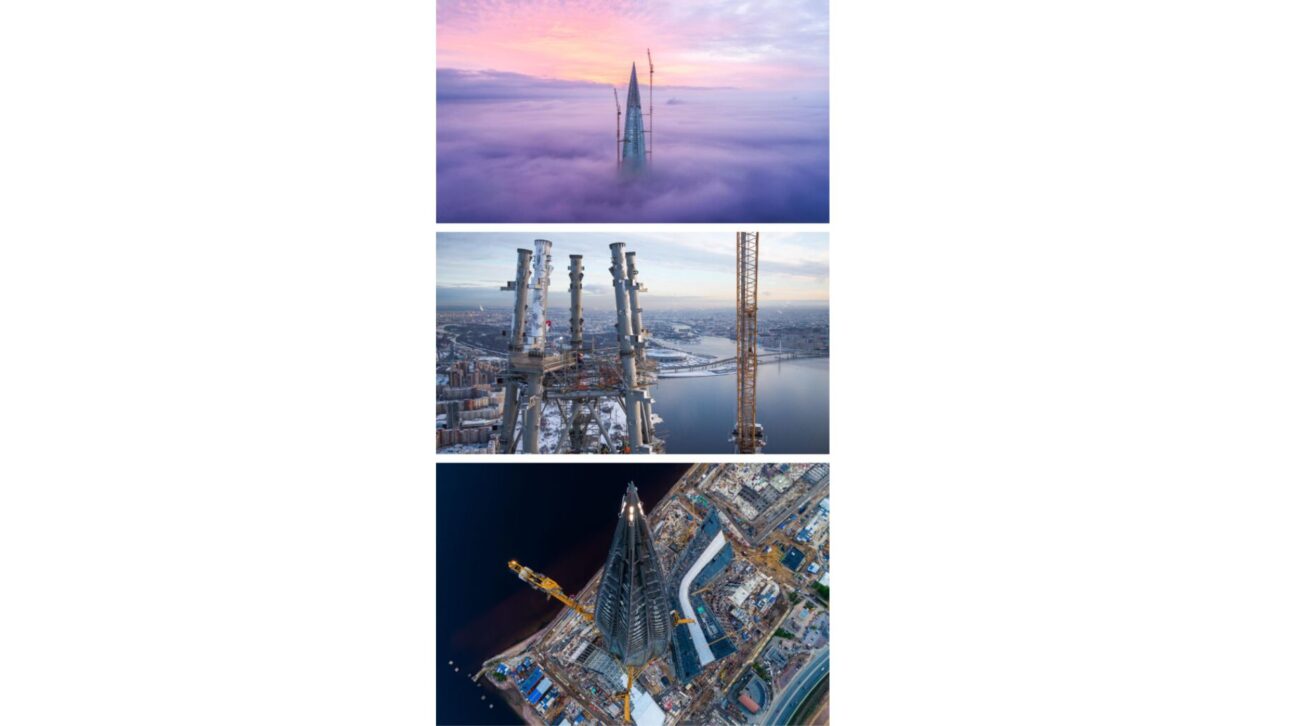
The most delicate part of all was the top. The spire of the tallest building in Europe was erected around the concrete core, and just its steel structure weighs more than 2,000 tons; previously assembled on the ground, it was hoisted by giant cranes to hundreds of meters high, forming a tapered pyramid with eight main levels, steel tubes up to 1.5 meters in diameter, and an 8-meter element marking the highest point.
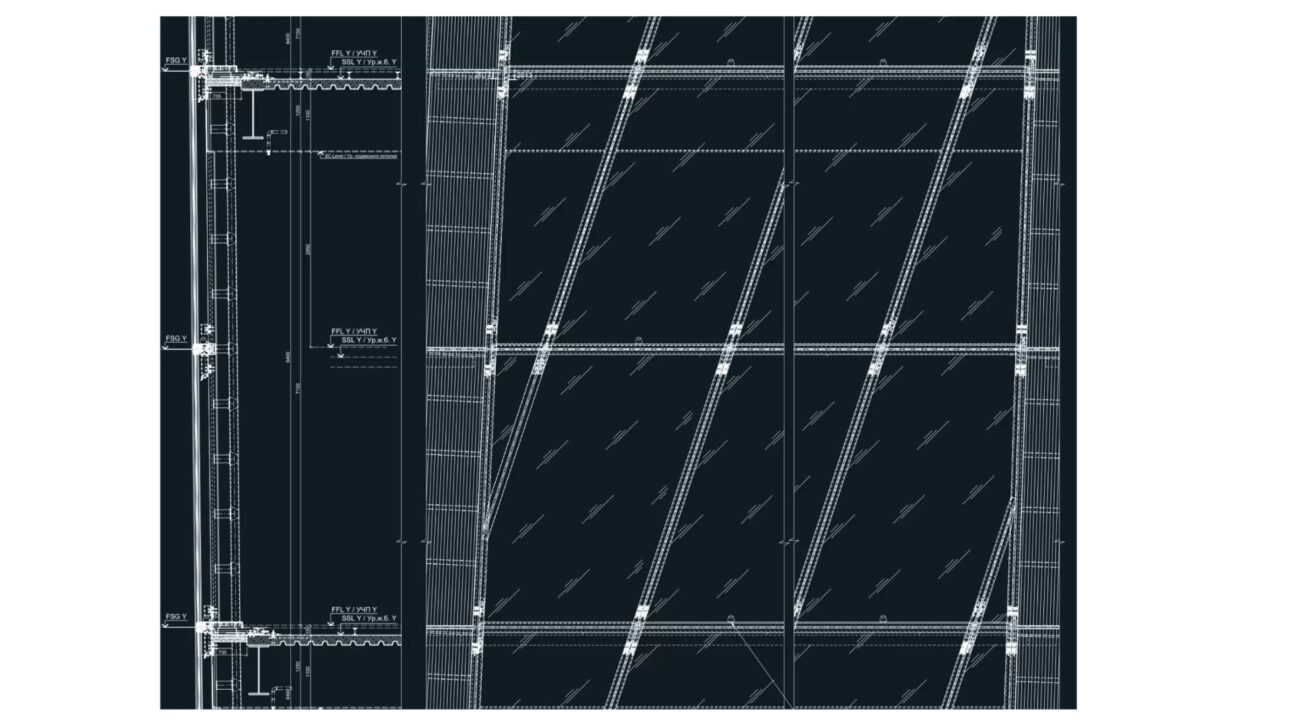
But what truly differentiates the tower is its glass skin. The façade is made up of about 16,500 cold-bent glass panels, each with a different shape, in the largest cold-bent glass façade system ever applied to a tall building in the world, with modules 4.2 meters high, 11 m² in area, and almost 740 kilograms each.
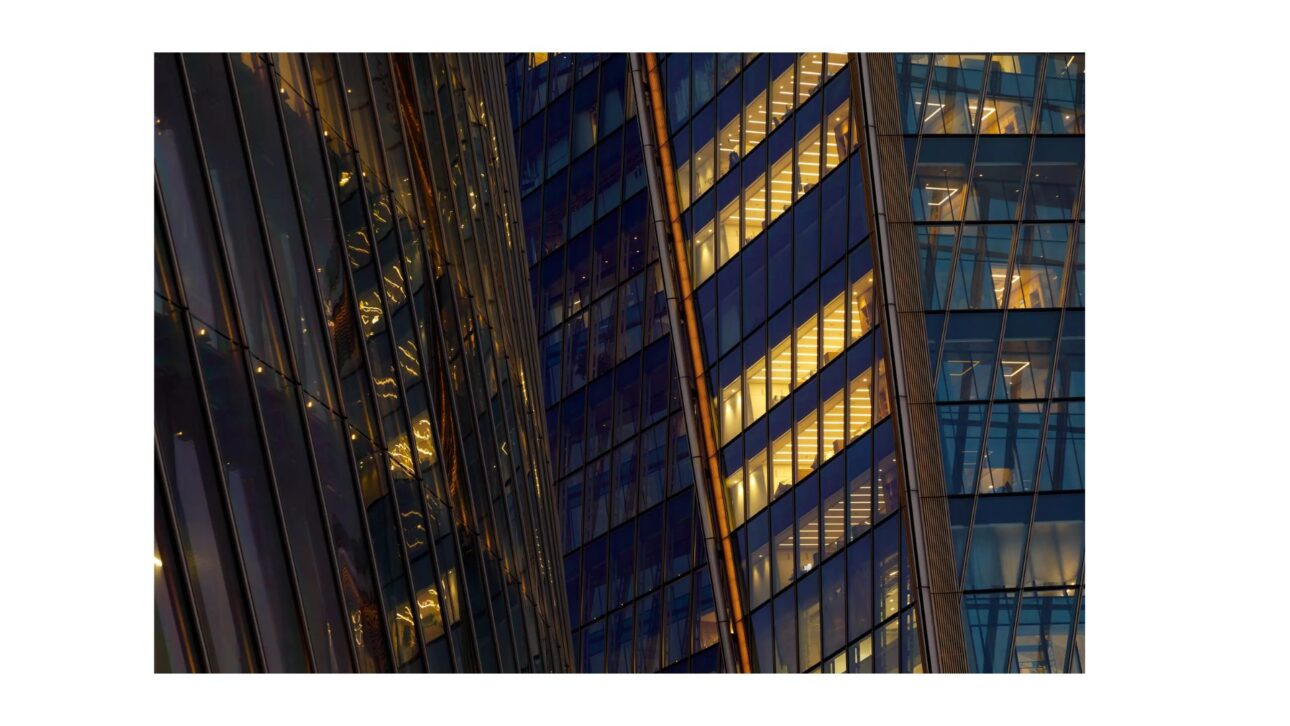
Instead of shaping the curves with heat in a factory, most of the bending was done during installation, gently bending the glass within aluminum frames on-site to reduce costs, and behind this outer layer, a double-skin system with an air cushion helped save, according to the project’s engineers, about 40% of energy compared to conventional glass, in a tower served by 38 high-speed elevators.
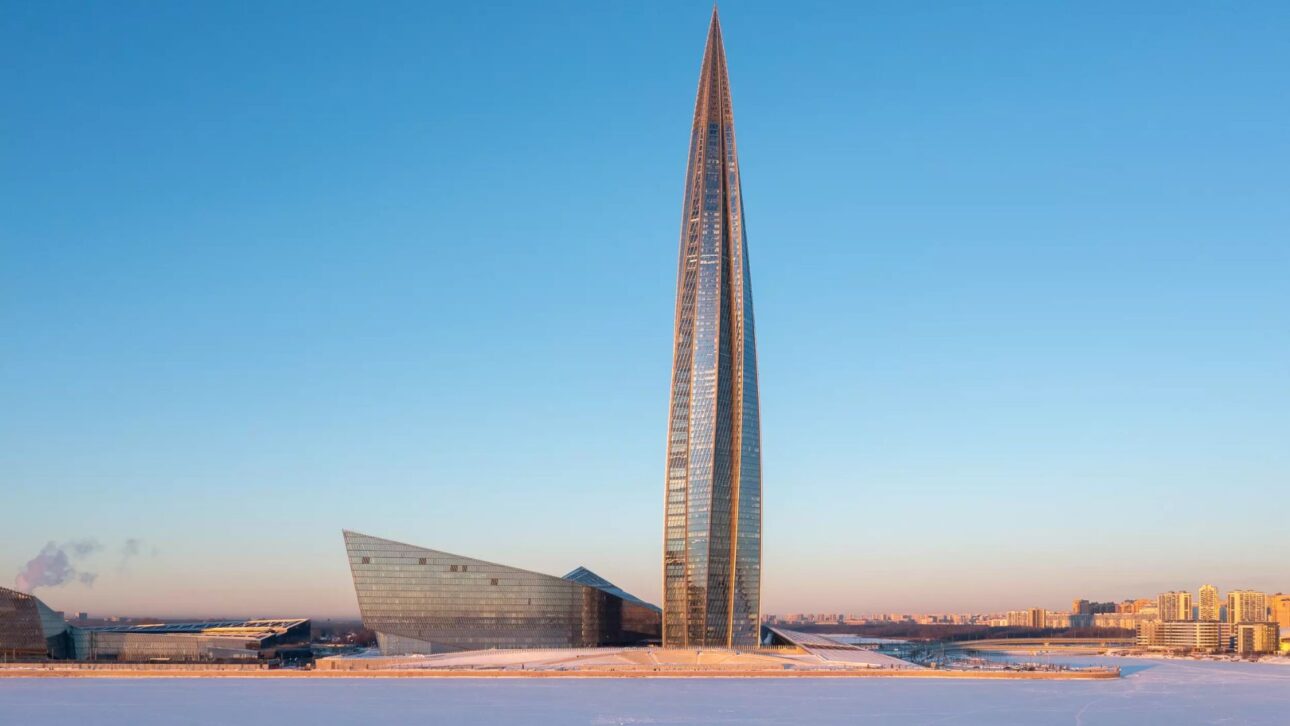
Rising 462 meters over a ground as soft as quicksand, Baltic winds, and extreme cold, the tallest building in Europe, the Lakhta Center, became a twisted glass tower and the global headquarters of Gazprom, proving that one of the world’s most complex super-tall projects could be built in one of the planet’s most hostile climates.


From the foundation that entered the Guinness World Records to the largest cold-bent glass façade ever made, each step marked an advance in modern construction, and the tower transformed not only the secular skyline of Saint Petersburg but the entire surroundings of the Lakhta neighborhood, with new roads, transport terminals, and public spaces in a previously forgotten area. Completed in 2018, the building established itself as a symbol of Russia’s modernization ambition in the 21st century.
And you, what do you think? Do super-tall buildings like this truly represent the future of modern cities, or are they, at heart, just symbols of power and national ambition? Share your opinion and exchange ideas with other readers about engineering and construction, with respect for different views.





It’d be an interesting drone target
Your mom’s house too…