






 Portuguese
  Spanish
  5 min of reading
  0 comments



China Accelerates Its Technological Infrastructure Focused On Artificial Intelligence, Expanding Computing Capacity And Investing In Advanced Chips. The Advance Promises To Transform Sectors Like Smart Cities, Health, Agriculture And Augmented Reality In The Coming Years.
The China projects an increase of more than 40% in its intelligent computing power by 2025, according to a forecast presented at the China Computing Power Conference, which ended on Sunday.
According to the Global Times newspaper, the country already holds the second position globally in computing capacity and aims for the accelerated expansion of infrastructure to support large-scale artificial intelligence applications, from smart cities to augmented reality.
Projected Growth And Global Position
Event organizers reported that, by June 2025, China will reach 788 EFLOPS of intelligent computing power, a significant advance from the 90 EFLOPS recorded at the end of 2024.
-
Helicopter Drops 180 Tons of Sand and Gravel on Swedish River to Revive Ecosystem Damaged by Decades of Exploitation

-
Brazilian Company Launches Retro Smartphone with 48 MP Camera, T9 Keyboard, and Privacy Features for Social Media-Free Use

-
Self-Taught Chinese Farmer Builds 5-Ton Submarine from Scrap, Launches It in Anhui River
-
Invisible Induction Technology Enables Wireless Power for Blenders, Coffee Makers, and Air Fryers, Reducing Countertop Cables





Last year, the country’s total computing capacity summed up to 280 EFLOPS, with 32% specifically related to intelligent computing.
Officials from the National Data Administration stated that China is only behind the United States in this indicator, a scenario that reinforces the strategy to expand processing supply to support the new wave of AI.
Still during the conference, Liu Liehong, head of the agency, highlighted robust investments in data centers and high-speed networks.
The expectation presented was for annual growth above 20% in infrastructure and investments exceeding 500 billion yuan from leading internet companies in the next three years, committing to new storage capacities, interconnection, and energy efficiency.
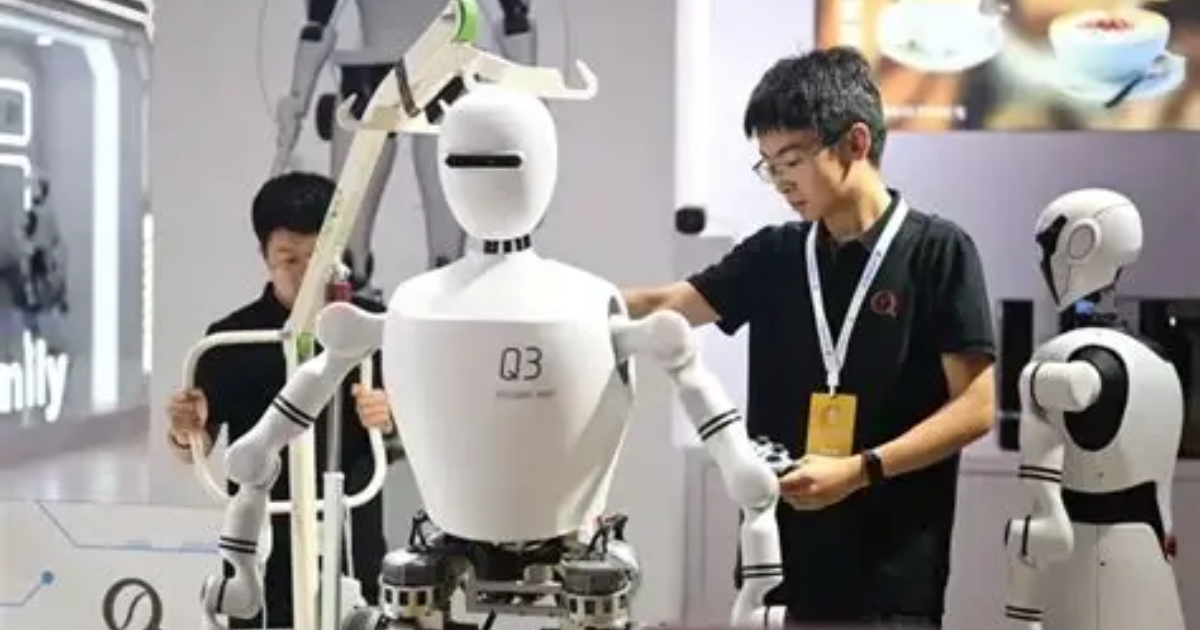
AI In Use: From Cities To Farms In China
Researchers at the meeting stated that the expansion of processing accompanies the rapid adoption of generative models, autonomous vehicles, urban management platforms, and industrial automation.
Wang Peng from the Beijing Academy of Social Sciences cited the “low-altitude economy” as an example of a technological frontier that requires high computing power for navigation and safety of unmanned aircraft.
In health, AI medical imaging applications speed up the reading of exams and assist doctors in more accurate diagnoses.
In education, adaptive systems adjust content to the student’s pace, while immersive virtual and augmented reality environments enhance classroom engagement.
In agriculture, the same technological push enables precision planting and agricultural robots for harvesting, reducing waste and optimizing resource use.
Scaling Expansion And Use Cases
According to the event committee, more than 23,000 projects have been registered in national computing power application competitions, with solutions incorporated into sectors such as finance, energy, and health.
Experts believe that AI has moved from being concentrated in laboratories and large urban centers to permeate the routine of businesses and public services.
“The increase in computing power scale indicates a significant transformation is underway,” said Zhang Xiaorong, director of the Cutting-Edge Technology Research Institute.
For him, AI “spreads rapidly across Chinese society,” supported by a more extensive infrastructure and new business models.
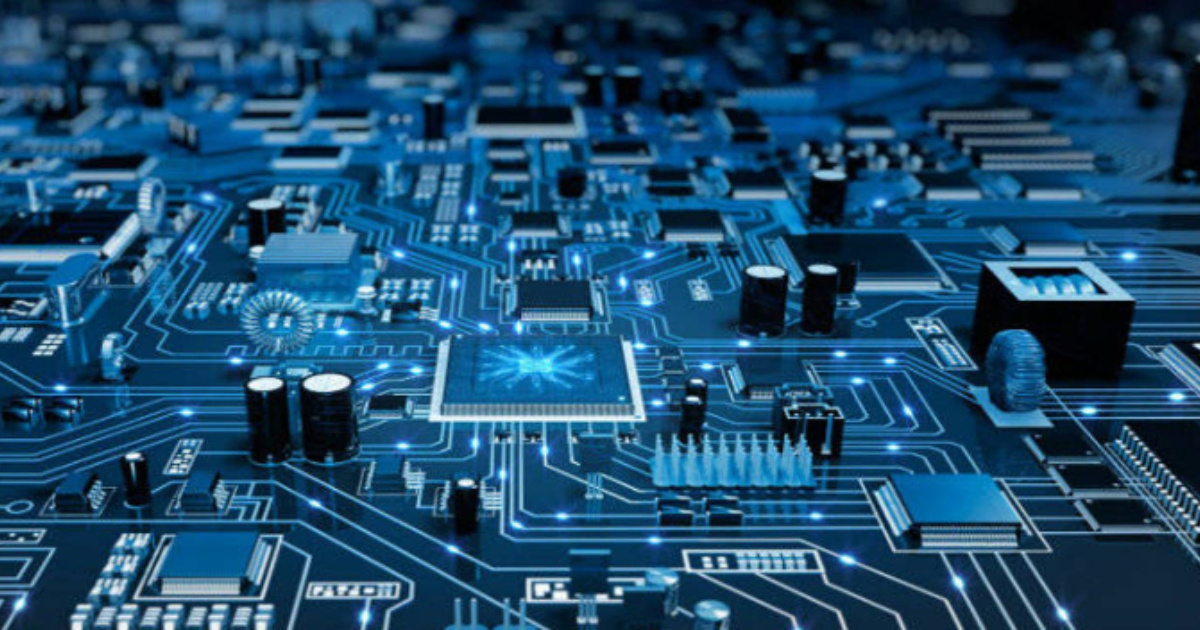
Infrastructure And Chips In Focus Of MIIT
The Ministry of Industry and Information Technology (MIIT) announced guidelines to optimize the intelligent computing mesh, integrating resources between regions and seeking complementarity between the east and west of the country.
Vice Minister Xiong Jijun stated that the department will work to balance supply and demand of resources, build an interconnected system, and promote coordination among hubs, in addition to stimulating advances in chips and foundational technologies.
The guidance aims to reduce bottlenecks, standardize services, and improve the efficiency of data use and processing.
This strategy targets not only new data centers but also low-latency interconnections, network optimization, and stable energy sources to support intensive AI training and inference loads.
At the same time, the industrial policy aims to accelerate the adoption of materials and processor designs that consider energy efficiency and total cost of operation.
FP8 And DeepSeek-V3.1: Efficiency At The Center
Among the technical highlights of the conference, the consortium behind the DeepSeek-V3.1 model presented optimizations for the new generation of domestic chips.
The technology adopts the FP8 format, which reduces numerical representation to 8 bits, aiming to double processing efficiency in certain scenarios and enhance the training of large-scale models.
Researchers emphasized that this standard allows for better hardware utilization while maintaining the necessary quality for language and computer vision tasks.
Zhang Xiaorong emphasized the feedback loop between chip, computing power, and AI: increasingly complex applications raise the demand for processing; this pressure drives the development of more powerful chips; and the new chips, in turn, enable more efficient AI systems, feeding back the need for infrastructure.
Economic Impact And Horizon Until 2035
The strengthening of infrastructure and the diffusion of intelligent computing consolidate the digital economy as a growth driver.
For Rao Shaoyang, director of the China Telecom Research Institute, AI’s contribution to the Gross Domestic Product could exceed 11 trillion yuan by 2035, about 4% to 5% of the economy.
In his assessment, the demand for processing is likely to multiply by ten or even a hundred times as more sectors incorporate algorithms into daily activities, from customer service to predictive maintenance in factories.
Meanwhile, companies and local governments intensify pilots and commercial scales of AI solutions.
Cities adopt traffic management, environmental monitoring, and connected urban services platforms.
Industries expand automation with data-driven maintenance. Energy networks adjust supply and consumption in real-time.
In parallel, universities and research centers strengthen talent training and technology transfer to the market.
Coordination Challenges And Next Steps
The acceleration, however, imposes challenges. Coordination among regions requires common technical standards and mechanisms for resource sharing that prevent idleness.
The expansion of processing also imposes goals for energy efficiency and sustainability, a sensitive topic in large-scale projects.
Finally, experts point to the need for integration among data, algorithms, and hardware to capture productivity gains and avoid bottlenecks in training and deployment stages of models.
Still, the targets outlined at the conference indicate a long-term vision to consolidate infrastructure, strengthen the chip base, and expand use cases with a direct impact on the real economy.
If confirmed, the projected numbers for 2025 and the initiatives from MIIT could redefine the computing supply landscape in the country and accelerate the race for leadership in AI.




Be the first to react!