Portuguese
  Spanish


Brazil participated as the guest country of honor at the China Space Day 2026, in Chengdu, reinforcing a 38-year space partnership that has already launched CBERS program satellites used to monitor the Amazon. The two countries are now negotiating the CBERS-6, equipped with radar that generates images even in the rain, and the CBERS-5, which will be the first geostationary satellite of the cooperation. The mission expands Brazilian technological autonomy in generating environmental data.
China invited Brazil as the guest country of honor at the China Space Day 2026, the main event of the Chinese space sector, held in Chengdu, Sichuan province. The distinction reflects a cooperation that has lasted 38 years and produced the satellites of the CBERS (China-Brazil Earth Resources Satellite) program, used daily by systems like Deter and Prodes to monitor deforestation, fires, and land use in the Amazon and other Brazilian biomes. The MCTI delegation was led by chief of staff Rubens Diniz and included representatives from the Brazilian Space Agency and INPE.
The next steps of the partnership go far beyond repeating what has already been done. Brazil and China are negotiating the development of the CBERS-6, a satellite equipped with radar technology capable of generating images even during rain and cloudiness, a limitation that current optical satellites cannot overcome. Also under discussion is the CBERS-5, which will be the first geostationary satellite of the cooperation, expanding the national capacity to generate meteorological and environmental data without relying on information provided by other countries.
What is the CBERS program and why it matters to Brazil
According to information released by the GOV, the CBERS program is the largest bilateral space technology cooperation between a developing country and China. Initiated in 1988, the project has already launched multiple remote sensing satellites into orbit that provide images of the Earth’s surface used in environmental monitoring, urban planning, natural resource management, and disaster response. The data is distributed for free, benefiting not only Brazil and China but also other nations in South America and Africa.
-
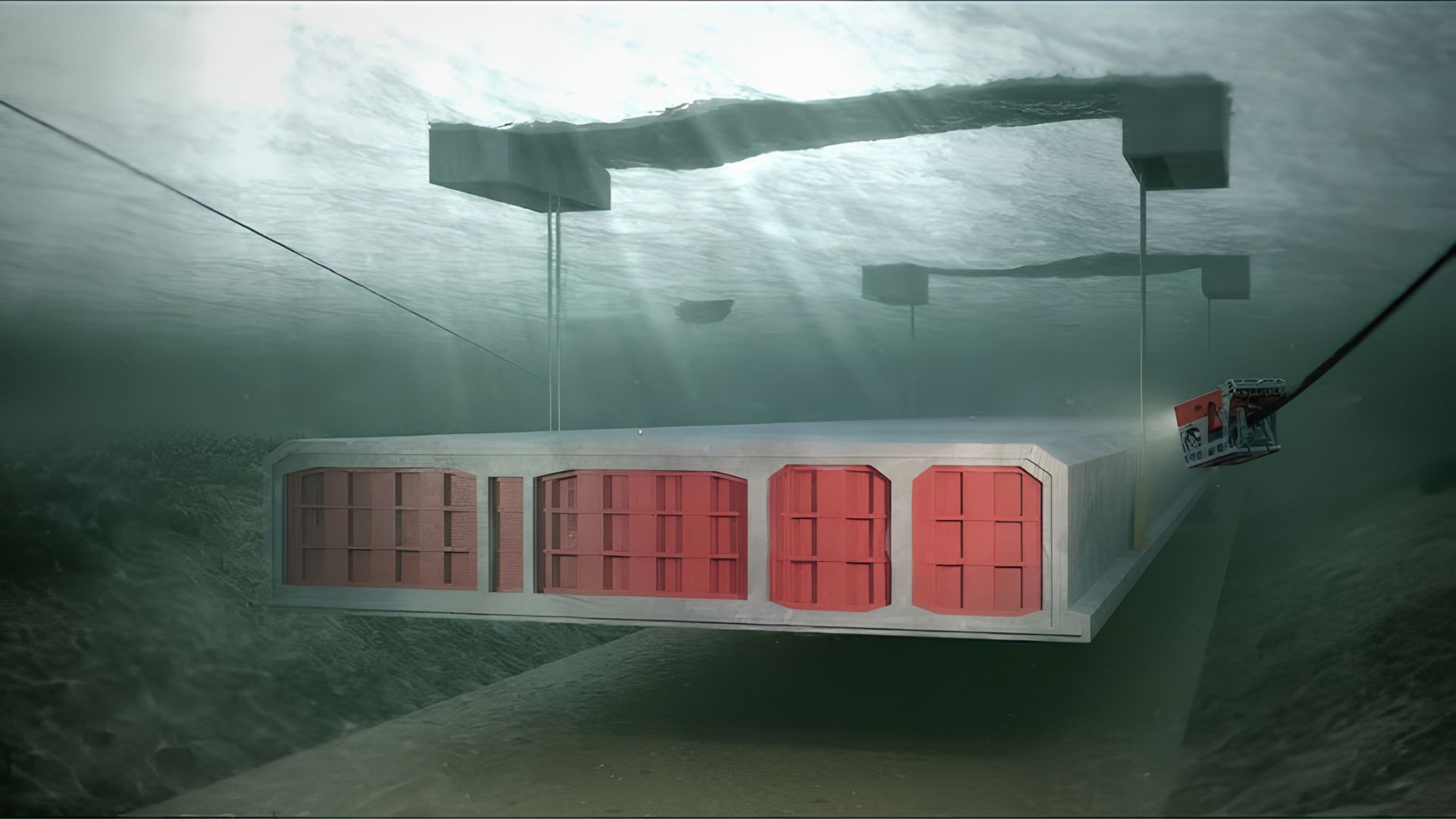
South Korea Tows 18 Concrete Blocks Weighing Up to 48,000 Tons Over 36 km to Construct a 3.2 km Underwater Tunnel Between Busan and Geoje, Installed Nearly 50 Meters Deep

-
Chinese Tianwen-2 Mission Targets Near-Earth Asteroid After 1 Billion Kilometer Journey to Collect Ancient Samples, Aiming to Uncover Clues About Water, Organic Compounds, and Solar System Origins Before Heading to a Comet

-
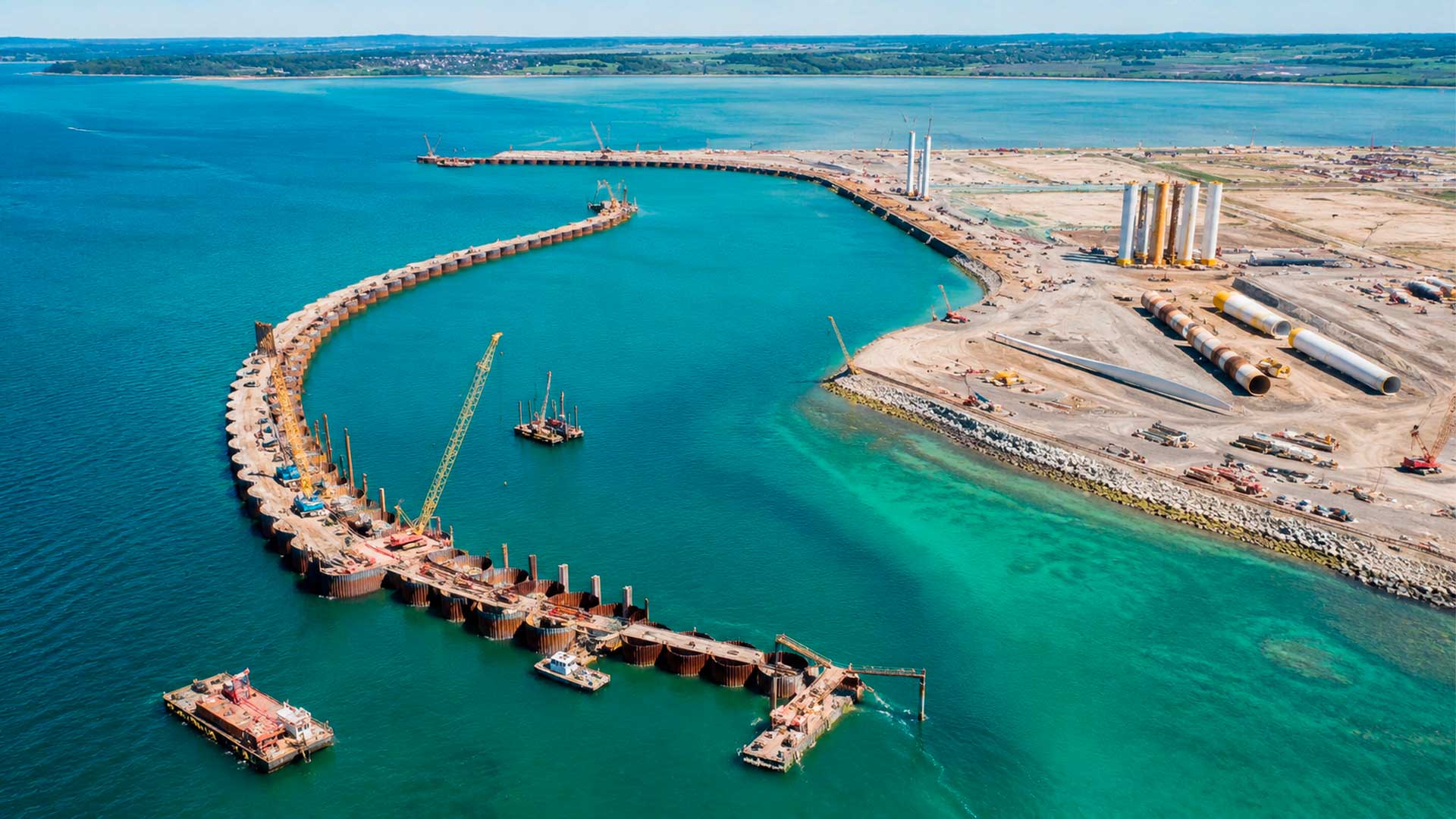
France Constructs 900-Meter Sea Wall in Brest, Expands Port by 14 Hectares for Marine Renewable Energy Hub
-
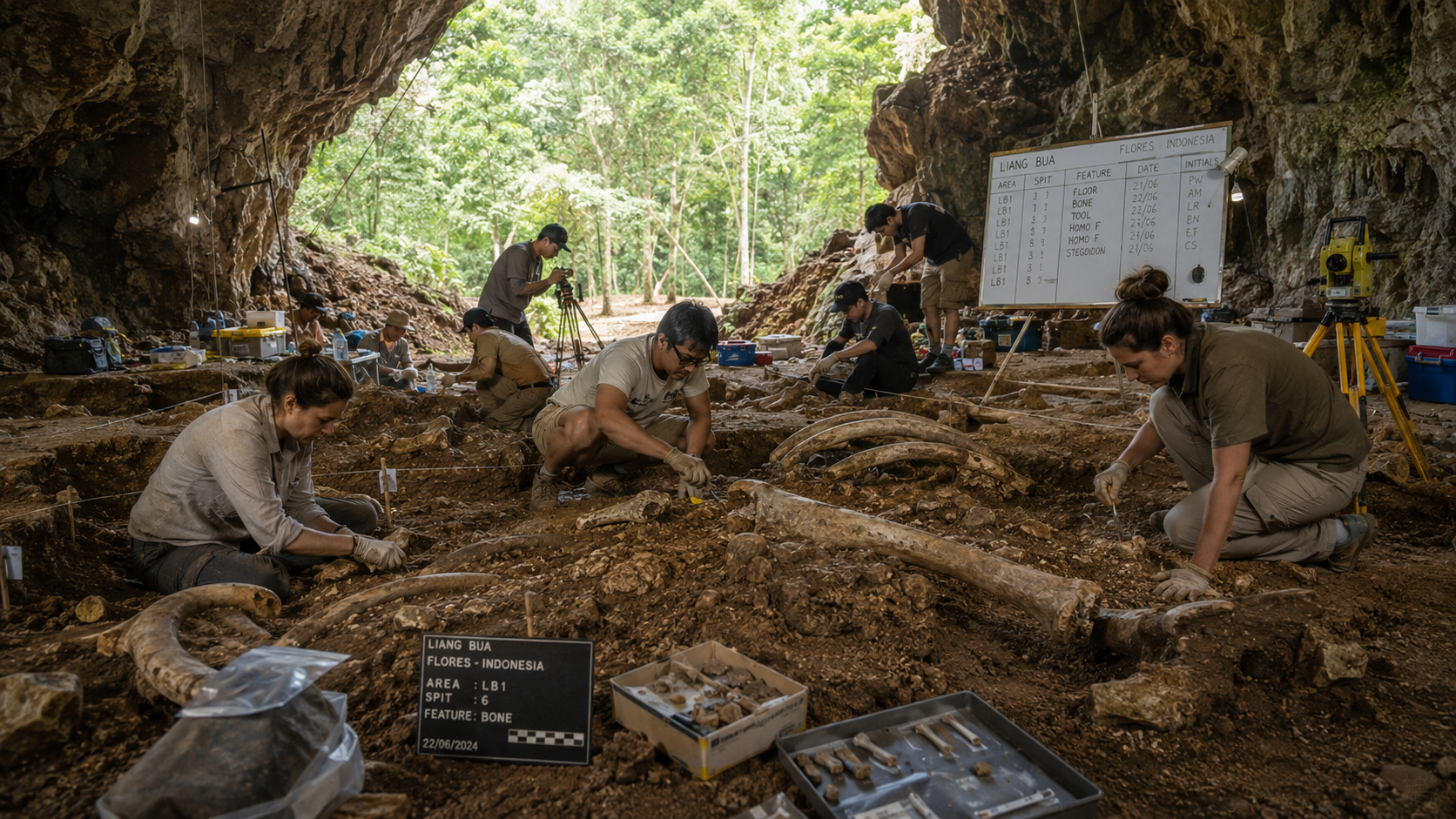
New Discovery Suggests Prehistoric “Hobbits” May Have Survived on Komodo Dragon Remains



For Brazil, CBERS is the backbone of Amazon monitoring. The Deter and Prodes systems, operated by INPE, use CBERS satellite images to detect deforestation in near real-time and calculate annual forest loss rates, information that guides Ibama’s enforcement operations and public conservation policies. Without its own satellites, the country would rely entirely on data provided by foreign agencies, compromising autonomy in managing the planet’s largest environmental asset.
The CBERS-6 with radar that sees through the rain
The main limitation of optical satellites is that they depend on clear skies to generate useful images. In the Amazon, where cloud cover is intense for much of the year, this restriction means large areas remain invisible for weeks or months, precisely during periods when deforestation can progress undetected. The CBERS-6 solves this problem with synthetic aperture radar (SAR) technology.
The radar emits electromagnetic waves that penetrate clouds and rain, reflect off the surface, and return to the satellite, generating images regardless of atmospheric conditions. For Amazon monitoring, this means continuous surveillance capability 365 days a year, without the invisibility windows that deforesters exploit to operate during the rainy season. China has advanced experience in satellites with radar and will transfer part of this technology to the joint project.
The CBERS-5: the first geostationary satellite of the partnership
While previous CBERS satellites operate in low orbit and pass over each point on Earth every few days, CBERS-5 will be positioned in geostationary orbit, at an altitude of about 36,000 kilometers, where it will remain fixed in relation to a point on the planet. This position allows continuous real-time monitoring of an entire region, something that low-orbit satellites cannot do.
For Brazil, its own geostationary satellite expands the capacity to generate meteorological data, monitor extreme weather events, and predict natural disasters in advance. The initiative reduces dependence on information provided by American and European satellites and gives the country autonomy to operate its own weather forecasting and disaster warning systems. Cooperation with China makes a project feasible that Brazil would hardly be able to execute alone due to the cost and technological complexity involved.
What else Brazil and China discussed at China Space Day
In addition to CBERS, the Brazilian delegation presented other fronts of scientific cooperation that expand the partnership beyond remote sensing. Among the initiatives are the Sino-Brazilian space weather laboratory, scientific experiments with the Bingo radio telescope, and the articulation for a satellite constellation within the BRICS framework. Academic training and exchange actions were also discussed, with opportunities for Brazilian students in Chinese institutions.
President Lula sent a letter to President Xi Jinping, read during the event, in which he highlighted that the satellites of the CBERS program contribute directly to environmental monitoring and territorial planning. “China Space Day celebrates China’s remarkable advances in the space field and reaffirms the value of international cooperation for the peaceful use of outer space,” wrote the Brazilian president, signaling that the partnership has support at the highest political level of both countries.
What the space partnership with China means for Brazilian sovereignty
Cooperation with China in the space sector is one of the rare examples where Brazil manages to participate in high-tech projects as a partner, not as a buyer of ready-made products. Each CBERS satellite developed jointly transfers knowledge to Brazilian engineers and scientists, strengthening the national capacity to design, build, and operate space systems with increasing autonomy.
In a global context of geopolitical tensions, the partnership gains an additional strategic dimension. Brazil demonstrates that scientific collaboration can function as an instrument of development and peace, as highlighted by Rubens Diniz during the event. For a country that depends on monitoring the Amazon to fulfill international climate commitments and protect the world’s largest tropical biome, having its own satellites is not a technological luxury: it is a sovereign necessity.
Did you know that Brazil and China have been building satellites together for almost four decades, or did you think the country relied entirely on American and European technology to monitor the Amazon? Tell us in the comments what you think about the space partnership and if you believe Brazil should invest more in its own satellite technology.