






 Portuguese
  Spanish


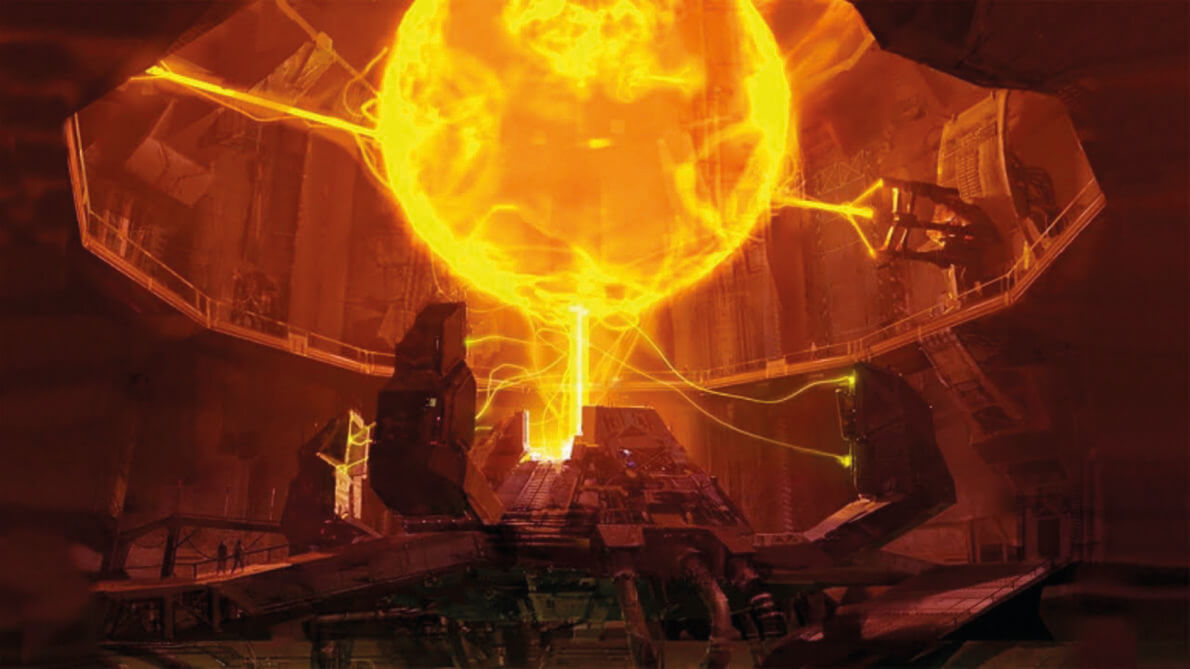


The Artificial Sun Of China Is Now Operational And Promises To Be The Solution For A Renewable Future. The ‘New Sun’ Is 13 Times Hotter Than Our Star, The Equipment Can Generate 500 MW Of Energy.
The China Once Again Positions Itself At The Technological Forefront, This Time With Its Scientists Launching Their Own Artificial Sun. This Remarkable Innovation Marks A Significant Turning Point In Space Research And Exploration, Demonstrating That China Is Ahead Of Other Nations In The Development Of Advanced Technologies. The Chinese Artificial Sun, A Clean And Inexhaustible Energy Source, Promises To Have Profound Implications For Global Energy Sustainability In The Future.
Understand How The Artificial Sun Of China Works
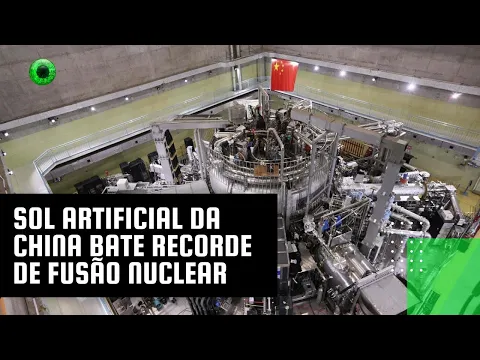

The energy from nuclear fusion is a promise that has been sought for decades in various countries, and China is a step ahead of this great feat. The country has developed its own artificial sun, a nuclear fusion research device that is expected to pave the way for clean energy similar to the real sun.
The completion of the reactor was announced, and it began operating in 2020. The real name of the artificial sun is HL2M, and it was built by the China National Nuclear Corporation And The Southwestern Institute Of Physics. The reactor is located in Leshan, where it was built to research fusion technology.
-
China Develops Custom 140-Ton Electric Mining Truck with 770 kWh Swappable Battery, Deploys 290 Units in Xinjiang’s Largest Zinc Mine

-
Meta to Launch Arena, a New Prediction App Targeting 3.56 Billion Users, Competing with Polymarket and Kalshi

-
Scientist Challenges Famous Human Evolution Theory, Argues Homo Sapiens Evolved Gradually Over Thousands of Years
-
15-Year-Old American Builds Ocean Generator with PVC Pipe and 3D-Printed Propeller for $12, Wins National Prize, Presents at White House, and Makes Forbes 30 Under 30 List




To understand the artificial sun of China, it is first necessary to explain what nuclear fusion is. As the name suggests, it is a process in which the nucleus of two light atoms comes together to form a heavier nucleus.
With each fusion reaction, a large amount of energy is released. This is how the sun and stars function, where millions of reactions occur every second in which hydrogen nuclei, for example, fuse and generate helium nuclei.
Artificial Sun Of China Reaches Temperatures 13 Times Higher Than The Original Sun
Although compared to the star that lights up our planet, the artificial sun of China can reach temperatures 13 times higher than our star. The HL2M will be able to reach 200 Million Degrees Celsius, 360 Million Degrees Fahrenheit. For comparison, the sun reaches 15 million degrees Celsius in its core.
Physics professor Gao Zhe from Tsinghua University in Beijing stated in an interview that scientists worldwide still have many problems to overcome in the field of nuclear fusion. There is no guarantee that all these problems will be resolved, but if they are not, definitely they won’t be resolved.
The artificial sun of China is what engineers call a Tokamak, a machine developed to harness the energy from nuclear fusion. It works like a vacuum chamber in the shape of a ring, where gas, under heat and pressure, converts into plasma and initiates fusion. The HL2M Is The Largest And Most Advanced Tokamak Created By China, According To The China National Nuclear Corporation (CNNC).
New Artificial Sun Can Generate 500 MW Of Power By 2025
According to its creators, the artificial sun of China can process more than double the plasma compared to other devices in the country. It is an important support equipment for achieving the advancement of nuclear fusion energy in China, says the statement from CNNC.
The company also highlights that the artificial sun of China is an indispensable platform with which the country can absorb the technology from the International Thermonuclear Experimental Reactor (ITER) being built in France.
It is the largest nuclear fusion project in the world, involving the European Union, United States, India, Japan, South Korea, Russia, and China. The goal of ITER is to build a Tokamak that can produce 500 megawatts of energy by 2025. The reactor that generates all this power would be sufficient to supply around 200,000 homes at the same time.






