Portuguese
  Spanish


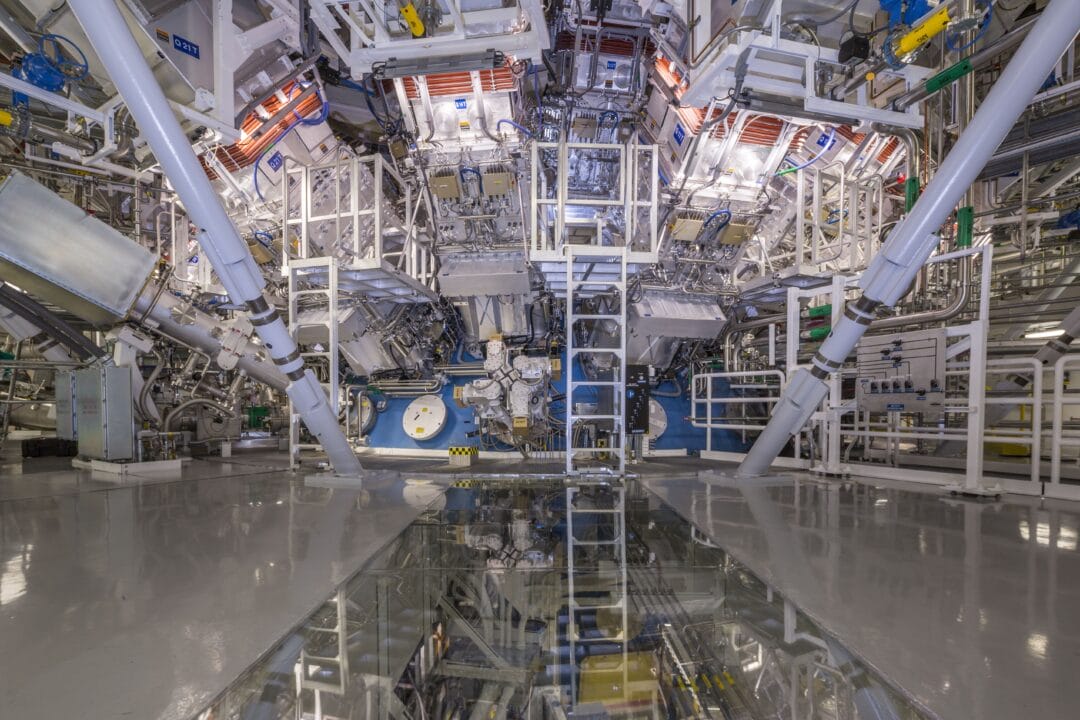

After Record Energy Gain, Goal Is to Replicate Nuclear Fusion Process Using Laser at NIF and Reduce Harmful Emissions.
The quest for nuclear fusion energy has been a challenge for scientists, but recent advances bring hope that this revolutionary technology may soon become a reality. In California, researchers are using nearly 200 lasers to achieve nuclear fusion, a process that could provide a clean and limitless energy source for the world.
The National Ignition Facility at Lawrence Livermore National Laboratory in California (LLNL) has demonstrated significant advancements in the field of nuclear fusion. With successful replication of ignition three times this year, scientists are closer to realizing the dream of a clean energy source that can help address the global climate crisis, largely caused by the burning of fossil fuels. This progress brings renewed hope for a future powered by nuclear fusion energy.
Challenges of Nuclear Fusion Energy
For decades, scientists have dedicated themselves to exploring nuclear fusion energy, which essentially seeks to recreate the power of the sun on Earth. After achieving a historic net energy gain last year, the next crucial step was to demonstrate the replicability of the process. Brian Appelbe, a researcher at the Centre for Inertial Fusion Studies at Imperial College London, emphasized that the replication capability proves the ‘robustness’ of the process, demonstrating its viability even under varying conditions, such as laser intensity or capsule quality. Additionally, each experiment provides an opportunity to closely study the physics of ignition, providing valuable information to address the challenge of maximizing the energy that can be harnessed.
-
NuScale proposes revised plan for six VOYGR SMR reactors in Poland after ending U.S. project

-
Holtec and EDF Submit Joint Proposal to Install Four SMR-300 Reactors in England with Combined Capacity of 1.3 GW
-
Brazil’s Angra 3 Nuclear Plant Reaches 66% Completion; Government Faces 2026 Deadline to Decide on $24 Billion Project’s Future
-
American company drills a 1,830-meter hole in Kansas using oil well technology, places a nuclear reactor inside, and claims it will generate electricity without any cooling tower.


Unlike nuclear fission – used in current nuclear plants, which is generated by the splitting of atoms – nuclear fusion does not leave long-lasting radioactive waste. With the intensification of the climate crisis and the urgency to move away from fossil fuels, the prospect of a clean and safe energy source is becoming increasingly attractive. Nuclear fusion, which powers the sun and other stars, involves the collision of two or more atoms to form a denser one, releasing large amounts of energy. There are different ways to generate energy from fusion, but at the NIF, scientists use a series of nearly 200 lasers to heat a hydrogen fuel pellet inside a diamond capsule, all within a gold cylinder. The lasers create a series of very rapid explosions, generating large amounts of energy in the form of heat.
Although the energy produced in December 2022 was small – about 2 megajoules were needed to fuel the reaction, which released a total of 3.15 megajoules – it was enough to achieve successful ignition and prove that laser fusion could generate energy. Since then, scientists have repeated the feat several times and advanced to greater energy production. At the COP28 climate summit in Dubai, U.S. climate envoy John Kerry launched an international engagement plan involving more than 30 countries aimed at advancing nuclear fusion to help address the climate crisis.
In December, the U.S. Department of Energy announced a $42 million investment in a program that brings together several institutions, including LLNL, to establish ‘hubs‘ focused on advancing fusion. ‘Harnessing fusion energy is one of the greatest scientific and technological challenges of the 21st century,’ said U.S. Energy Secretary Jennifer Granholm in a statement. ‘We now have the confidence that not only is it possible, but likely, that fusion energy will become a reality.’
These advancements have the potential to revolutionize the global energy matrix, providing an abundant and clean energy source, without the harmful emissions associated with fossil fuels. The pursuit of nuclear fusion energy remains a challenge, but recent progress demonstrates that we are increasingly close to achieving this ambitious and promising goal.
Source: CNN Brazil