






 Portuguese
  Spanish
  3 min of reading
  11 comments


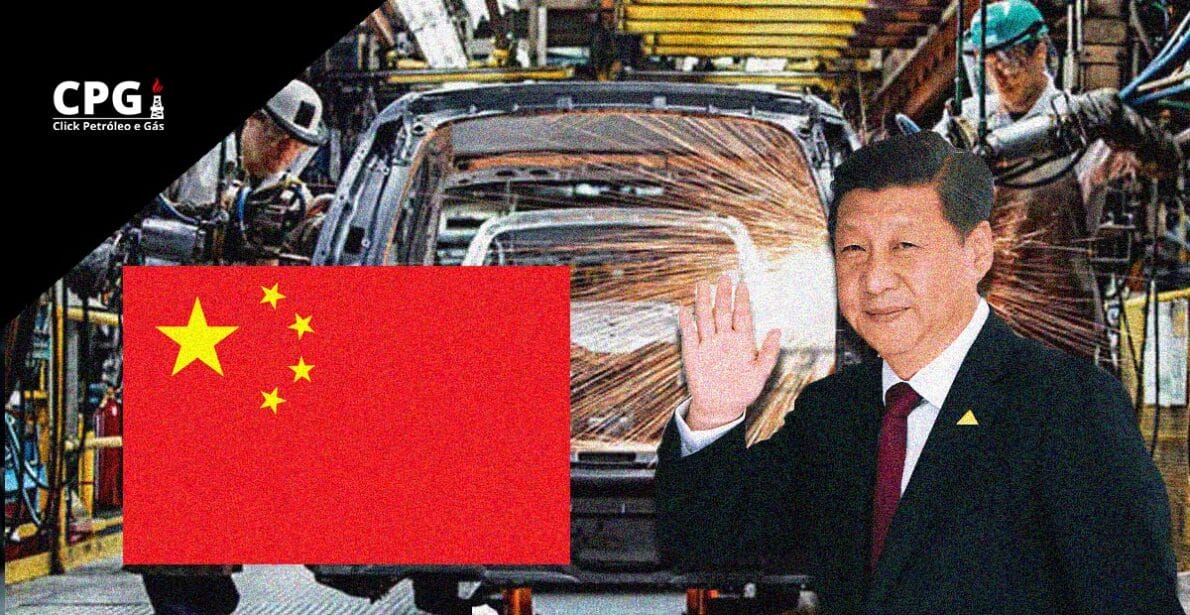

In a Bold Move, China Announced a Stimulus Package of Approximately 300 Billion Yuan, About 225 Billion Reais to Boost Internal Consumption, Focusing Mainly on Passenger Vehicles and Consumer Electronics.
This program, announced by the National Development and Reform Commission and the Ministry of Finance, will be financed through the issuance of special treasury bonds.
Subsidies for trading gasoline vehicles for new energy vehicles will double to 20,000 yuan, while gasoline vehicle swaps will increase from 7,000 yuan to 15,000 yuan.
According to information from the newspaper Valor Econômico, the measure aims to revitalize the automotive industry, which accounts for around 10% of the GDP of China, but has faced a decline in sales in recent months.
-
Used Civic and Corolla have been stuck in stock for months. “People are preferring Chinese cars,” says the car dealership owner.

-
Toyota Sienna becomes a “VIP lounge on wheels” in Brazil after receiving a Chinese luxury kit, seats with massage, Starlink, refrigerator, and a 245 hp hybrid engine, targeting high-income families, artists, and executive transport in an almost million-dollar van.

-
The urgent need to implement a severe cut in public spending and a massive increase in taxes, in addition to drastically compromising the quality of basic services and the purchasing power of the population, could result in social unrest in the country, with the population leading protests, strikes, and frequent disturbances.
-
Two new 300cc models from QJ Motor are expected to arrive in Brazil as SBM to target the CB 300F and shake up the low-displacement market, with more power and liquid cooling than Honda.


Stimulus for the Electronics Sector
In addition to vehicles, the Chinese program also includes subsidies for eight types of electronic products, such as refrigerators, washing machines, and televisions.
These subsidies will amount to 15% of the sale price, up to a maximum of 2,000 yuan per product.
These initiatives are not only a response to slow internal consumption but also an attempt to reduce overproduction capacity, which has led to excess inventory being exported to other countries.
Observers believe, the cited newspaper reported, that these measures aim to sustain domestic demand and alleviate external pressure.
Subsidies in Brazil
In Brazil, the subsidy scenario for similar sectors is not as robust as in China, but significant efforts are also underway.
Until July 2024, the Brazilian government has been offering tax exemptions and various incentives for electric and hybrid vehicles. For example, there is an exemption from the Industrialized Products Tax (IPI) and from PIS/COFINS for these vehicles.
Additionally, some Brazilian states, such as São Paulo, offer exemption from IPVA for electric and hybrid vehicles. The city council of São Paulo also enacted a law allowing part of the IPVA amount to be converted into credit for payment of IPTU.
These incentives aim not only to stimulate the purchase of more sustainable vehicles but also to foster an adequate infrastructure to support this new demand.
In the electronics sector, Brazil does not have a subsidy program as comprehensive as China’s.
However, initiatives to promote energy efficiency and the modernization of industrial equipment are underway.
In 2023, for example, Brazil allocated around R$ 3 billion in incentives for energy efficiency and industrial modernization projects.
Difference Between Brazil and China
The Chinese initiative to inject billions to subsidize the purchase of cars and household appliances highlights the difference in governments’ approaches to stimulating the economy.
While China bets on a large stimulus package, Brazil focuses on tax exemptions and specific incentives for strategic sectors.
How these policies will impact the economy and consumer market in both countries will still be seen in the coming years.
Do you think Brazil should follow a model similar to China’s and invest more aggressively in subsidies to stimulate the economy? Leave your opinion in the comments!





Faltou informar que atualmente a grande preocupação que deveria ser de ajudar o consumidor e o mercado interno, o governo está com taxas absurdas. Quem abre alguma coisa investe ou compra algo neste ambiente absurdo.
Eu acho que o Brasil deveria gastar bem menos com a máquina administrativa… só isso resolveria boa parte dos nossos problemas!
Com certeza o Brasil está tímido quanto a antecipa o equilíbrio do sucesso