






 Portuguese
  Spanish


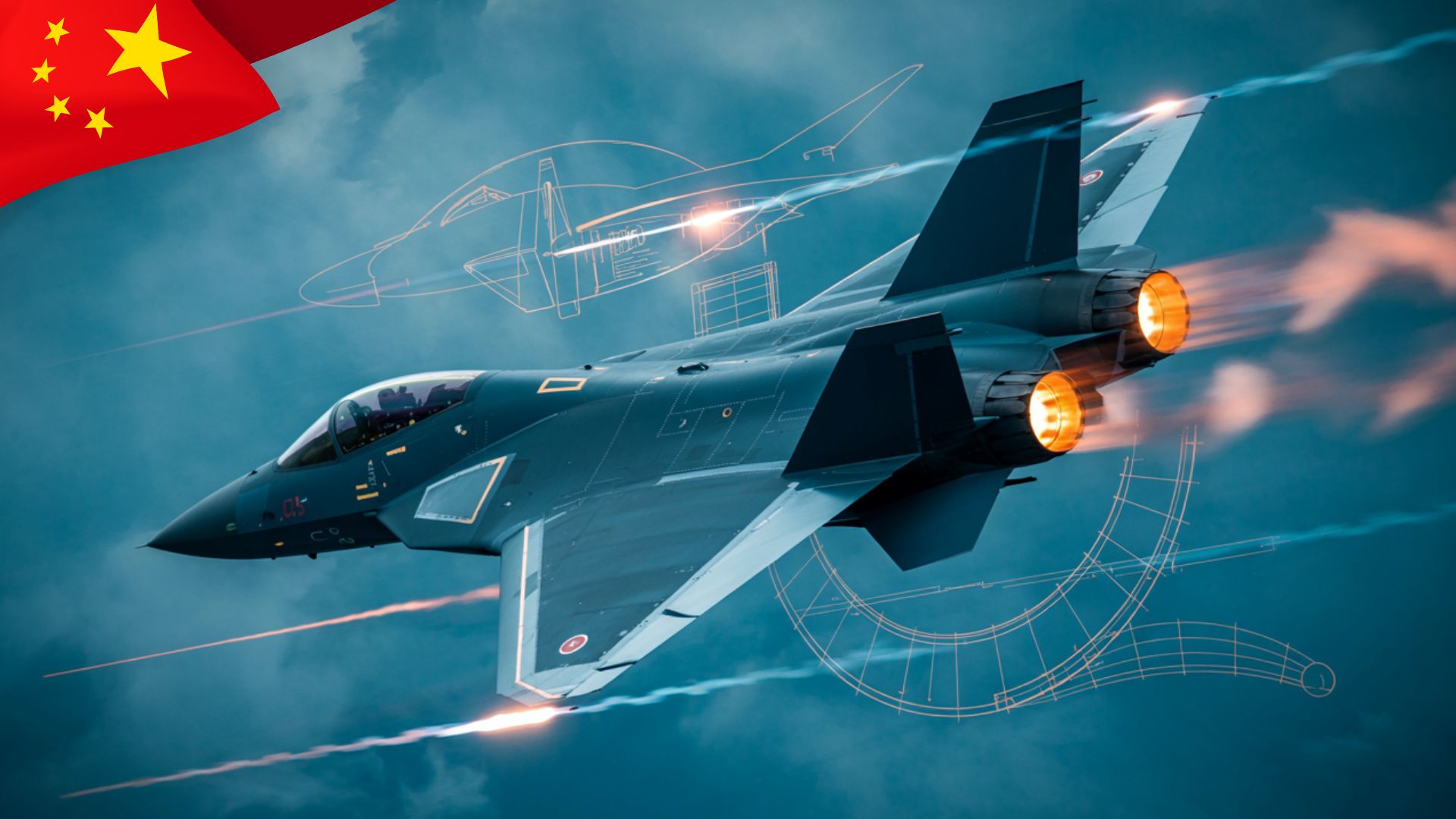


Chinese Researchers Develop Unique Cooling Method for Superalloy That Could Revolutionize Jet Engines and Accelerate Stealth and Hypersonic Programs in China’s Military Aviation.
A metallurgical breakthrough announced by researchers from Dalian University of Technology in northeastern China could reposition the country in the global race for dominance in sixth-generation military aviation and control of the next era of hypersonic weapons.
This involves a new cooling technique for metallic superalloys applied to turbine disks — fundamental components for the operation of high-temperature jet engines that power both stealth fighters and hypersonic vehicles.
According to the state newspaper Science and Technology Daily, the innovation could considerably improve the performance and durability of Chinese engines, shortening the technological gap between the country and Western powers such as the United States.
-
UFG’s Innovative Use of Air Conditioner Drip Saves 400 Liters of Water Daily in Brazilian Public Building

-
China Builds Underwater Wall After Discovering Technology That Could Shift Military Balance in the Pacific, Study Reveals Why the Asian Power Reacted Now

-
After Over 8 Months in a Simulated Mars Habitat in Houston, 4 NASA Volunteers Communicate Almost Silently and Will Exit in October
-
Natural Phenomenon Turns Black Sea Turquoise Blue Due to Billions of Microscopic Organisms


How The Technique Works That Could Change Chinese Engines
The new process consists of rapidly cooling metallic disks with a mist of high-speed water jets, drastically improving the control of the size of the crystalline grains in the material.
According to the research team led by Shi Jinhe, the method allows for a cooling speed that is 3.75 times greater and a fourfold improvement in grain size uniformity compared to conventional methods.
In a laboratory test, a metallic disk at 1,200 °C was cooled to 673 °C per minute — an unusual rate even by the advanced standards of the Chinese industry.
This innovation allows for the manufacturing of turbine disks with greater thermal resistance, less wear, and a longer lifespan, essential for the performance of high-pressure, high-speed, and long-duration engines, such as those required in stealth fighters and hypersonic missiles.
The Direct Impact on Stealth Jets and the New Generation of Weapons
The technology developed in Dalian could be a key piece in maturing China’s strategic programs, such as the WS-15 engines designed for the J-20 fighter and the future engines for sixth-generation aircraft.
More durable turbine disks are fundamental in TBCC (Turbine-Based Combined Cycle) engines, a promising architecture for hypersonic flights, where the transition from a conventional jet engine to a ramjet or scramjet requires the set to withstand extreme temperatures, thermal shocks, and prolonged vibrations.
The engine’s performance directly depends on the efficiency of these disks. According to defense analysts, improving the durability of these components is critical to maintaining high thrust and reducing failures during extreme flights — whether in stealth aircraft, attack drones, or intercontinental-range missiles.
Is China’s “Heart Disease” Starting to Be Treated?
For years, China has struggled with a notorious weakness in military development: the difficulty of designing and manufacturing internationally quality engines. The situation was so critical that the Chinese military itself coined the bottleneck as “heart disease“.
The J-20, China’s fifth-generation fighter, was launched with WS-10 engines considered weak and unreliable. Only in July 2023 did a prototype of the J-20 finally fly with two more powerful and efficient WS-15 engines, after more than a decade of delays.
However, the situation is changing. The DD6 superalloy, already employed in the WS-15, and the development of the even more heat-resistant DD9 superalloy show that China is rapidly advancing in materials science — a critical foundation for more modern and reliable engines.
From Research to Application: A Large-Scale Industrial Challenge
Although the cooling technique developed by the Dalian team represents a remarkable leap, transforming this innovation into viable industrial production is still a challenge.
The scalability of the process, the repeatability of results in industrial environments, and integration with engine assembly lines will be the next crucial steps. If this technology is widely adopted, the country could reduce:
- Engine maintenance costs,
- The frequency of flight failures,
- And also increase the range and energy efficiency of future war platforms.
With this, Beijing advances its ambition to lead the next generation of stealth jets, autonomous drones, and hypersonic vehicles, with more durable, reliable, and technologically competitive engines.
The 21st Century Air Superiority Race
In the geopolitical context, China’s advance is not just technical — it is strategic.
While the US invests billions in sixth-generation fighters such as the NGAD (Next-Generation Air Dominance) and the UK leads the Tempest program, China seeks to respond with a stealth, hypersonic system powered by artificial intelligence.
In this scenario, mastering engine technology — the “heart” of any aircraft — is the last obstacle to achieving cutting-edge military self-sufficiency.
If it can turn this metallurgical innovation into more efficient engines, China could finally free itself from reliance on Russian imports and move towards technological leadership in defense aviation.





Muitos questionam a capacidade chinesa afirmando que eles só sabem copiar. Mas esquecem que a Europa e os EUA trilharam o mesmo caminho. Se apropriaram e roubaram muitas invenções de várias povos milenares para chegar onde estão. Um bom exemplo disso é a pólvora e a bússola que por ironia do destino surgiram na China.