






 Portuguese
  Spanish


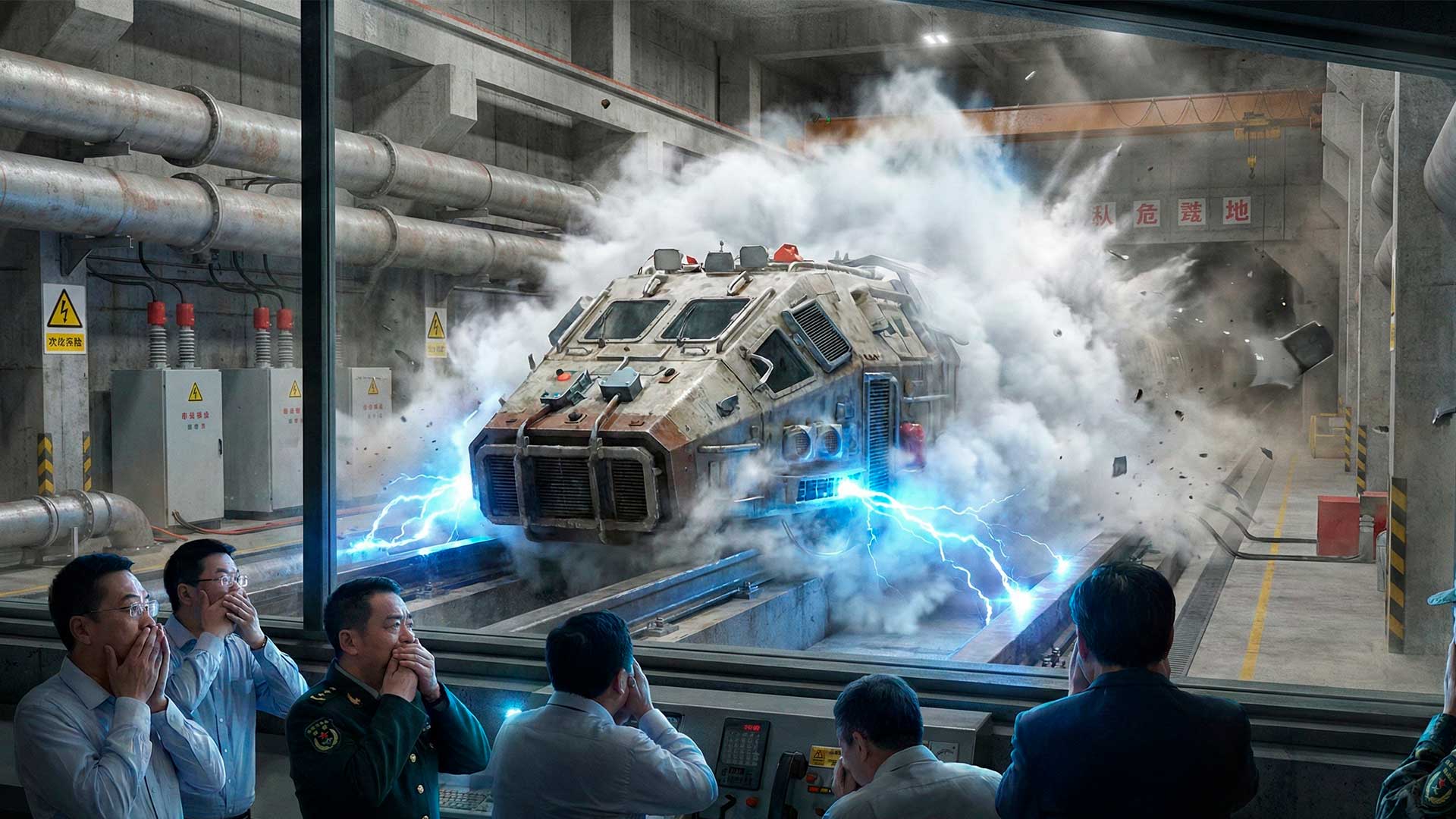


A short track test of 400 meters took an experimental magnetic levitation vehicle to a new acceleration record. The feat was reported by state media and points to applications ranging from vacuum tube trains to testing for the aerospace sector.
A superconducting magnetic levitation prototype accelerated from 0 to 700 km/h in less than 2 seconds in an experiment conducted in China, according to a report by state broadcaster CCTV.
The test took place on a 400-meter experimental line and was conducted by a team from the National University of Defense Technology, according to CCTV.
The maximum speed was achieved with a vehicle weighing approximately one ton, and the system was also able to come to a safe stop at the end of the track, which adds weight to the result beyond the impressive number.
-
Giant Earthworms up to 2 Meters Long Secretly Sustain Fertility in the Amazon Rainforest

-
Brazil Launches Ambitious Project to Recycle Toothpaste Tubes and Toothbrushes, Aiming to Revolutionize Waste Management

-
The Mystery of Roanoke: Entire Colony Vanished Without a Trace, Leaving Only “Croatoan” as a Clue and Becoming a Historical Legend
-
Namibia Plans to Build Homes for the Homeless Using Mushrooms and Invasive Plants to Tackle Housing Crisis




The released images show the equipment crossing the track in a blur, leaving a trail of mist and then braking, in a demonstration that looks more like a laboratory test than a passenger train.
What The Test Showed In Numbers And Why It Matters; Video:
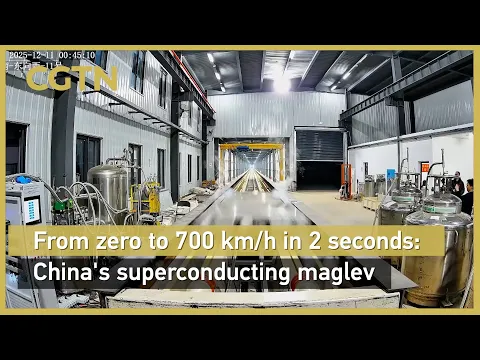

The main highlight is the extreme acceleration, since 700 km/h is equivalent to approximately 194 m/s, reached in less than 2 seconds. In practical terms, this suggests forces close to 10 g, something that would not be considered for transporting people, but could be useful as control and power testing in electromagnetic systems.
The Chinese media itself highlights that the advancement is not only about speed but also about control at high power and precision in driving and braking.
According to China Daily, the group has been working on the topic for about 10 years and had to overcome challenges such as electromagnetic propulsion at very high speeds, electric guidance and suspension, high-power transient energy storage, and high-field superconducting magnets.
How Superconducting Magnetic Levitation Enters The Equation
In maglev systems, the idea is to drastically reduce mechanical friction by avoiding direct contact with tracks, using magnetic fields to support and guide the vehicle. This opens the door for higher speeds, as the limitation shifts from wheel-rail wear to energy, stability, and safety.
In the case of the announced record, CCTV describes the accomplishment as an advancement in superconducting electric maglev propulsion, precisely because it combines strong magnetic fields with the need for fine control over short distances.
Proof that China is also experimenting with other formats appeared in 2022, when a state agency reported a test on a highway in which a 2.8-ton car managed to float 35 millimeters above the asphalt, in Jiangsu, using a solution aimed at road vehicles.
Vacuum Tubes And The Bridge To The Hyperloop Concept
The most discussed point outside the laboratory is what the technology might indicate for trains in a vacuum tube, a proposal similar to the concept popularized as hyperloop, where air reduction in the path decreases resistance and allows for much higher speeds.
China Daily claims that the result offers a new option for the development of maglev transportation in vacuum tubes and could also support propulsion methods and testing in the aerospace sector.
The South China Morning Post shared the same sentiment, stating that the demonstration opens possibilities for both transport in sealed tubes and for applications that require intense acceleration and high-power control.
However, experts often remind us that records on short tracks do not automatically solve the obstacles of operating on a large scale, such as infrastructure, continuous energy consumption, emergency evacuation, and maintenance costs in controlled environments.
The Maglev Race In China And What Already Existed Before The Record
China has been investing in maglev for decades and has a clear symbol of this strategy in Shanghai, where the commercial maglev train line began operation after a testing phase in the early 2000s, according to the official website of the system.
In the high-speed field, the country has also been presenting prototypes and testing platforms for speeds of 600 km/h, such as the system reported by the People’s Daily in 2021.
The new acceleration record, however, shifts the focus of the debate because it sheds light on the most challenging part of the problem, which is controlling gigantic forces in instants without losing stability and compromising safety during braking.
Whether this route will turn into a passenger train or a niche technology for testing and launches is still unclear. But the message from the experiment is straightforward: China wants to be the first to master what currently seems impossible.
From your point of view, does this type of record truly accelerate everyday transportation, or does it just become an expensive and difficult-to-apply technological showcase on a larger scale? Leave a comment saying whether you think maglev in a vacuum tube is the future or just another promise that never leaves the laboratory.






Curiosidade, gostaria de ver.