Portuguese
  Spanish


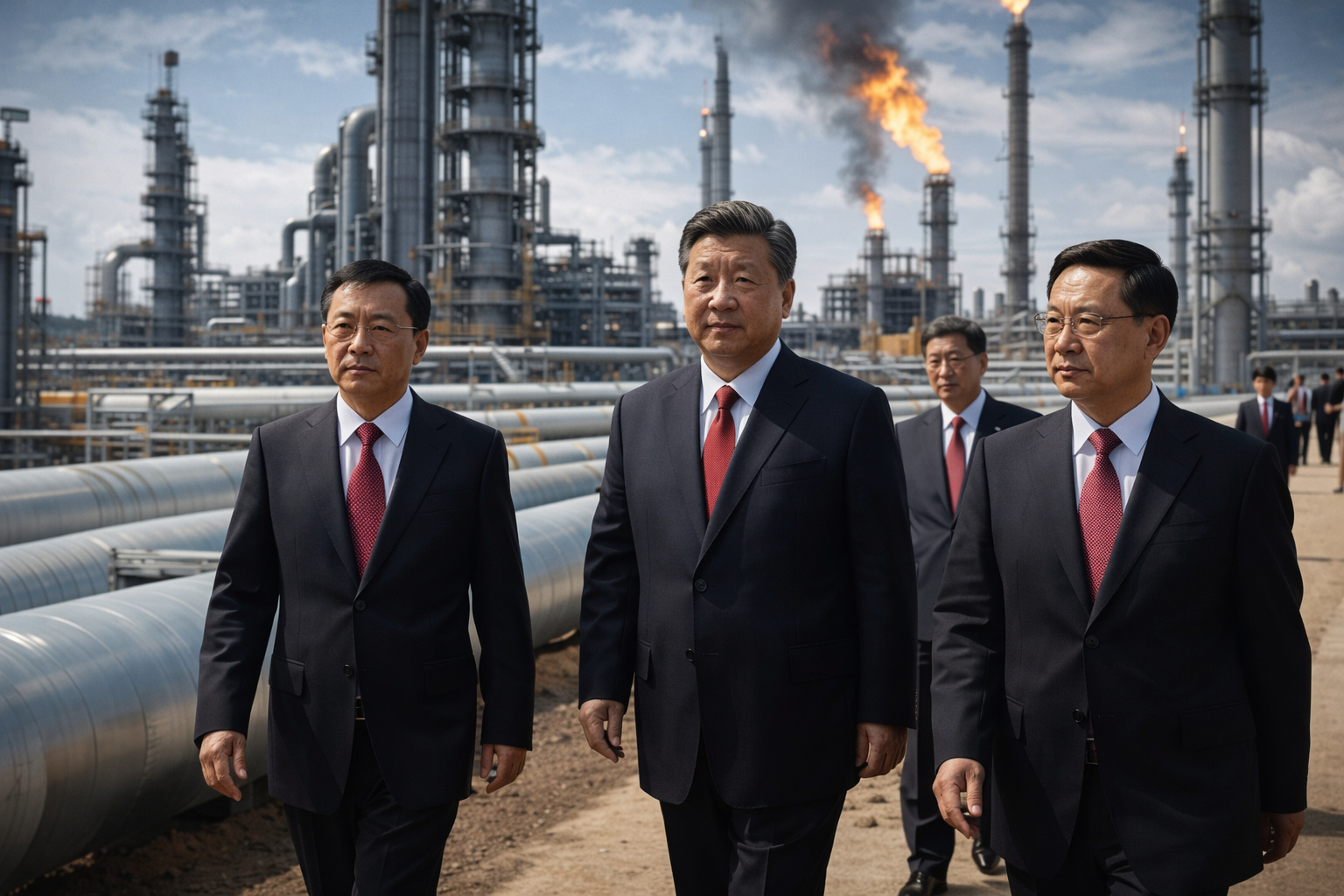

China invests US$ 5.1 billion in the Galkynysh gas field and expands energy flow that already moves 30 billion m³ per year towards the country.
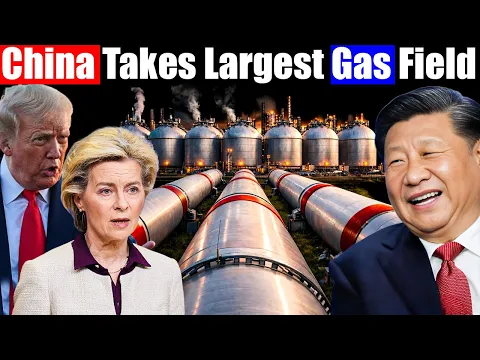
On April 16, 2026, a report from Reuters stated that the Chinese state-owned company China National Petroleum Corporation (CNPC) and the Turkmen state-owned company Turkmengaz, with approval from the Turkmenistan government, signed an agreement worth US$ 5.1 billion to develop the fourth phase of the Galkynysh gas field in the eastern part of the country. Under the contract, CNPC will be responsible for constructing a unit capable of processing an additional 10 billion cubic meters per year and for drilling new production wells.
This move reinforces Turkmenistan’s role as a central piece of China’s energy supply. According to Reuters itself, also on April 16, 2026, the country exports about 30 billion cubic meters of gas per year to China, and the new project was designed to meet both domestic market needs and external sales. In practice, China is expanding one of the largest gas supply mechanisms on the planet outside its territory and strengthening a continental-scale energy corridor.
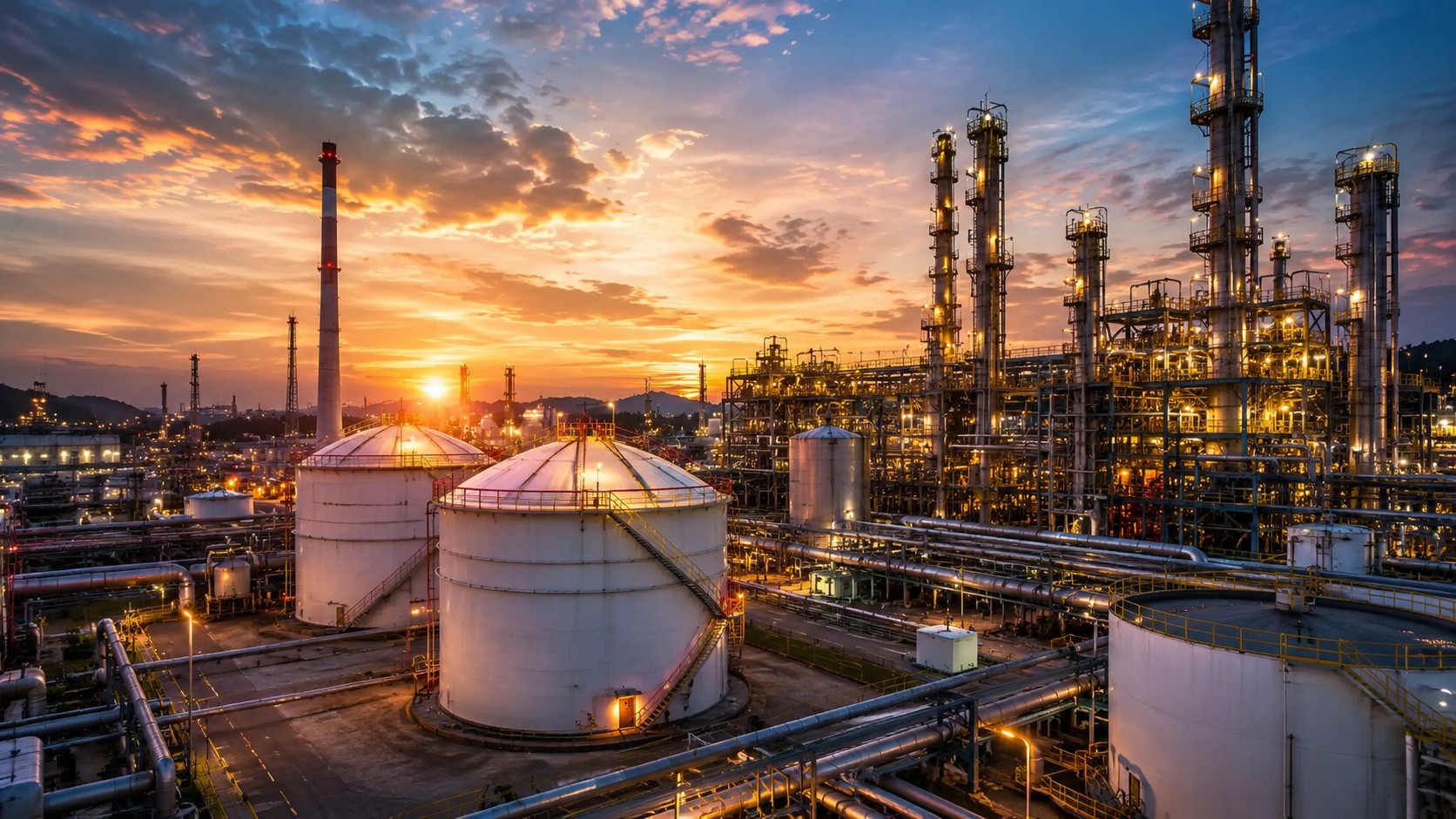
Galkynysh field is one of the largest natural gas reservoirs ever discovered
Located in southeastern Turkmenistan, the Galkynysh field is often cited as one of the largest in the world in terms of natural gas reserves.
-
Oil Prices Rise as U.S.-Iran Tensions Heighten Concerns Over Global Supply and Energy Market Stability

-
Explosion at QatarEnergy Plant in Ras Laffan Kills 13 and Injures 66; Investigation Rules Out Sabotage

-
Brazil’s Búzios Oil Field Sets Record with 1.2 Million Barrels Per Day, Strengthening Global Leadership in Deepwater Production
-
Petrobras and Equinor Reach Agreement for 50% Stake in Itaimbezinho Block in Brazil’s Pre-Salt Campos Basin


Widely circulated estimates by technical bodies and industry institutions place the field among the largest ever identified, with trillions of recoverable cubic meters of gas.

This scale means that any expansion at the site has a direct impact on the global energy market. The increase in capacity by 10 billion m³ per year is not just a technical increase, but an intervention in a system that already operates on a massive scale.
Expansion strengthens direct energy corridor between Central Asia and China
The gas produced in Galkynysh is primarily channeled through the Central Asia–China pipeline, a strategic infrastructure that connects Turkmenistan directly to Chinese territory.
This energy corridor crosses countries like Uzbekistan and Kazakhstan, forming one of the most important land routes for gas supply to East Asia.
With the new phase of the project, the trend is that:
-
“`html
- The exported volume increases significantly
- The Chinese dependence on maritime suppliers decreases
- The land energy flow gains even more relevance
China is effectively consolidating an energy network that reduces geopolitical risks associated with maritime routes such as the Strait of Malacca.
Investment of $5.1 billion highlights long-term strategy
The amount of $5.1 billion allocated to the new phase of the field demonstrates the level of priority that the project receives within China’s energy strategy.
This type of investment involves:
- Drilling new wells
- Expanding processing infrastructure
- Integrating with existing transportation systems
This is a heavy engineering project that requires years of execution and detailed planning, indicating that China is operating with a long-term vision to ensure energy security.
China expands energy presence beyond its borders
By directly investing in gas infrastructure in Turkmenistan, China reinforces a model that has been adopted for years: ensuring access to energy resources through direct participation in overseas projects.
This strategy includes:
- Infrastructure financing
- Partnerships with local state-owned enterprises
- Long-term supply contracts
The goal is to reduce internal vulnerabilities and ensure a continuous energy flow to sustain economic and industrial growth.
Additional volume of 10 billion m³ represents significant impact on supply
To gauge the impact of the anticipated increase, it is necessary to understand the scale of energy consumption. An increase of 10 billion m³ per year can:
- Supply millions of households
- Sustain large industrial hubs
- Reduce pressure on other energy sources “`
When added to the 30 billion m³ already exported annually, the total volume reinforces the importance of Turkmenistan as a strategic supplier. The growth of the flow consolidates the country as one of the pillars of Chinese energy supply.
Project occurs amid the global reorganization of the gas market
The agreement arises at a time of reconfiguration of the global energy market, marked by:
- Geopolitical tensions
- Changes in supply routes
- Ongoing energy transition
In this scenario, ensuring stable and predictable sources of natural gas remains a priority for major economies.
Natural gas continues to serve as a transition fuel, essential for balancing energy systems while renewables advance.
Partnership strengthens strategic relationship between China and Turkmenistan
In addition to the energy aspect, the project also reinforces the political and economic ties between the two countries. Turkmenistan heavily relies on gas exports, while China seeks to diversify its supply sources.
This complementarity creates a relationship of interdependence: Turkmenistan ensures revenue and investment, and China ensures stable supply. The expansion of the Galkynysh field deepens this strategic connection at a structural level.
Energy infrastructure becomes a tool of geopolitical influence
Projects of this magnitude go beyond engineering and enter the realm of geopolitics. By financing and operating critical infrastructure in other countries, China expands its influence in strategic regions.
This includes:
- Indirect control over energy flows
- Participation in long-term decisions
- Consolidated presence in logistical corridors
Energy ceases to be merely a resource and becomes a tool for global positioning. Despite the advancement of renewable energies, natural gas remains a central piece in the global energy matrix.
It is frequently used to:
- Replace coal in electricity generation
- Ensure stability in the grid
- Complement intermittent sources
The investment in Galkynysh shows that, even amid the transition, gas still occupies a strategic position.
Project shows the scale and complexity of the new energy dispute
The expansion of one of the largest gas fields in the world, outside of Chinese territory, highlights the level of complexity in the current energy dispute. It is not just about producing energy, but about controlling routes, ensuring access, and minimizing risks.
China is operating on multiple layers to secure its position in the global energy landscape.