






 Portuguese
  Spanish


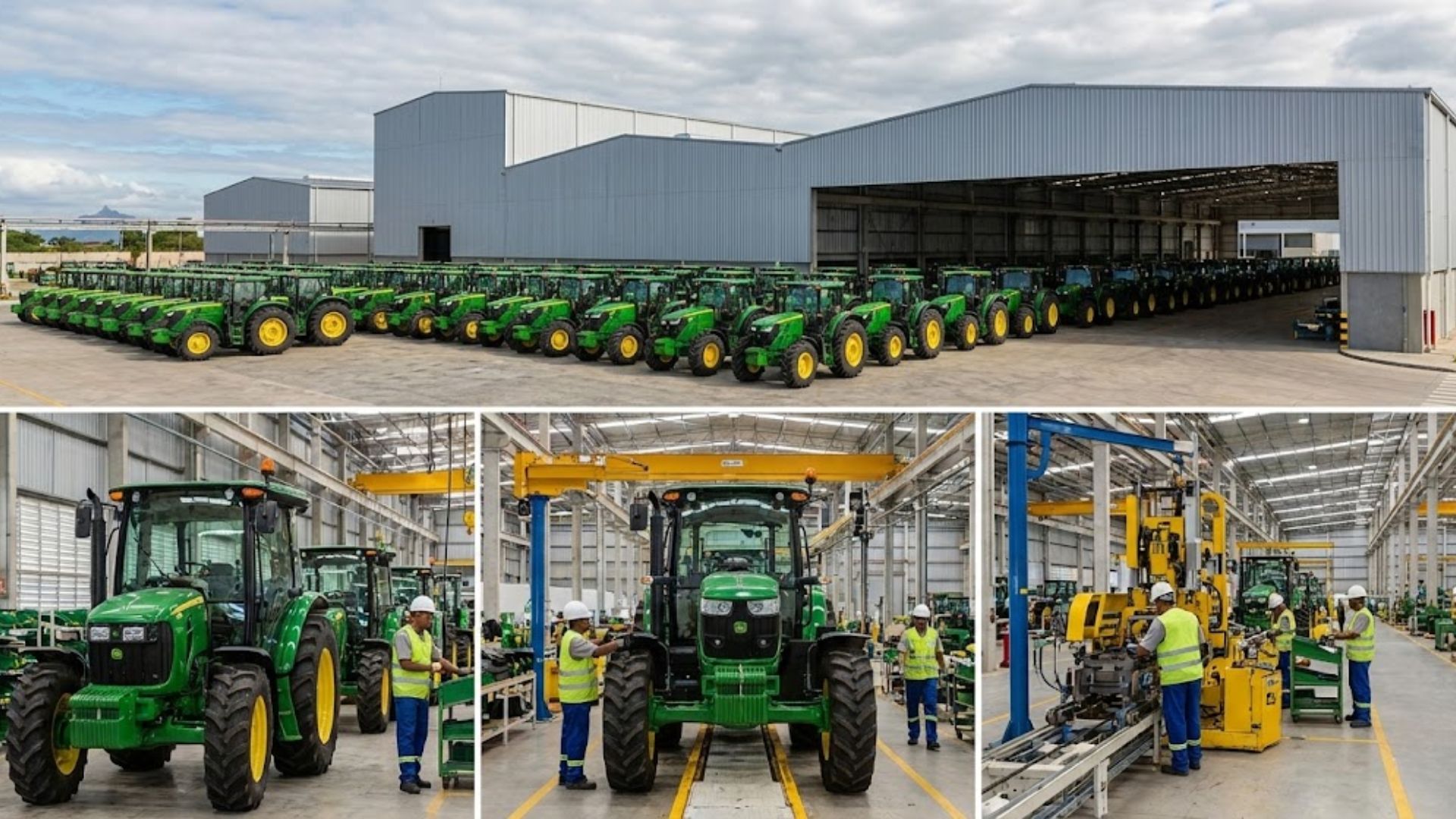


Chinese Investment in Maricá Anticipates Tractor Factory Focused on Family Agriculture, with Million-Dollar Investment, Uncommon Partnership Model and Articulation Between Public Power, Companies, and Cooperatives, According to Announcement by the City Hall and Political Leaders During Official Ceremony in the Municipality.
The City Hall of Maricá, on the coast of Rio de Janeiro, signed an agreement with a group of Chinese companies to establish a tractor factory focused on family agriculture in the municipality, with an announced investment of R$ 200 million.
The unit is expected to be located in the district of Ponta Negra, near RJ-106, within a format that those involved describe as a Public, Private, and Popular Partnership (PPPP).
The municipal administration claims that the production will be directed toward small and medium-sized machinery intended for small and medium rural properties.
-
Brazil’s 2026 Tax Refund: Record 9.58 Million Filers in Largest Payout Ever, But a Key Detail on Priority Recipients Draws Nationwide Attention

-
Itaú Alters Hybrid Work Model, Increasing Office Days from 2028, Prompting Employees to Adjust to New Routine
-
Facing Labor Shortage, Japan Plans to Invest $34 Million to Attract Foreign Workers in Construction, Healthcare, Industry, and Commerce

-
Brazilian City Makes Remarkable Leap, Becomes 4th Wealthiest in the Country with GDP of R$ 134.1 Billion




The announcement was made after the signing of the agreement, which took place at the end of November, according to the City Hall itself.
Location of the Factory and Industrial Plan in Maricá
According to the official statement, the factory will be built on a plot of land in the district of Ponta Negra, in an area close to RJ-106, a highway that crosses the region.
The City Hall describes the initiative as part of a local strategy to attract industry and strengthen chains linked to food production and processing.

According to the text released by the municipality, the announced investment is R$ 200 million and the partnership involves Chinese and Brazilian companies, under the presentation of a “Brazil-China technological partnership.”
The City Hall did not detail, in the consulted material, the schedule for the construction, the starting date for operations, or the predicted production capacity for the factory.
PPPP Model and Articulation Between Government, Companies and Cooperatives
The City Hall and participants of the event classified the model as PPPP, an acronym presented as a public, private, and popular partnership.
In the municipality’s description, the idea is to bring together public power, companies, and organized popular entities structured in cooperatives in the arrangement.
During the ceremony, Mayor Washington Quaquá linked the project to oil revenues, stating that the initiative has the potential to change the productive reality of small farmers.
“This factory takes the money from oil and turns it into a tractor industry that will revolutionize family agriculture, which produces food in Brazil, will generate qualified jobs in Maricá and also benefit the city hall with taxes. These tractors will create a revolution in family agriculture in the country, which today relies only on rudimentary tools.”
The statements were made in the context of the announcement and reflect the participants’ expectations regarding the project’s impact.

So far, the official statement has not provided indicators, targets, or public studies that allow for an independent assessment of the expected effect on employment, collection, or mechanization in the countryside.
Statements from Political Leaders and the MST About the Agreement
The leader of the MST João Pedro Stédile, cited by the City Hall, classified the factory as strategic for the country’s development, highlighting the governance aspect of the model.
“It is a public, private, and popular partnership, as it brings together the government, private companies, but also the organized popular sector in cooperatives. An investment that develops the country and makes it better for the people. This is a historic day for Brazil. Because of this corporate arrangement, being the first tractor factory from China in Brazil and solving a problem for the Brazilian people, for our agriculture that truly produces food.”
At the same event, the government secretary Arlen Pereira also commented on the agreement and related the initiative to a vision of international cooperation with China.
According to him, “this type of partnership with an extra ‘P’ is the future,” defending that Brazil should expand exchanges and learn from the Chinese industrial park.
However, the statements did not come accompanied by details about ownership participation, governance rules, the share percentages of each party, or legal instruments that would support this “popular” format in the structure of the enterprise.
Focus on Family Agriculture and Mechanization of the Countryside
The declared focus of the project is to serve family agriculture with tractors suitable for this production profile and also for small and medium rural properties, according to the City Hall.
The statement associates the initiative with a local policy that values food production and processing, integrating the investment into a narrative of economic diversification for the municipality.

By highlighting family agriculture, the announcement participants emphasized mechanization as a bottleneck and pointed to tractors as tools for increasing productivity and improving working conditions.
This perspective is reflected in the statements recorded during the ceremony, especially when authorities and leaders cite the existence of work with “rudimentary tools.”
The statement does not detail which regions would be prioritized, how the distribution or sale of machinery would occur, or what public policies could accompany the arrival of the equipment.
The City Hall also mentioned, in the same text, local initiatives linked to brands and food projects, contextualizing the factory as part of a broader strategy.
This passage addresses objectives and plans mentioned during the event and does not present formalized steps, attached public contracts, or execution deadlines.
With the signed agreement and the promise of investment, the expectation now turns to the disclosure of operational information that typically defines the real scope of industrial enterprises.
When will the construction begin, how many jobs will be created, what will be the production capacity, and what business model will support the arrival of tractors to the target audience?









Imagina o impulso que isso não vai dar ao Brasil naquilo que realmente interessa que é a produção de alimentos por pequenos agricultores. Além de aumentar a produtividade vai baratear o produto ao consumidor. Belíssima iniciativa
Ai sim, tratores que cabem no bolso do pequeno agricultor, tem que acabar com o monopólio das marcas americanas caríssimas
Engraçado o povo esta reclamando com 525 anos atrasado, o importante e o início desta fábrica com tratores
adequado para a agricultura familiar e preço barato para o pequeno agricultor.