





 Portuguese
  English
  Spanish
  4 min of reading
  22 comments


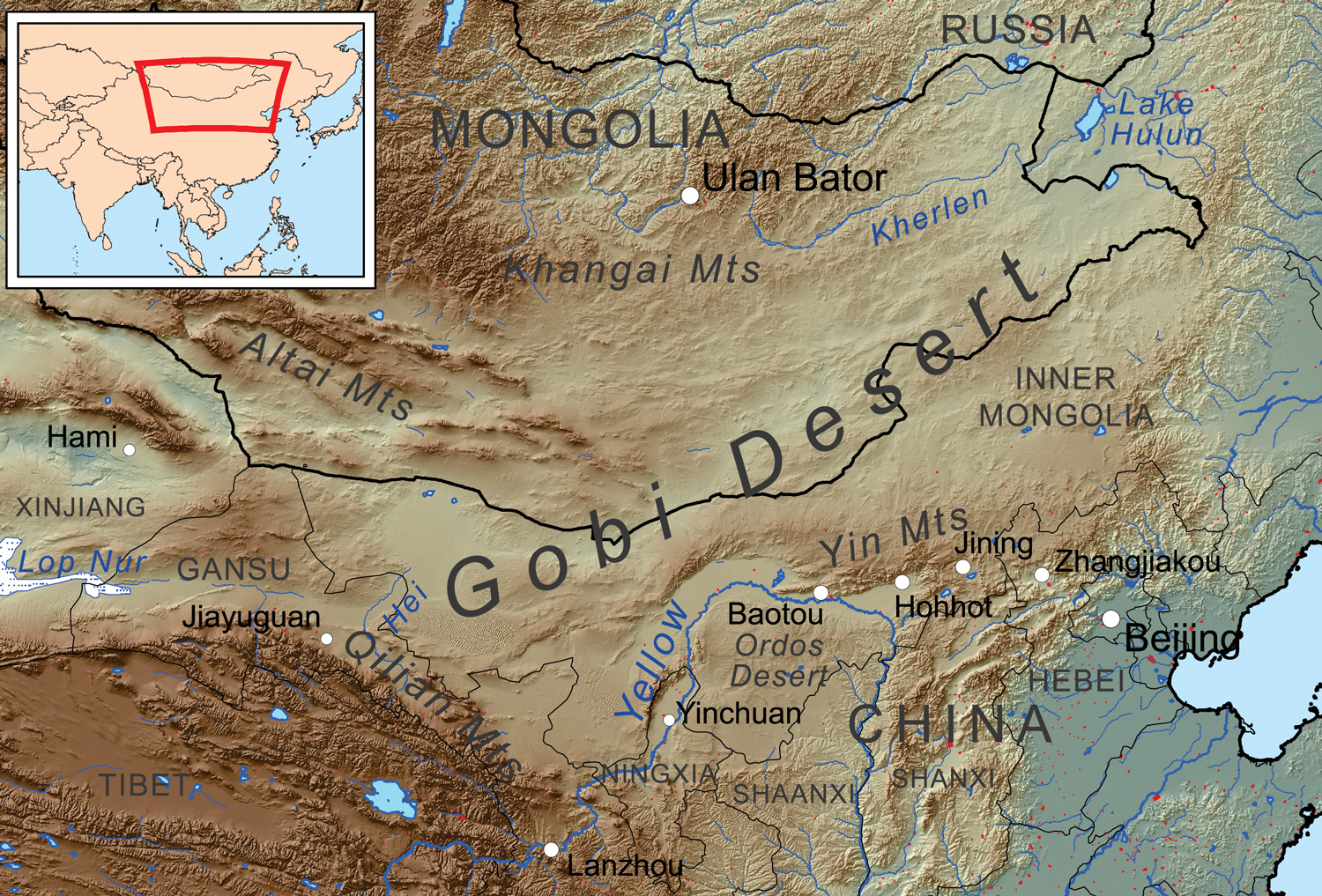


China Studies Bringing Water from the Himalayas to the Gobi Desert to Create Artificial Lakes, Generate Energy, and Alter the Climate of the Region.
The Gobi Desert has always slowly advanced over northern China, but in recent decades this advance has accelerated, reaching agricultural areas, threatening cities, and spreading sandstorms as far as Beijing, South Korea, and Japan. It is the combination of global warming, urban pressure, and ecological fragility that gives rise, within the Chinese scientific community, to a radical idea: bringing water from the Himalayas into the Gobi and creating large artificial lakes capable of altering the regional climate.
This extreme proposal does not arise in a vacuum. It emerges as a possible expansion of the South–North Water Transfer Project, the largest water project ever constructed by humans, responsible for moving trillions of liters of water from the humid southern regions to the dry north of China.
The current discussion is whether a future phase could push this redistribution even further west and inland.
-
Somali referee was close to fulfilling his dream of officiating at the World Cup, was barred in the USA and returned home welcomed as a hero in Somalia

-
Discovery of floating structure in Scarborough prompts Philippines to act and increases international attention on the South China Sea

-
Hungarian deputies approve a 40% cut in their own salaries, lose allowances, and place political privileges at the center of a change that surprised Europe.
-
US targets Alibaba, Baidu, BYD, Tencent, and Nio by including Chinese giants on the list of companies linked to China’s Armed Forces





How Water from the Himalayas Could Reach the Gobi
The Tibetan region, often called “the water tower of Asia,” feeds many of the rivers that sustain populations in ten countries.
The idea being studied by Chinese engineers is to capture part of this melting ice, especially from geopolitically less sensitive tributaries, and transport it through long corridors of tunnels and channels to depressed areas of the Gobi.


The engineering required would be colossal: pressurized tunnels crossing mountainous areas, reverse siphons to overcome elevation changes, intermediate reservoirs to equalize pressure, and possibly integration with reversible hydroelectric plants to recover some of the energy spent in pumping. It would, in practice, be a second continental water axis connected to one of the driest regions on Earth.
The Climate Goal: Artificial Lakes That Generate Humidity, Cooling, and New Air Currents
The studies supporting the project are based on a simple principle: bodies of water modify the climate around them.
If extensive lakes were created within the Gobi, the liquid surface would increase evaporation, forming pockets of humidity capable of reducing the average temperature and weakening sandstorms, one of the most devastating environmental phenomena in Asia.
These lakes would function as generators of humid microclimates, opening space for gradual reforestation, soil stabilization, and improved air quality. Theoretically, cities that currently suffer constantly from desert dust could experience significant reductions in atmospheric pollution episodes.
Energy and Infrastructure: A Megaproject Combining Reversible Hydroelectric Plants and Solar Energy
If this system of artificial lakes were to become a reality, it would not only serve to contain desertification. China sees the Gobi as one of the most favorable environments in the world for large solar parks, and the presence of reservoirs would create ideal conditions for hybrid generation and storage systems.
The water brought from the Himalayas could pass through reversible plants, producing electricity when descending and consuming solar energy when ascending again. It is a model that already exists in other parts of the world but never on a continental scale.
Moreover, the presence of water would pave the way for industrial processes that are currently impossible in the Gobi, such as internal desalination and mining for strategic minerals with a lower environmental impact.
Environmental and Geopolitical Obstacles That Make the Project Almost Impossible
The grandeur of the idea does not erase its risks. Diverting water from Tibetan rivers is an extremely sensitive issue, as it alters the water volume that sustains millions of people in South Asia. India, Nepal, Bhutan, Pakistan, and Bangladesh are directly affected, and any Chinese interference in these natural flows is already a source of diplomatic tension.
Furthermore, creating artificial lakes in an area of extreme evaporation would require constant replenishment of water. If the volume evaporates faster than it is replenished, the project could fail or even accelerate desertification.
There is also the ecological concern: altering a desert so profoundly could generate unpredictable climatic effects, changing wind directions and weather patterns that extend even to the Pacific coast.
Why China Continues to Evaluate the Idea Despite So Many Risks
Despite the difficulties, the concept does not vanish. It is debated in universities, appears in long-term planning theses, and has resurfaced in environmental discussions due to the urgency that China faces in combating desertification.
The country has already achieved impressive results with its “Great Green Wall”, a belt of planted forests to hold back dunes, but still, the advance of the Gobi remains a structural threat to northern China.

Creating artificial lakes in the desert is not treated as an imminent project, but as a climate experiment on a continental scale, capable of redefining the natural boundary between the desert and habitable areas.
A Future Where the Desert Ceases to Be a Desert?
If the project is ever executed, the Gobi could become one of the largest environmental engineering laboratories on the planet: a region where water, renewable energy, and climate would be manipulated in an integrated manner.
It is an attempt to transform one of the harshest deserts on Earth into an artificial wetland — something that would change the economy, geography, and even the lives of cities in northern China.
It is an extreme, controversial, and deeply ambitious vision. And it is precisely for this reason that it continues to be studied: because, in the face of the relentless advance of the Gobi, China believes that perhaps only an equally relentless endeavor can contain the desert.


Será que diminuiria as tempestade de areia, que ocorre todo ano,cujos efeitos colaterais são as nuvens de areia que chegam até aqui no Japão, acarretando incômodos respiratórios a população.
Como quando desviaram o Velho Chico
Que aquecimento global, cara pálida? Se atualiza pois o planeta está esfriando, conforme demonstram TODOS os estudos sérios baseados nas informsções das estações meteorológicas espalhadas pelo MUNDO.