






 Portuguese
  Spanish
  4 min of reading
  0 comments


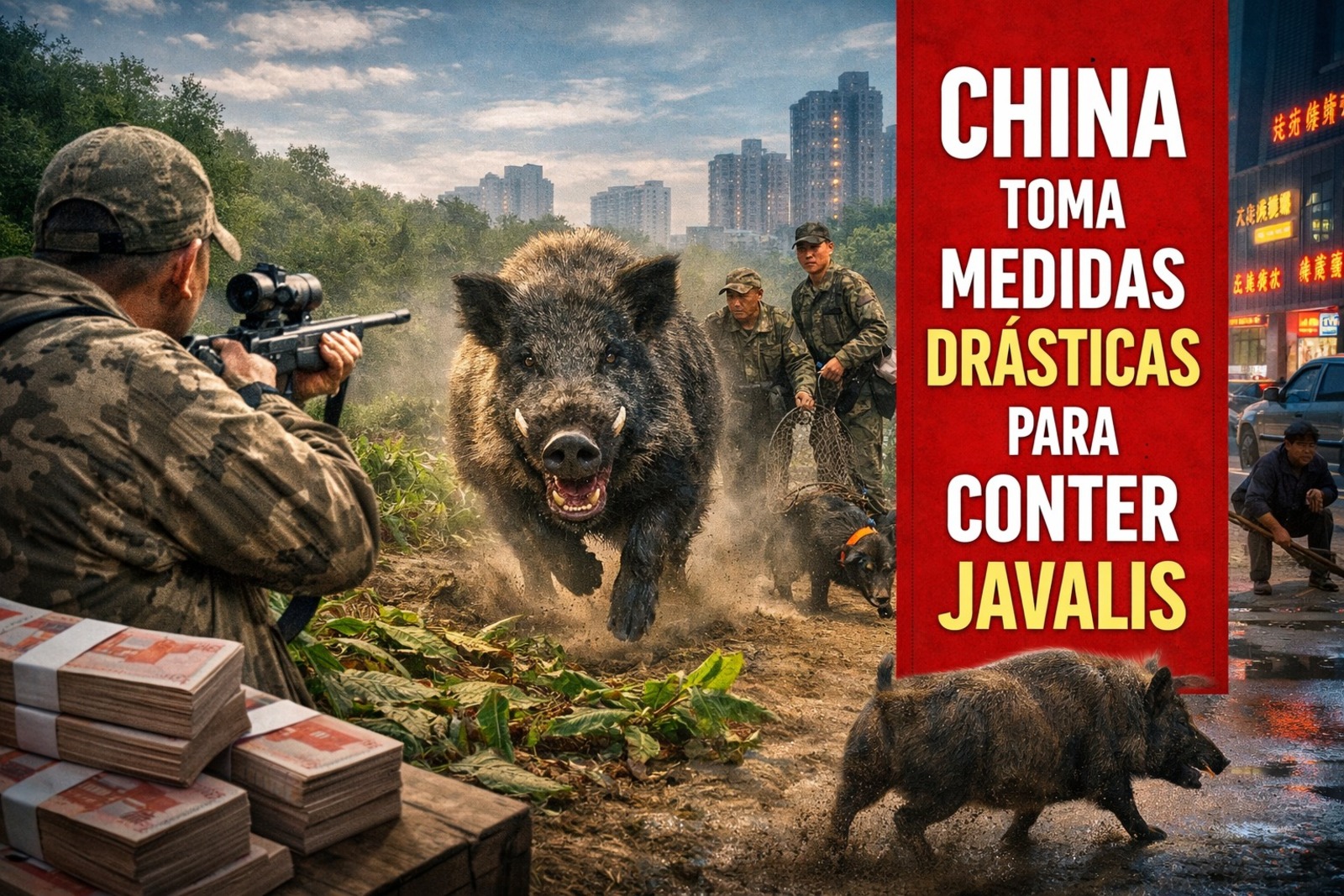
Sly, Aggressive, And Increasingly Present In Daily Life, Wild Boars Have Spread To Rural And Urban Areas Of China, Causing Deaths, Millions In Agricultural Damage, Fear Among Residents, And An Historic Shift In The Country’s Environmental Policy
Sly, aggressive, and weighing up to 200 kilograms, wild boars have become a national problem in China, leading authorities to summon hunters after recent legal changes, in response to attacks, agricultural damage, and risks to the population.
Expansion Of The Problem In The Fields And Cities
In recent years, wild boars have spread to rural and urban areas, devastating entire crops in a single night and surprising communities that had few legal means of defense.
Long classified as a protected species, the animals acted almost with impunity, while farmers accumulated losses and residents reported attacks on schools and commercial establishments.
-
Low-Demand Brazilian Beef Offal Gains Popularity Abroad: Indonesia Purchases $19.5 Million, Boosting Revenue and Reducing Waste

-
Soy Expansion in Former Brazilian Savanna Sparks Water and Land Conflicts in Major Agricultural Frontier
-
Mexican Pest Threatens U.S. Cattle Herds at Historic Lows, Potentially Boosting Brazilian Beef Exports as Burger Prices Soar

-
Avocado Boom for European and U.S. Markets Fuels Water Crisis in Drought-Stricken Chilean Region




In 2021, a public official from Sichuan province died after being attacked by a wild boar, an incident that underscored the severity of the situation faced.


Official Change In Protection Policy
In light of the escalating damage, the central government removed wild boars from the list of protected species in 2023, paving the way for a new population containment strategy.
In February, a national plan was announced to cull damaging wild boars, sending over 100 hunter teams to affected areas.
The decision marked a significant turnaround in environmental policy, after years of almost exclusive focus on the unrestricted protection of the species, even with increasing impacts.
Local Initiatives And Financial Rewards For Wild Boar Hunting
Local authorities have also begun to take action. On September 23, a county in the Ningxia Hui autonomous region announced the hiring of bounty hunters.
Participants will receive 2,400 yuan per person, an amount equivalent to about half of a local private sector employee’s monthly salary.
According to the official statement, the goal is to eliminate 300 adult wild boars, using traps, hunting dogs, or other allowed methods, without firearms or poison.
Additionally, the local government will offer an additional bonus of 200 yuan for the safe disposal of each carcass collected.
Public Reaction And Debate On Social Media
The announcement in Ningxia quickly went viral on Chinese social media, becoming one of the most talked-about subjects and generating intense debate among users.
On the Douyin platform, internet users questioned the government’s change in stance, recalling previous arrests for the illegal hunting of wild boars.
Comments expressed surprise at the speed of the reversal, highlighting the contradiction between past punishments and the current official rewards.
Legal History And Population Explosion
The hunting of wild boars was first prohibited in 2000 as part of efforts to protect local biodiversity, even without national maximum status.
The classification guaranteed protection due to economic or scientific value, predicting up to three years of imprisonment for those who hunted without proper permission.
In 2020, even stricter rules prevented farmers from using traps, contributing to an uncontrolled expansion of the wild boar population.
Each female can give birth to up to 16 piglets in just over a year, while males reach large size in six years, running up to 40 kilometers per hour.

Attacks, Costs And Urban Advancement Of Wild Boars
With the population increase, 26 out of 31 provincial regions reported incidents with wild boars, according to the state agency Xinhua.
Local governments spent millions of yuan compensating farmers for destroyed crops, increasing pressure for more effective and rapid solutions.
The animals have also started to roam urban areas, causing damage in cities like Hangzhou and Nanjing.
Reports include invasions of schools, running through busy streets, and destruction of shops, amplifying fear among urban residents.
Criticism And The Search For Ecological Balance
The revocation of the protection status and the culling have generated criticism from activists, who labeled the measure as a barbaric and unsustainable farce.
Expert Xu Binrong told local media that the problem reveals gaps in conservation efforts and wild species management.
He cited international examples, advocating for complementary strategies such as fencing and relocation, with culling seen only as part of a broader plan.
Xu emphasized that only an ecological conservation approach focused on systemic balance can prevent repeated cycles of overpopulation and excessive hunting.
Other Conflicts With Wildlife
Wild boars are not an isolated case. The recovery of animal populations has led species to invade human areas more frequently.
Recent incidents include a Siberian tiger in a village in Heilongjiang, a snow leopard in Qinghai, and elephants in Yunnan.
These episodes reinforce the ongoing challenge faced by Chinese authorities in balancing environmental protection, public safety, and sustainable coexistence.
With information from Sixthtone.





-

-

-

-

-

-

53 people reacted to this.