Portuguese
  Spanish


It took more than a decade of work to transform what remains from farming into one of China’s most ambitious green technology ventures. At the Institute of Environment of the Hefei Comprehensive National Science Center, in the city of Hefei, Anhui province, in the east of the country, the team led by Xing Xianjun, a professor at Hefei University of Technology, developed a process that converts straw, wood chips, and sludge into high-value biochar, capable of becoming fertilizer, feeding energy storage, and now targeting jet fuel.
According to China Daily, it was reported on July 8, 2026 (08/07/2026) that the branch focused on green aviation fuel is advancing rapidly in the city of Bozhou, also in Anhui province. According to the Science and Technology Daily, the heart of the invention is a single-step dry catalytic process that simultaneously solves the four problems that have always hindered biochar production: low yield, low quality, high energy consumption, and pollution.
The technology increased the carbon conversion rate to about 60%, compared to approximately 35% of the traditional method, carbonizing agricultural and forestry waste in just 30 minutes and operating with emissions that the team describes as almost zero. A single carbonization unit reaches a capacity of more than 50 thousand tons per year, a number that refers to what one piece of equipment can process, not the entire country’s production.
A decade of attempts until the first black powder comes out of the oven
The history of this green technology began long before any industrial oven. In 2011, after repeated attempts, Xing Xianjun’s team managed to produce the first 500 grams of biochar in the laboratory, a tiny amount that proved one big thing: the idea worked. It was the missing signal to persist on the path.
-
The World’s First Smartphone, Released in 1994, Would Cost the Equivalent of an iPhone 16 Plus Today

-
Robot Explores Atlantic Ocean Depths, Captures Unprecedented High-Definition Footage of Rare Giant Squid

-
Three 70 kg 17th-century lead ingots found stacked on the North Sea floor during Hornsea 3 wind farm investigation, 120 km off Norfolk coast

-
From Humble Beginnings in Brazil to Latin America’s Largest Fitness Chain: Smart Fit’s Journey to 5 Million Members Across 14 Countries


Two years later, in 2013, the group reached small-scale production. The decisive leap came in 2019 when an oven capable of processing 100 tons of agricultural waste per day came into operation. Each stage required overcoming the bottlenecks that made the old method waste raw material and consume too much energy.
The word that sums up the turnaround is “dry.” The single-step dry catalytic process dispenses with water and the various expensive and polluting phases of conventional methods. Instead of a back-and-forth of reactions, a single transformation converts straw, wood chips, and sludge into biochar. This is how the team tackled, at once, the low yield and high energy consumption that always hindered this type of production.
After all, what is biochar and why is this black powder so valuable?
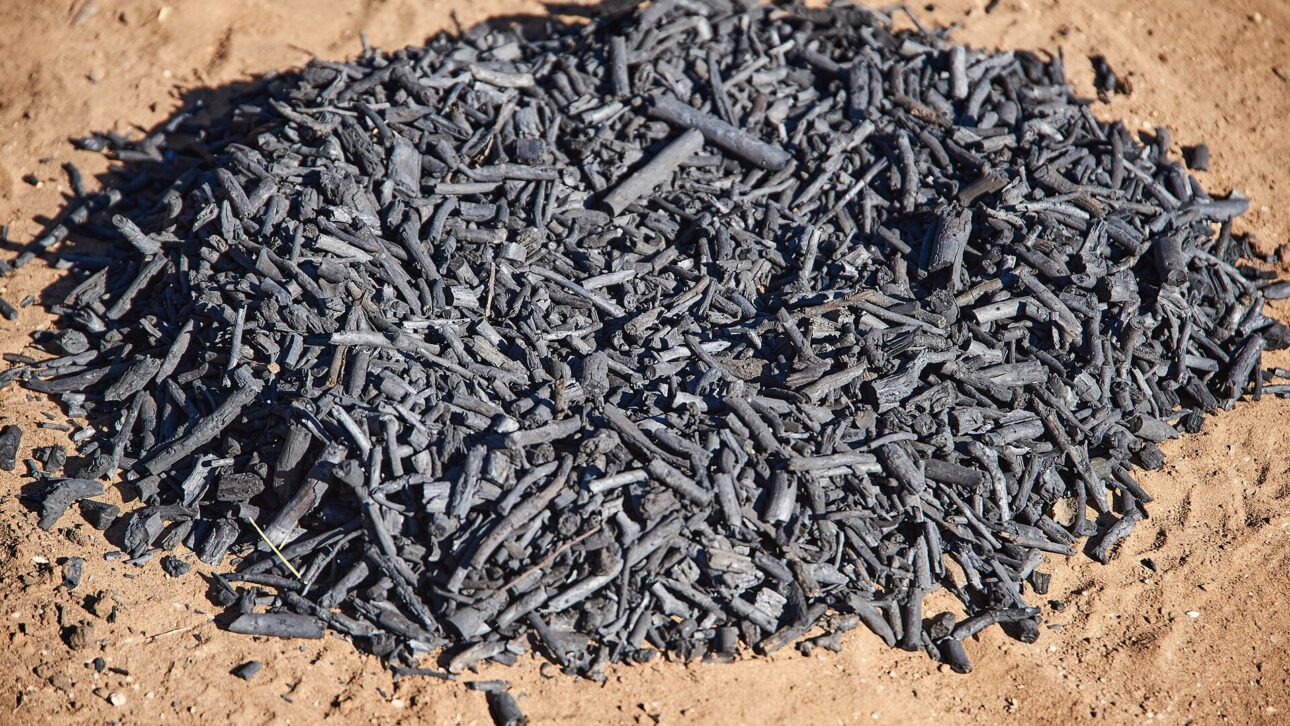
Anyone who hasn’t heard the term might imagine just barbecue charcoal, but biochar is something else. It is a charcoal produced by the thermal decomposition of biomass in an environment with little or no oxygen, a process that concentrates carbon into a porous and very stable structure. This black powder has a huge internal surface that holds water, nutrients, and microorganisms.
It is this versatility that makes this black powder so valuable. The same material is used to improve soil, store energy, and, in the newest frontier of research, to become an input for aviation fuel. Transforming cheap and abundant agricultural waste into a product with so many uses is what puts China’s green technology ahead in this race. It’s not waste turning into treated waste, it’s waste turning into coveted raw material.
One furnace, more than 50 thousand tons per year and almost zero emissions
The most impressive number is the capacity. A single carbonization unit can process more than 50 thousand tons per year, and it’s worth emphasizing a point to avoid confusion: this figure is the capacity of one piece of equipment, not the production of all of China. Even so, for a process that started with 500 grams in the laboratory, reaching this scale is a remarkable leap.
The efficiency gain is evident in the carbon conversion rate, which has risen to about 60%, compared to approximately 35% of the traditional method. In practice, almost double the carbon present in agricultural waste ends up trapped in the material, instead of escaping as smoke and lost heat. Less waste means more useful product for every ton of straw that enters the furnace.
There is also the variable of time and air. Carbonization takes only 30 minutes, an industrial pace, and occurs with almost zero emissions. For a technology born precisely from the promise of cleaning up the environmental mess, polluting little during the process itself is not a detail, it is a central part of the argument.
From agricultural waste to sustainable aviation fuel (SAF)
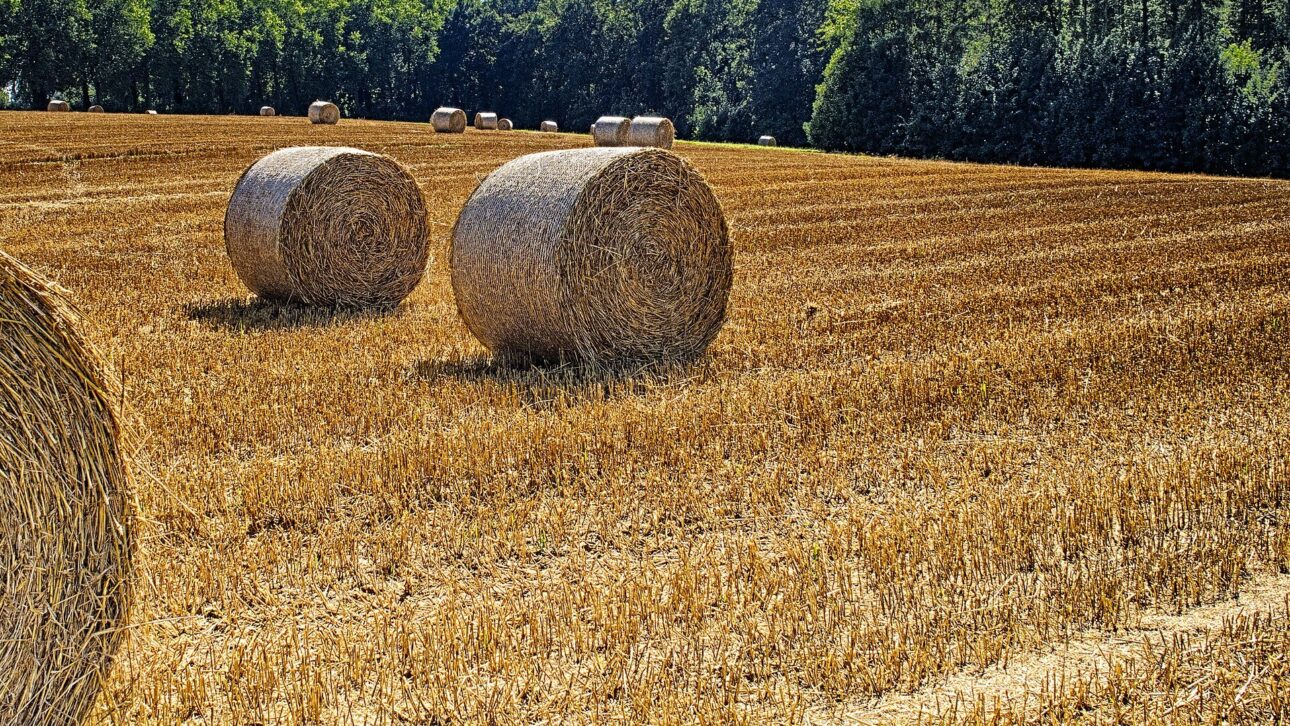
The newest and most talked-about branch of this research aims at the sky. From the same biochar and the same line of research, the team is working to achieve sustainable aviation kerosene, known as SAF, a green aviation fuel that promises to reduce the carbon footprint of flights. This project is advancing rapidly in the city of Bozhou, also in Anhui province.
Here, it is necessary to read carefully, without rushing the facts. The fuel related to this work is still in the development phase and not in large-scale commercial production. The title points to this destination because that is where the technology is heading, not because aircraft are already taking off with the fuel in the tank.
Even so, the mere fact of connecting agricultural waste to sustainable aviation kerosene explains the level of enthusiasm. Aviation is one of the most challenging sectors to decarbonize, and every new SAF route counts. If Bozhou’s promise comes to fruition, straw and wood residues could end up as aircraft fuel, something that would have seemed unlikely a few years ago.
Biochar in the soil: more harvest, retained water, and carbon trapped in the earth
The oldest and most established use of biochar is in the field. Mixed with the soil, it acts as a soil conditioner that increases crop yield, improves nutrient and water retention, and helps plants endure drought periods. In poor or already degraded soils, the effect is usually even more evident.
The porosity explains much of the magic. Those millions of microscopic pores function as a sponge and as a shelter: they hold moisture near the roots and create a home for the microorganisms that keep the soil alive. The result is less wasted fertilizer and less water thrown away.
There is a climate bonus in this application. Since the carbon captured from biomass remains stable within the biochar, burying it in the field is a form of long-term carbon capture, removing carbon dioxide from the atmosphere for decades or even centuries. Thus, the same black powder that originates from agricultural waste returns fertility to the land and also provides a service to the climate. It is one of the reasons why this green technology has gained traction so quickly.
Biochar in batteries: the unexpected link with energy storage
Few imagine that the same material from fertilizer could end up inside a battery, but this is where the second destination comes in. High-quality biochar serves as a base for graphite materials and for the anode, the negative electrode of lithium batteries. In other words, it ends up at the heart of the energy storage that powers cell phones, laptops, and electric cars.
Producing these components from agricultural waste, and not just from mineral graphite extracted at high environmental cost, changes the logic of the chain. Energy storage is currently one of the biggest bottlenecks in the energy transition, and any cheaper and cleaner path to manufacture electrodes has strategic weight.
By placing this material in this chain, China’s green technology ties agriculture to the future of energy storage in a way that almost no one had predicted. The straw that yesterday turned into smoke in the corner of the field can, tomorrow, store the electricity that lights up cities. It’s this type of connection that makes the sector fully engage in the conversation about the fate of agricultural waste.
Why does the “world’s first device” still call for caution?
The enthusiasm comes with quite a statement. According to Xing, this is the world’s first device to produce biochar through catalytic biomass conversion, a pioneering effort that, if confirmed, puts China at the forefront of this race. It’s wise to treat the statement for what it is: the assessment of the researcher who led the project, not an independently verified verdict.
The same calm applies to the numbers. The capacity of 50 thousand tons per year is of one unit, the aviation fuel is under development, and the title of pioneer is a declaration from those who built the equipment. None of this diminishes the achievement, but it helps to keep everything grounded.
It’s worth remembering that many green technology promises stumble precisely on the gap between the laboratory and industrial scale. What is already proven and running, such as use in soil and energy storage, supports the optimism. What is still a project, like aviation fuel, deserves monitoring and a bit of patience before becoming a commercial production headline.
What does Chinese biochar have to do with Brazil?
For Brazil, this story sounds very familiar. The country is a giant in agricultural waste, with mountains of bagasse and sugarcane straw left over every year from sugar and ethanol plants, exactly the type of raw material that Chinese technology transforms into biochar. There is an abundance of quality biomass, and there are plenty of crops that could receive this soil conditioner back.
The link with sustainable aviation kerosene is even more direct. Brazil has the Future Fuel Law, which created ProBioQAV and foresees an increasing SAF blend in aviation, starting from 1% in 2027 and reaching 10% in 2037. SAF is already being produced on Brazilian soil, such as in Salvador, in a project linked to Petrobras, and there is an agreement between Brazil and China focused precisely on green aviation fuel.
Connecting the dots, Brazil has the waste, the law, and the demand. A green technology capable of converting agricultural waste into biochar, fertilizing the soil, supplying energy storage, and even pointing to sustainable aviation kerosene fits perfectly in a country that plants sugarcane on a continental scale. None of this means that the Chinese solution will land here tomorrow. It’s context, not an announcement, but the fit is too significant to be ignored.
And the next chapter of this green race?
And you, had you ever stopped to think that the straw discarded in the fields could end up as fertilizer, as a battery, or inside an airplane’s tank? This is the promise that takes biochar out of the technical niche and puts it at the center of the conversation about the future of energy. China’s green technology shows that agricultural waste is worth much more than it appears, as long as there is the right process to extract that value.
The path to sustainable jet fuel is still long, and it’s worth following each step with curiosity and skepticism in equal measure.
But the direction is set, and both the soil and energy storage are already reaping concrete results today. Now here’s the question we want to take to the comments: would you trust biochar more as fertilizer, as a piece of energy storage, or as a raw material for airplane fuel?