






 Portuguese
  Spanish


Long before the cell phone became a camera, wallet, and pocket computer, a half-kilo “brick” with a greenish screen was already called smart.
According to TechTudo, the world’s first smartphone was the IBM Simon Personal Communicator, manufactured by IBM in partnership with Mitsubishi Electric and sold by BellSouth Cellular in the United States starting in August 1994, at a price of US$ 899 with a two-year contract (or US$ 1,099 without a contract). Adjusted for inflation, this pioneer would cost around R$ 6,222 today, a price close to that of a brand new iPhone 16 Plus.
According to the Mobile Phone Museum, the IBM Simon was not just a phone. It made calls, sent and received emails and faxes, featured an address book, calendar, calculator, notepad, and world clock, and even accepted third-party applications via a card inserted into the device’s body. It lacked a camera and GPS, and the battery lasted about an hour, but the 1994 smartphone concept was all there. This is the piece that truly opens the history of the smartphone you carry in your pocket today.
So, what was the world’s first smartphone?
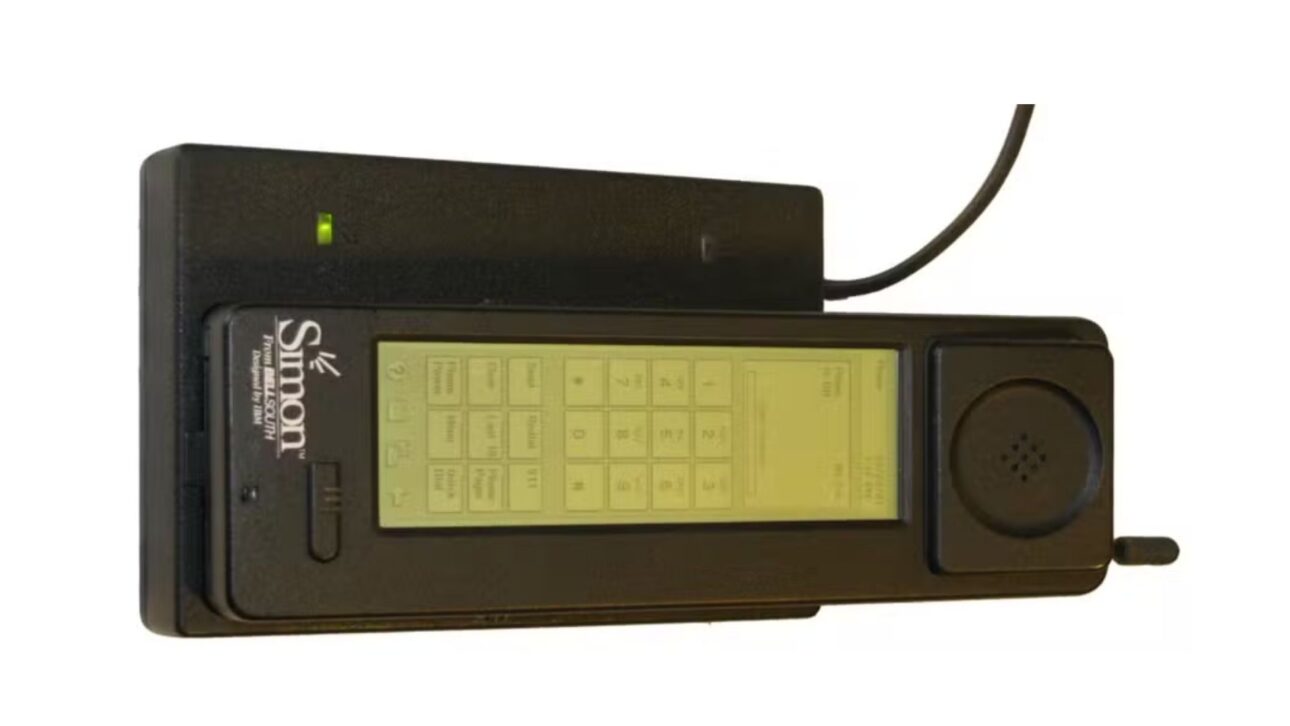
When the IBM Simon Personal Communicator hit stores in August 1994, the word we use for it today barely existed. Even so, the world’s first smartphone already delivered the central idea that defines the category to this day: combining, in a single device, the telephone and the personal computer. Manufactured by IBM in partnership with Mitsubishi Electric and marketed by BellSouth Cellular, this pioneer was born to be much more than an ordinary cell phone.
-
Robot Explores Atlantic Ocean Depths, Captures Unprecedented High-Definition Footage of Rare Giant Squid

-
Three 70 kg 17th-century lead ingots found stacked on the North Sea floor during Hornsea 3 wind farm investigation, 120 km off Norfolk coast

-
From Humble Beginnings in Brazil to Latin America’s Largest Fitness Chain: Smart Fit’s Journey to 5 Million Members Across 14 Countries

-
Ninja’s New Combi Multicooker Revolutionizes Cooking with Superheated Steam and Air Frying, Offering 14 Functions and Full Meals in 15 Minutes


The name was long, but the proposal was simple: a personal communicator that fit, with some effort, in the palm of your hand. That’s why the history of the smartphone doesn’t start with the iPhone, nor with the first Android devices, but with this veteran with a touch-sensitive screen, launched at a time when many people still used wired phones at home.
Understanding what the world’s first smartphone was helps measure the size of the technological leap of the last three decades. The 1994 smartphone was expensive, heavy, and limited, but it planted the seed for everything that came after. Without this first smartphone, the timeline of smart phones simply wouldn’t exist.
A 500 g “brick” with a greenish screen and stylus
At first glance, the pioneer looked like a black block of a cordless phone from that era. The IBM Simon weighed about 500 g, equivalent to a good package of rice in the palm of your hand, and featured a monochrome liquid crystal display (LCD), with that typical greenish hue of 1990s screens. No vibrant colors: the greenish glow was the hallmark of gadgets from the decade.
The big trick, however, was precisely in this screen: it was touch-sensitive. The user navigated through the menus with their fingers or with a stylus that came with the device, a feature that would only become popular many years later. For 1994, seeing someone touch a phone screen to write a message was almost science fiction.
This “brick” format is part of the retro charm of this pioneer and helped define the aesthetics of the 1994 smartphone. It didn’t display a physical numeric keypad all the time: when you needed to dial, the numbers appeared on the screen itself, something revolutionary for those used to plastic buttons. The history of the smartphone, therefore, was already betting on touch from the start.
What the IBM Simon did (and what it lacked)
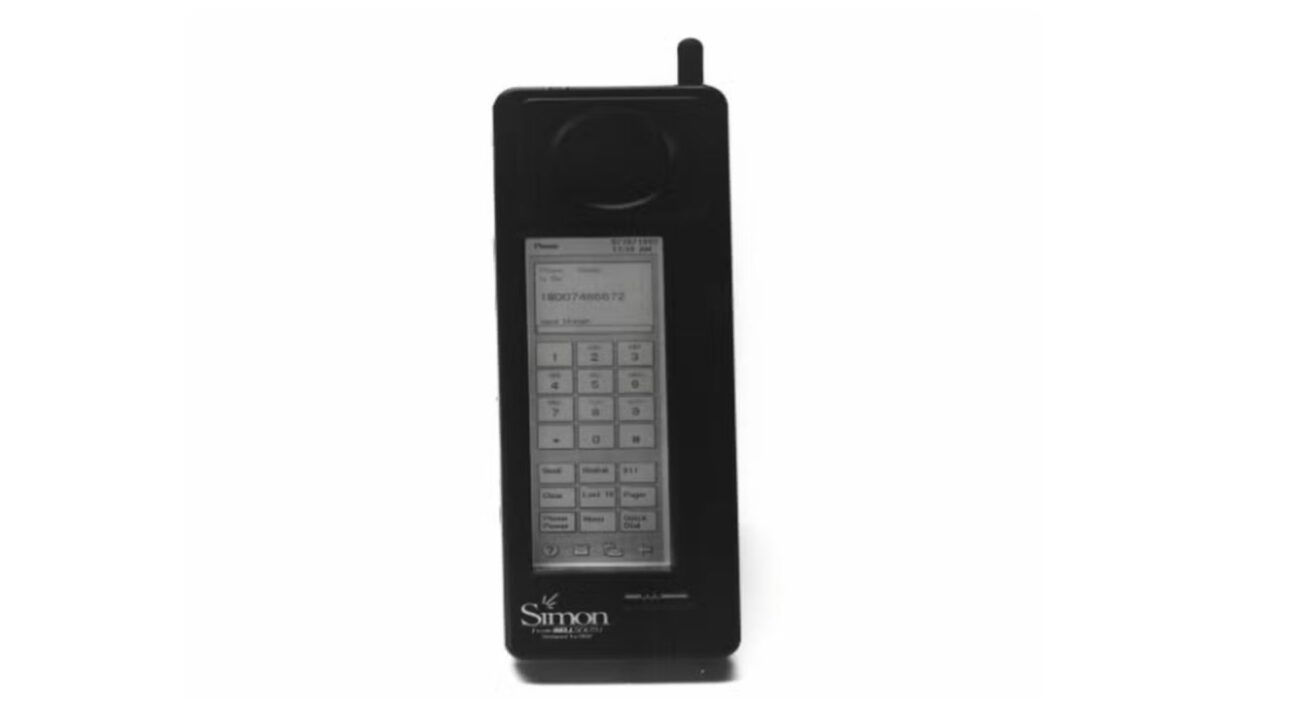
If the look was daunting, the list of functions was impressive for the time. In addition to making and receiving calls, this smart device sent and received emails and faxes, something that thrilled executives in 1994. It had a contact list, calendar, calculator, notepad, and even a world clock, all gathered in one heavy black body.
There was still a detail that sounds surprisingly modern: the IBM Simon accepted third-party applications, loaded via a card. In other words, the idea of “installing an app” to gain new functions, which seems like something from the iPhone era, was already taking its first steps back in the 1990s. This is a little-remembered chapter in the history of the smartphone, but fundamental.
Not everything was perfect. The 1994 smartphone had no camera or GPS, items that we now consider basic in any cell phone. Worse: the battery lasted about an hour of use, which forced the owner to live near a power outlet. Add to that the weight of half a kilo, and you understand why the first smartphone was an avant-garde object, but still far from being practical in everyday life.
From US$ 899 to R$ 6,222: the bill inflation made
Here comes the part that hurts the most in the pocket. The world’s first smartphone cost US$ 899 in the United States with a two-year contract, and went up to US$ 1,099 for those who wanted to take the device without carrier ties. It was already a luxury price in 1994, reserved for those with a lot of spare money or companies willing to pay dearly for the novelty.
Now comes the economic twist. When you adjust those US$ 899 from 1994 for inflation until 2026, the value is equivalent to about R$ 6,222. It’s not a small amount: this sum is close to the price of a brand new iPhone 16 Plus, one of the most advanced smartphones on sale today. In terms of purchasing power, therefore, the first smartphone cost almost the same as a current top-of-the-line model.
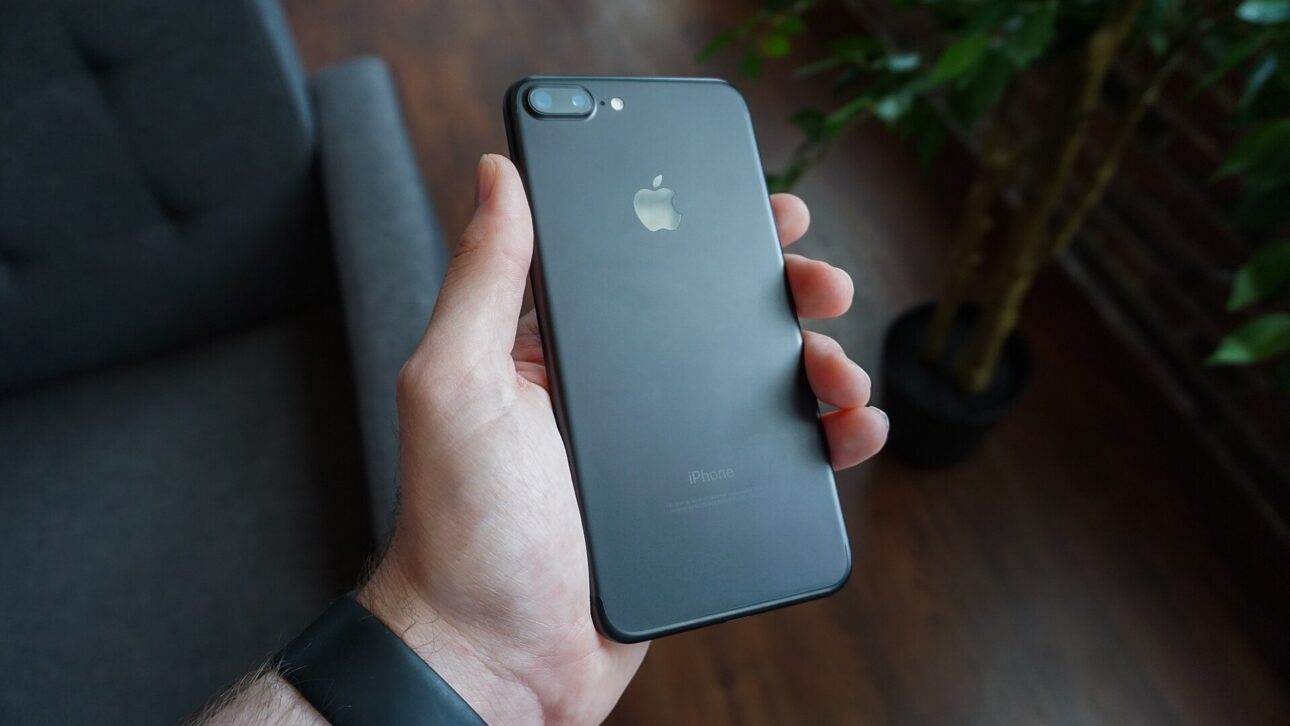
The comparison with the iPhone 16 Plus is what makes the story so intriguing. For a similar price, the 1994 buyer took home a “brick” with a green screen and a one-hour battery, while the 2026 buyer gets an iPhone 16 Plus with professional cameras, a high-resolution screen, and an all-day battery. The first smartphone and the iPhone 16 Plus cost almost the same, but deliver completely different worlds.
First smartphone or first cell phone? DynaTAC enters history
Here it is necessary to clear up a common confusion. The IBM Simon was the first smartphone, but it was not the first cell phone in history. That other title belongs to the Motorola DynaTAC, launched in 1983, more than a decade before the pioneer of smart devices.
The difference is important and explains a lot. The Motorola DynaTAC, from 1983, was a cell phone in the pure sense: it was used to make and receive wireless calls, and that’s it. The first smartphone, the pioneer of 1994, was the first to combine a phone with computer functions, such as email, calendar, and applications. In other words, the cell phone was born in 1983, but the smartphone only appeared 11 years later.
Saving these dates helps to not confuse the history of the smartphone with the history of the cell phone. There were eleven years between the first cell phone and the first smartphone, a period in which technology matured enough to fit into a device that did much more than just make calls. The 1994 smartphone was the milestone that separated the common phone from the pocket-sized minicomputer.
Why did the first smartphone sell only 50,000 units?
If the device was so advanced, why does almost no one remember it? The answer lies in the sales numbers. The world’s first smartphone sold only about 50,000 units, all in the United States, and available in only 15 states of the country. It was never a mass success.
The steep price, the half-kilo weight, the one-hour battery, and the absence of a data network like we have today weighed against it. The 1994 smartphone was ahead of its time, but the world still lacked the infrastructure and appetite for it. Result: the IBM Simon was discontinued about two years after its launch, a very short life for such an innovative product.
Even so, the pioneer fulfilled its role. It proved that it was possible to put a small computer inside a phone, an idea that would only become viable on a large scale when batteries, screens, and networks evolved. The history of the smartphone, therefore, begins with a commercial failure that, over time, became a celebrated technological milestone.
From the restricted luxury of 1994 to the mass smartphone
Looking at the first smartphone and the iPhone 16 Plus side by side is to see, in two points, the entire evolution of mobile technology. In 1994, having a smartphone was a privilege for very few: expensive, heavy, and restricted to some American states. It was a status symbol, not an everyday object for billions of people.
Thirty-odd years later, the script has completely reversed. The device has ceased to be a luxury and has become a necessity, present in the hands of workers, students, and retirees. What was an exception in the 1994 smartphone became the rule in 2026: almost everyone carries in their pocket a phone much more powerful than the first smartphone ever dreamed of being.
And the price tells this story better than any speech. The same money that, adjusted for inflation, bought a single green-screen device now buys a top-of-the-line iPhone 16 Plus or, if the person prefers, several well-capable mid-range phones. The technology has become incomparably better for the same real value, and that is the most beautiful lesson of the smartphone’s history.
What does the first smartphone have to do with Brazil?
Everything, when it comes to purchasing power. Those R$ 6,222 that the first smartphone would cost today, adjusted for inflation, serve as a very interesting benchmark for the Brazilian consumer. With that amount, you can buy anything from Apple’s top-of-the-line, in the range of the iPhone 16 Plus, to a bunch of powerful smartphones from various brands.
In practice, R$ 6,222 in Brazil in 2026 goes a long way. It’s enough money for a single premium device or, if the idea is to save, for three, four, or even more phones in the range of R$ 800 to R$ 2,000. These models do everything the IBM Simon did and much more, with a camera, GPS, fast internet, and a battery that lasts all day. A Brazilian who spends R$ 1,500 on a phone today takes home technology that, in the 1994 smartphone, even the wealthiest couldn’t buy for four times that amount.
This is the message that the history of the smartphone leaves for Brazil: what was once an imported and inaccessible luxury has become a mass item in the pocket of Brazilians. From street vendors to app delivery drivers, the smartphone has become a tool for work and income. The first smartphone opened a door that, decades later, helped connect all of Brazil, even though the 1994 smartphone was never sold here.
And you, would you trade your current phone for the pioneer from 1994?
And you, would you be willing to go back in time and use the world’s first smartphone instead of the device in your hand now? Imagine facing the day with a 500 g “brick,” a greenish screen, a one-hour battery, and no camera, all for the equivalent of R$ 6,222, almost the price of a brand new iPhone 16 Plus. Hard to agree, isn’t it?
It’s exactly this contrast that makes the history of the smartphone so fascinating. In just over three decades, we’ve gone from an expensive and limited device to smartphones that cost less, in real terms, and do infinitely more. The first smartphone from 1994 was the initial brick of a revolution that today fits, light and cheap, in your pocket.
Tell us in the comments: would you pay R$ 6,222 for a 1994 smartphone or prefer to spend that money on a current iPhone 16 Plus, or even on several cheaper phones? And share this article with that friend who thinks the history of the smartphone began with the iPhone.


