Portuguese
  Spanish


Space exploration continues to spark the interest of governments, researchers, and companies worldwide. In recent years, the advancement of new technologies has completely transformed the way different countries develop missions beyond Earth’s atmosphere. In this scenario, China has once again drawn international attention after one of its experimental spacecraft released a mysterious object in Earth’s orbit, an event that raised several questions among industry experts.
Although there is still no official explanation about the purpose of the object, the episode highlights the growth of China’s space program and reinforces the importance of constant monitoring of activities conducted in space. Moreover, the mission demonstrates that the technological race among major powers continues to advance at a rapid pace.
According to a report published by R7, companies specializing in orbital tracking identified a new object near the Chinese spacecraft during the mission. So far, the country’s authorities have not disclosed details about its function.
What happened during the Chinese space mission
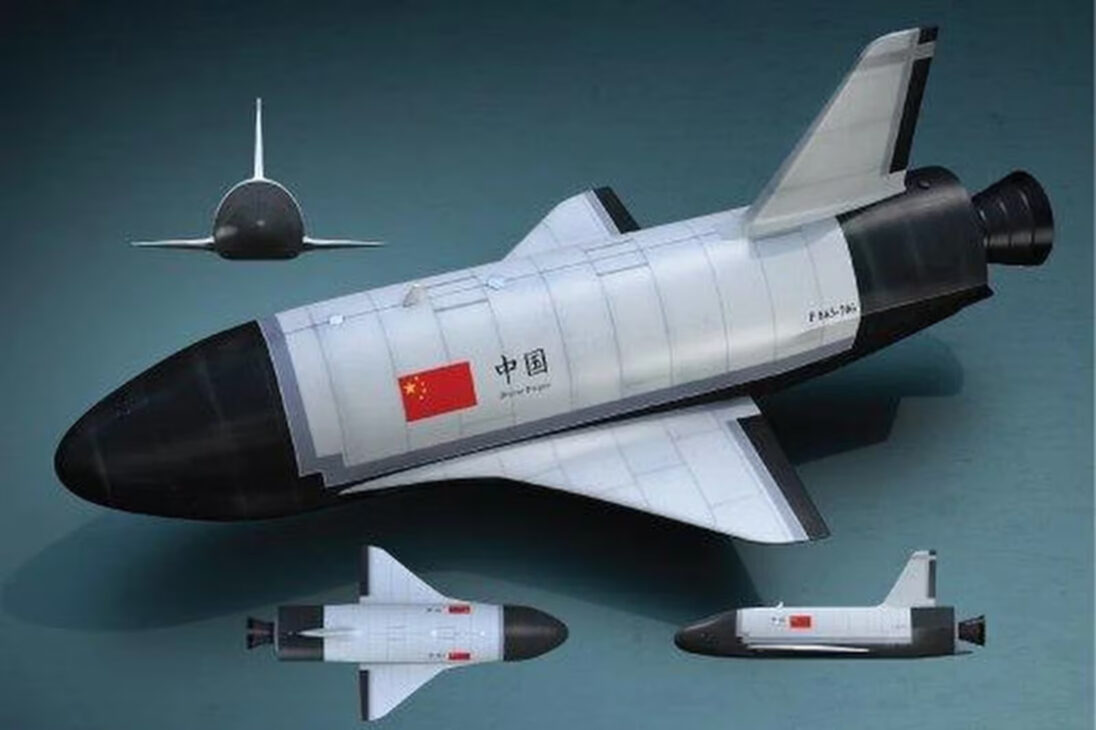
The mission involves the Shenlong, a word that means “Divine Dragon” in Chinese. China developed this reusable spacecraft to conduct technological tests in Earth’s orbit and expand its capabilities in future space missions.
-
Retired Builder Constructs House Using Over 4,000 Milk Cartons in Brazil, Engineer Estimates Structure Could Last 100 Years

-
Brazilian Well Taps Guarani Aquifer, Sparking Debate on Water Supply and Security
-
Unique Neck Flexibility and Natural Echolocation Make Amazon’s Pink River Dolphin Extraordinary

-
Young Brazilian Woman Rescues 60 Animals, Faces $6,500 Debt, and Strives to Build Shelter for Dogs and Cats




During the operation, the American company LeoLabs, specializing in monitoring objects in orbit, identified an artifact that began to follow the trajectory of the spacecraft. Subsequently, analysts studied the collected data and concluded that the vehicle likely released this new object during the mission.
So far, the Chinese government has not explained the function of the equipment. Nevertheless, the episode has sparked great interest from the international community and expanded discussions about the objectives of the country’s space program.
According to information released by LeoLabs, the tracking systems recorded the new object a few days after the start of the orbital mission.
Outras hipóteses incluem a possibilidade de que o objeto seja parte de um projeto ainda mais amplo, que ainda não foi divulgado ao público.
Por enquanto, a comunidade internacional continua a monitorar o objeto, aguardando novas informações que possam esclarecer sua função e propósito.
What is the Shenlong
The Shenlong is one of the most strategic projects of the Chinese space program. Although the government keeps some information confidential, experts know the vehicle as a reusable spaceplane capable of staying in orbit for several days before returning to Earth.
China carried out the first known mission of the Shenlong in 2020. Since then, new operations have lasted increasingly longer, demonstrating significant advances in the technology employed by the spacecraft.
Moreover, experts believe that the country uses these missions to test materials, navigation systems, orbital control, and other solutions aimed at future space travel.
According to information from the China National Space Administration (CNSA), the country continuously works to expand its technological capability in manned and unmanned missions.
Why the object attracted so much attention
Objects are often released during some space missions. Satellites, sensors, small scientific experiments, and auxiliary equipment frequently enter orbit as part of operations.
However, in this specific case, one factor increased international interest: no one officially knows the function of the new object.
LeoLabs analyzed its trajectory and verified that the equipment was not part of previous records of cataloged objects in orbit. Therefore, the company created a new record to track its movements.
Additionally, the absence of official information fueled various hypotheses among researchers and observers in the aerospace sector.
What hypotheses experts consider
So far, experts have not found sufficient evidence to determine exactly what the object’s purpose is.
Even so, some possibilities appear more frequently among researchers.
Among them are:
- testing small satellites;
- sensor validation;
- navigation experiments;
- evaluation of coupling systems;
- tests related to the development of reusable spacecraft.
Some analyses also mention possible military applications. However, no authority has presented evidence to confirm this hypothesis.
For this reason, experts recommend caution until new information is released.
The growth of China’s space program
In recent decades, China has significantly increased its investments in space technology.
In addition to developing its own rockets, the country has launched various satellites, sent probes to the Moon and Mars, and built the Tiangong space station.
Furthermore, the Chinese government plans to conduct manned missions to the Earth’s natural satellite in the coming years.
According to the China National Space Administration, these projects are part of the national strategy to strengthen the country’s presence in space exploration and expand its scientific capabilities.
As a result, China has become a prominent player among the world’s major space powers.
Space monitoring has become essential
Currently, thousands of objects orbit around the Earth.
Active satellites, decommissioned equipment, rocket fragments, and space debris share the same orbital environment.
For this reason, specialized companies continuously monitor these structures to reduce collision risks.
LeoLabs, for example, uses radars installed in different regions of the planet to track the movement of these objects.
In this way, governments, private companies, and space agencies can plan new missions with greater safety.
Why many missions remain classified
Governments often treat some space missions as strategic projects.
In addition to scientific applications, these technologies also have economic, industrial, and, in some cases, military significance.
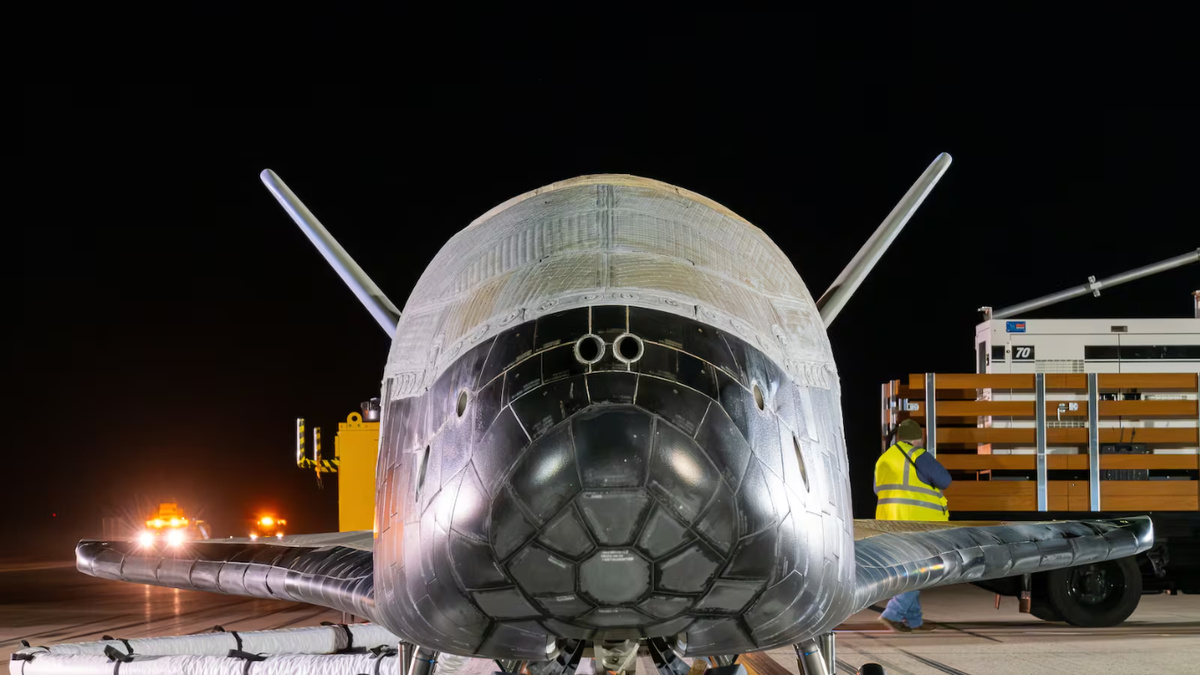
The United States follows a similar procedure with the X-37B, a reusable spaceplane operated by the U.S. Space Force.
Similarly, China only discloses general information about various experimental missions.
According to official statements, the Shenlong conducts technological tests aimed at the development of reusable vehicles, but the government does not detail the equipment used in each operation.
How reusable spacecraft are changing space exploration
For many years, practically all rockets carried out only one mission.
Today, this scenario has completely changed.
Thanks to technological advances, private companies and space agencies can reuse a significant part of the vehicles launched into space.
Moreover, this model reduces operational costs, accelerates new launches, and increases the frequency of missions.
In this context, the Shenlong represents another step by China in the development of this technology.
The new space race involves science, economy, and innovation
Space exploration has ceased to represent just a scientific challenge.
Today, satellites ensure communications, weather forecasting, GPS navigation, environmental monitoring, and various strategic applications for governments and companies.
Furthermore, new space technologies drive research in telecommunications, agriculture, defense, and Earth observation.
Therefore, any advancement made by major powers tends to attract international attention.
At the same time, private companies are also increasing investments in this sector, making the space race even more competitive.
What to expect from the next missions
Experts will continue to monitor the trajectory of the object released by the Shenlong.
Meanwhile, companies responsible for orbital monitoring should release new analyses if they identify changes in its behavior.
Additionally, there is the possibility that the Chinese government will present new information about the mission in the coming months.
Regardless of the purpose of this equipment, the episode demonstrates how space exploration is rapidly evolving.
Finally, the mission reinforces the importance of developing reusable technologies and highlights that international cooperation, orbital monitoring, and investments in innovation will continue to play a fundamental role in the safety and future of space operations around Earth.