Portuguese
  Spanish


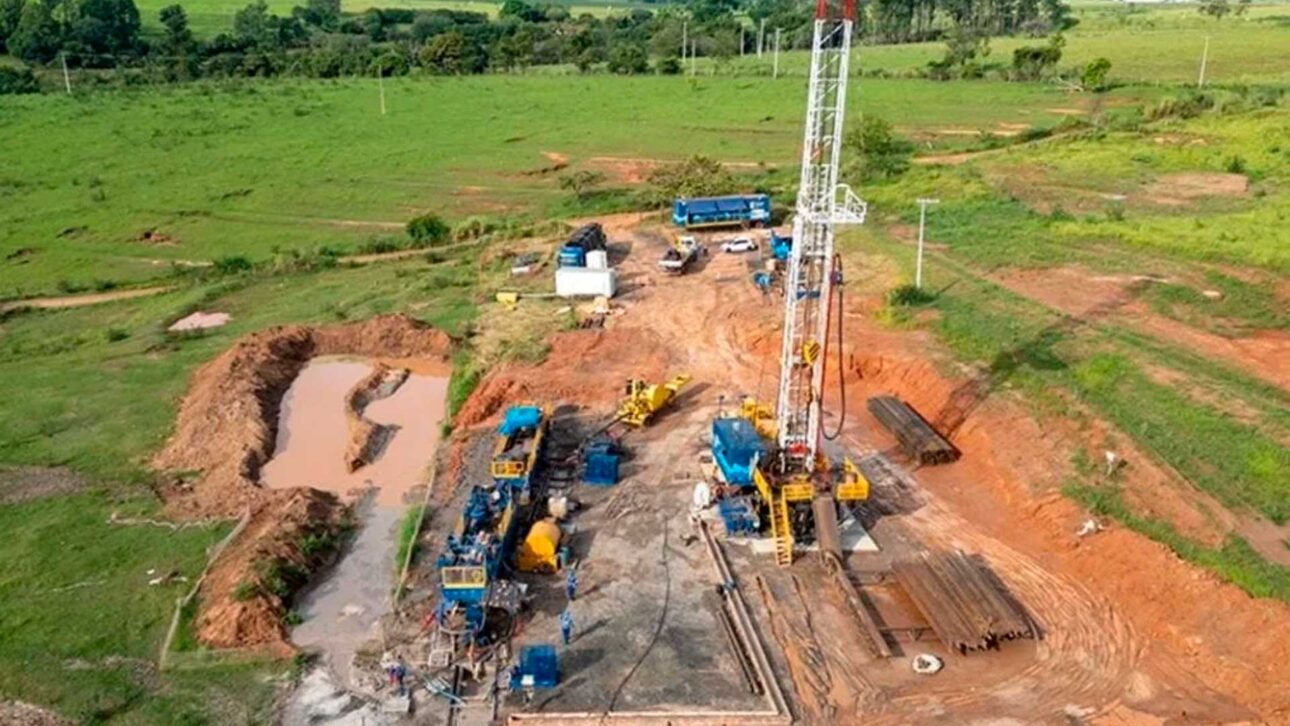
Structure PG-08 has a projected capacity of 250 thousand liters per hour, underwent drilling, cleaning, testing, and pipeline, and is expected to relieve the supply of the South and East Zones of Marília amid increasing pressure on urban water systems.
The new deep artesian well PG-08, installed in the Lácio District, in Marília, in the interior of São Paulo, has come into the spotlight of local sanitation due to a number hard to ignore. The structure was designed to capture 250 thousand liters of water per hour directly from the Guarani Aquifer.
The work is conducted by RIC Ambiental, the concessionaire responsible for water supply and sewage services in the urban areas of Marília. According to information released by the company on June 7, 2025, the drilling, installation of pipes, and well profiling had already been completed at that time.
The next step involved internal cleaning, removal of solid residues left by the drilling, and flow testing. This test measures the actual production capacity of the artesian well and helps verify if the structure delivers, in practice, what was projected in the plan.
-
Unique Neck Flexibility and Natural Echolocation Make Amazon’s Pink River Dolphin Extraordinary

-
Young Brazilian Woman Rescues 60 Animals, Faces $6,500 Debt, and Strives to Build Shelter for Dogs and Cats

-
Artesian Well Becomes Lifeline for Small Brazilian Farm: Drilling Reaches 60 Meters, Finds Marble, Navigates Rock Fissures, and Strikes Fresh Water
-
Street Cleaner in Brazil Finds Discarded Books That Helped His Wife Pass Civil Service Exam and Become Police Captain



In a subsequent publication, the concessionaire informed that PG-08 was already in operation, still with final adjustments to function fully integrated into the network. The well is treated by the company as a reinforcement piece for the South and East Zones of Marília, regions that depend on greater supply stability.
The number of 250 thousand liters per hour changes the scale of supply in Marília
The projected capacity of PG-08 equals 6 million liters of water per day, should the structure operate for 24 hours at the estimated maximum flow. In practice, the operation depends on testing, granting, hydraulic integration, storage, water quality, and network balance.
Even so, the volume shows the importance of the work within the local system. In a city with expanding neighborhoods, more properties connected to the network and increasingly felt drought periods by the population, increasing water production does not solve everything alone, but it reduces a visible bottleneck.
According to RIC Ambiental, the deep artesian well was planned to serve thousands of families in the South and East Zones. In October 2025, the company also reported that the pipeline connected to PG-08 would have 2.5 kilometers in length, with piping made of HDPE, a material used in pressurized networks for its resistance and long lifespan.
This pipeline is the connection that turns the well into a real supply. Without it, the water extracted from the underground does not reach the reservoirs, homes, and businesses. Therefore, the interconnection stage to the network is as crucial as the drilling.
The water comes from the Guarani Aquifer, a strategic reserve that requires control
PG-08 extracts water from the Guarani Aquifer, one of the most well-known underground systems in South America. According to the Geological Service of Brazil, this aquifer covers about 1.2 million square kilometers and spreads across areas of Brazil, Argentina, Paraguay, and Uruguay.
In Brazil, the system appears under parts of states such as São Paulo, Paraná, Santa Catarina, Rio Grande do Sul, Mato Grosso do Sul, Mato Grosso, Goiás, and Minas Gerais. It is not a uniform “water tank” underground. The quality, depth, pressure, and flow vary depending on the region.
In the case of PG-08, RIC Ambiental reported that the extracted water has an alkaline pH and a higher natural concentration of minerals. This characteristic can create the sensation of “smooth water” to the touch, according to the company itself, without indicating, by itself, a health risk.
The concessionaire also informed the forecast to install a tank for the acidification process, aiming to reduce this sensation without compromising the water quality. This type of adjustment shows that a deep well is not just about drilling and pumping. Treatment and operation need to follow the characteristics of the water found.
Flow test, internal cleaning, and concession define what can come out of the well
The internal cleaning phase is a common technical step after drilling. It removes sand, rock fragments, mud, and residues that can compromise pumps, piping, and the well’s production reading itself.
Then comes the flow test. It is during this test that technicians observe how much the well delivers, how the water level behaves during pumping, and whether the extraction can be maintained without causing an inappropriate drop in the underground system.
In São Paulo, the use of underground water depends on authorization. As informed by the State of São Paulo’s Department of Environment, Infrastructure, and Logistics, the concession determines how much each user can extract, regulates shared use, and provides for quantitative control.
For deep wells used in public supply, the authorization is valid for 10 years. There is also a requirement to measure the exploited flow and submit an annual report with the extracted volume and the well’s static and dynamic levels.
This point is crucial for any debate about artesian wells or deep wells in Brazil. The project can increase a city’s water security, but the extraction needs to be measured, authorized, and monitored to prevent uncontrolled exploitation.
PG-08 is part of a series of works in the city’s water system
The Lácio well is not an isolated action. RIC Ambiental reported that it also reactivated and deepened strategic wells in Marília. In the Água do Norte system, the wells PSG.02 and PSG.03 increased production by 90 thousand liters per hour, benefiting the East Zone and the airport region.
Another point mentioned by the company is the well known as “Gigantão” in the North Zone, with a capacity of 75 thousand liters per hour. It reinforces the supply to neighborhoods like Santa Antonieta and Altos do Palmital.
The concessionaire also mentioned PG-09, in the Figueirinha neighborhood, expected to add about 250 thousand liters per hour to the North Zone. Combined, these projects indicate a strategy based on increasing underground production, recovering existing structures, and interconnecting with distribution networks.
The concession contract for public water and sewage services in Marília was signed on September 5, 2024, and, on the City Hall’s portal, it appears as valid until September 5, 2059. The municipal record states a contract value of R$ 2.03 billion, within the water supply and sewage disposal concession.
Do you think deep wells are the best solution for cities suffering from water shortages, or should investment prioritize reducing losses and recovering old networks? Leave your opinion in the comments and tell us if your city also relies on underground water.