






 Portuguese
  Spanish
  4 min of reading
  0 comments


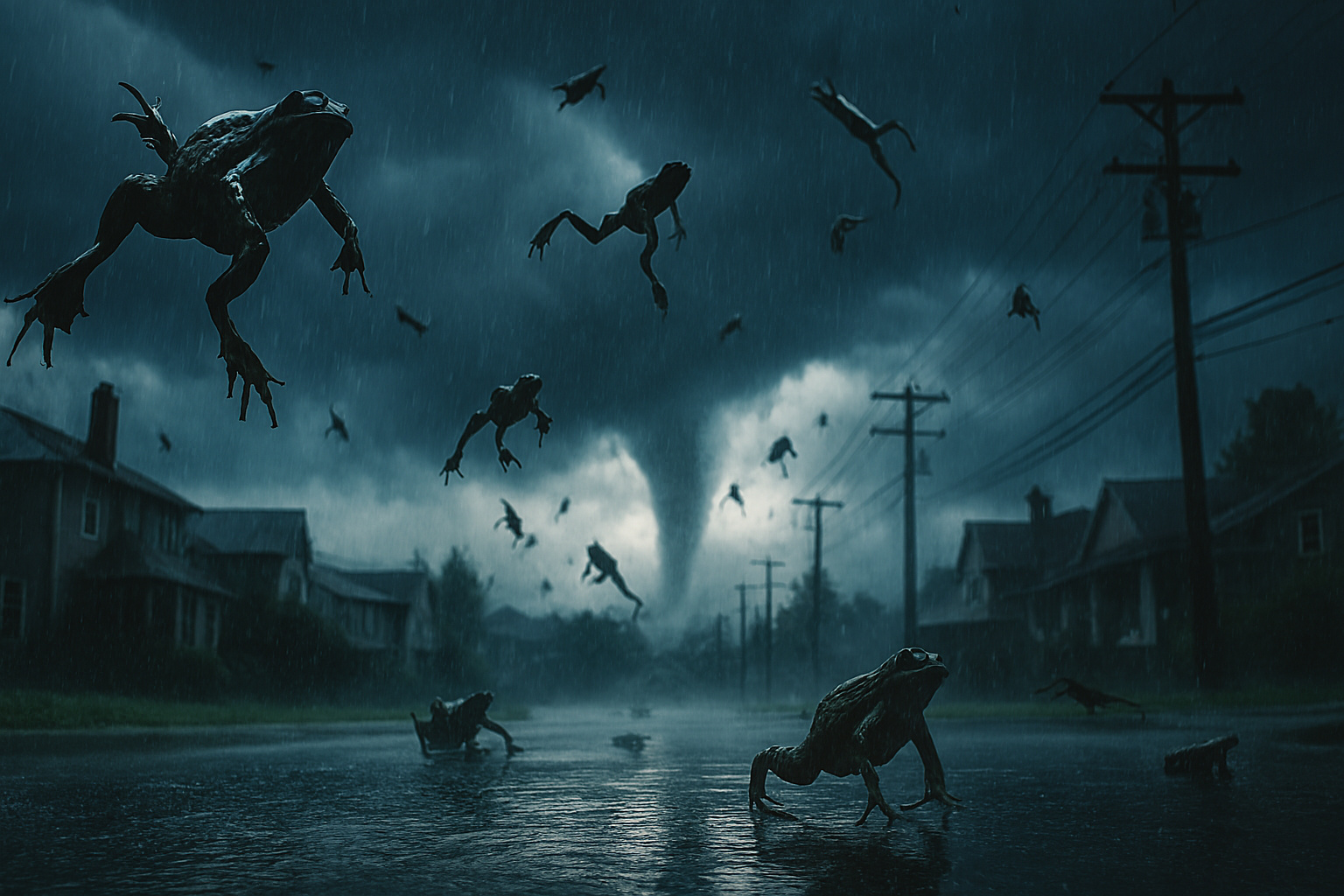
Rare Phenomenon Intrigues Residents: “Raining Frogs” During Storms Show How Waterspouts Suck Amphibians and Launch Them from the Sky in Different Countries.
At different times in recent history, residents of cities around the world have reported a scene that seems straight out of a surreal movie: frogs falling from the sky during storms, scattered across streets, rooftops, and backyards shortly after the rain. The phenomenon, which at first glance sounds like an urban legend or popular exaggeration, is real, documented, and studied by science, and follows a specific meteorological pattern.
Although rare, the so-called “raining frogs” has been recorded in countries across Europe, Asia, Oceania, and the Americas, always associated with extreme weather events, especially waterspouts, localized tornadoes, and strong upward wind currents.
When the Storm Carries Aquatic Life to the Sky
The most accepted scientific explanation for the raining frogs involves the action of extremely intense wind columns, capable of sucking water and small animals from shallow lakes, wetlands, ponds, and flooded areas.
-
Space technology used to search for water on Mars is now hunting for invisible leaks under the streets of São Paulo, using satellites, AI, and chlorine signals to help Sabesp recover up to 6.7 billion liters of water.

-
Japan sends ship to extract mud rich in rare earths at nearly 6,000 meters deep in the Pacific, attempts to lift 350 tons per day from the seabed, and transforms sediments near Minamitori Island into a strategic weapon to reduce dependence on China.
-
Venus Aerospace promises a rotating detonation hypersonic engine that takes the Stargazer to Mach 9 and crosses oceans in 1 hour, but the flight that made history barely surpassed the speed of sound.

-
Brazilian student creates a cheap formula that makes plants grow up to 90% faster and wins an award in a global scientific competition.




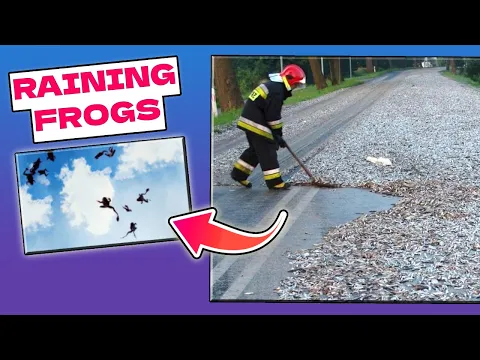

During the formation of a waterspout or a weak tornado, the upward wind creates a true suction effect, lifting not only raindrops but also light organisms, such as frogs, tadpoles, small fish, and aquatic insects. These animals can be transported for hundreds of meters — or even kilometers — before the system loses strength.
When the phenomenon dissipates, everything that was sucked falls back to the ground, often mixed with rain, creating the impression that the animals simply “plummeted from the sky.”
Real Cases That Shocked Residents
Reports of raining frogs are not exclusive to a single country or time. There are widely publicized records in places such as:
- Sri Lanka, where residents reported amphibians falling after heavy storms
- Australia, with documented episodes in rural areas after strong winds
- United States, especially in regions close to swamps and lakes
- United Kingdom, with historical reports associated with violent cold fronts
In all these cases, the pattern repeats: intense rain, extreme wind, proximity to bodies of water, and animals concentrated in a specific area, usually of the same species and size.
This detail is important. Normally, the frogs found after the phenomenon are very similar to each other, which reinforces the idea that they were sucked from a single location.
Why Frogs and Not Other Animals?
Frogs are especially susceptible to this type of event for some clear reasons. They live in aquatic or flooded environments, are relatively light, and often concentrate in large numbers during breeding periods.
Moreover, many species spend part of their time on the water’s surface or in shallow areas, precisely where the wind’s force can act most effectively. In a scenario of extreme winds, frogs become “easy targets” for the atmospheric suction.
An Ancient Phenomenon, but Rarely Understood by the Public
Raining animals have been mentioned in historical accounts for centuries. Ancient writings described inexplicable falls of fish, frogs, and even small crustaceans after storms. Today, science dismisses supernatural explanations and points to the violent dynamics of the atmosphere as the most likely cause.
What confuses witnesses is the fact that, often, the storm does not seem strong enough at the location where the animals fall. The suction event may have occurred kilometers away, far from the point where the “raining frogs” is observed.
Rare Phenomenon, but Possible Anywhere
Although impressive, the raining of frogs is extremely rare and depends on a very specific combination of factors: intense wind, shallow water, presence of animals, and an unstable meteorological system.
It does not indicate contamination, is not linked to pollution, and is not a sign of something “out of the ordinary” in the local climate. It is an unlikely but possible collateral effect of nature’s force in extreme events.
When the Impossible Has an Explanation
The raining of frogs is one of those phenomena that defies common sense and fuels popular imagination precisely because it breaks with everyday logic. Animals should not fall from the sky — but under certain conditions, the atmosphere is capable of doing just that.
It is a clear reminder that nature operates on scales and forces that we rarely perceive, but that, in extreme moments, become visible in almost unbelievable ways.
Phenomena like the raining frogs show that not everything that seems impossible is supernatural. Sometimes, the explanation is simply in the perfect — and rare — combination of wind, water, and life.
And you, dear reader: if you witnessed a rain of frogs in your city, would you believe your own eyes or think it was just another exaggerated storm story?


-

-

-

-

-

-

127 people reacted to this.