






 Portuguese
  Spanish
  8 min of reading
  13 comments


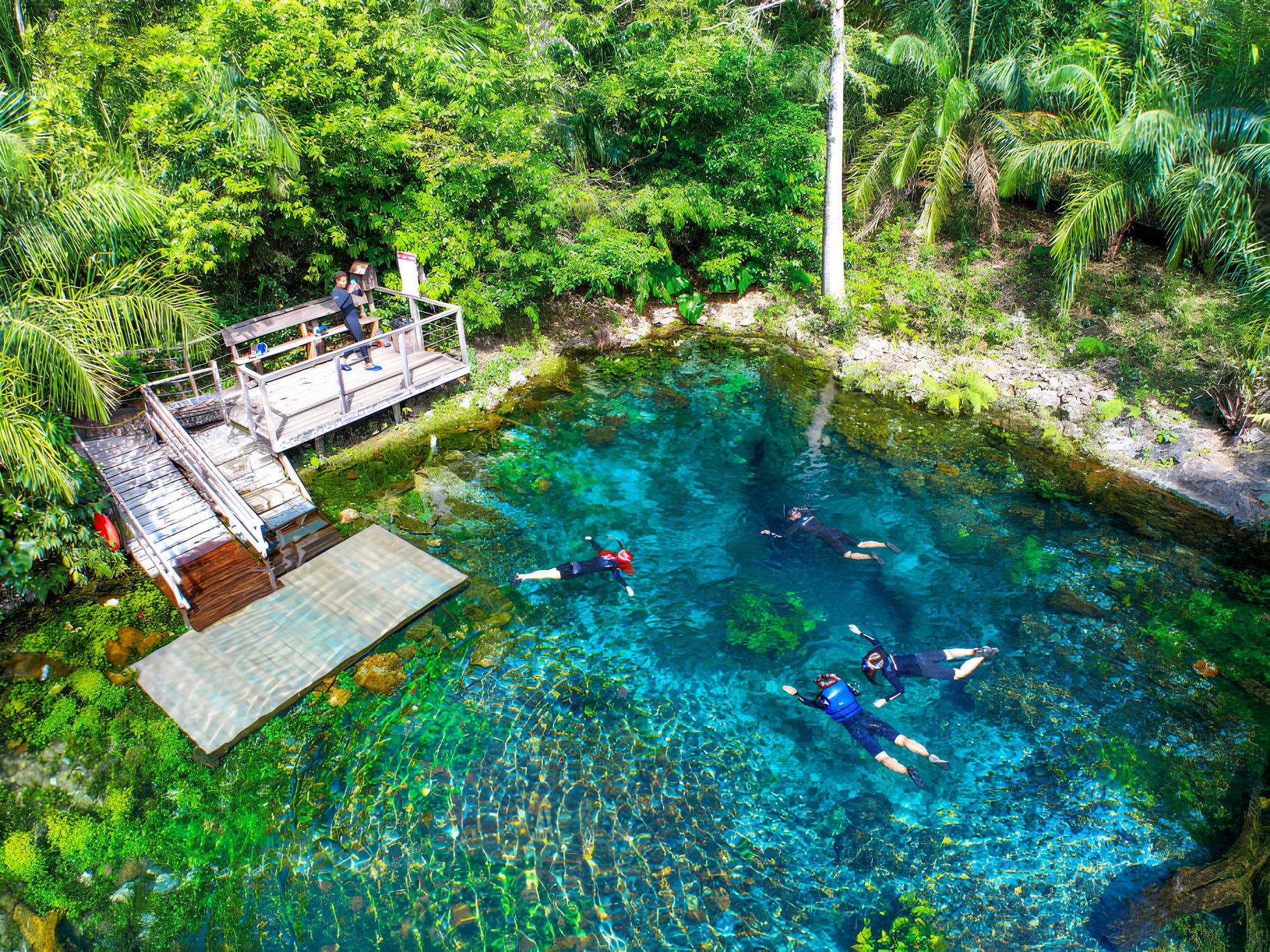


Bonito (MS) Became a Global Reference in Sustainable Tourism by Earning the UN Carbon Neutral Seal, Preserving Crystal Clear Rivers with Up to 30 Meters of Visibility, and Creating an Ecotourism Model Copied by Over 40 Countries.
Imagine floating over waters so clear that you can see every stone, every fish, every plant on the riverbed 30 meters deep. It seems like fantasy, but it’s exactly what happens in Bonito, a city of 23,000 residents in Mato Grosso do Sul that became a global reference in sustainable tourism.
In 2022, Bonito made history by becoming the first ecotourism destination in the world certified as carbon neutral by the Green Initiative, one of the 30 certifying companies recognized by the UN. This is the result of more than four decades of meticulous work in environmental preservation.
Bonito built a tourism management model that is so innovative that it is today studied and copied by over 40 countries. The municipality has been elected the best ecotourism destination in Brazil 18 consecutive times, receives about 300,000 tourists annually, and drives an economy that relies on tourism for more than 50% of its revenue.
-
Survivor of 1966 SS Daniel J. Morrell Shipwreck in Lake Huron Recounts 38-Hour Ordeal in Extreme Cold

-
The Greatest Hoax in World Cup History? The Film That Denied Brazil’s 1958 Victory and Exposed How Fake Evidence Can Seem Convincing on TV
-
Fake South Korean Online Stores Offer Shopping Thrill Without Spending Money or Receiving Products
-
The War of Jenkins’ Ear: How a Severed Ear Sparked One of the 18th Century’s Most Unusual Conflicts


The Most Crystal Clear River in Brazil
The Sucuri River, located 19 kilometers from downtown Bonito, is considered one of the three rivers with the clearest waters in the world. It can be compared to Jiuzhaigou Valley in China, Lake Königssee in Germany, and the Maldives.
The extreme transparency is the result of natural filtration through the limestone rocks of the Bodoquena Range. Underwater visibility reaches an impressive 30 meters of horizontal depth, allowing you to see every detail on the riverbed as if it were through crystal glass.
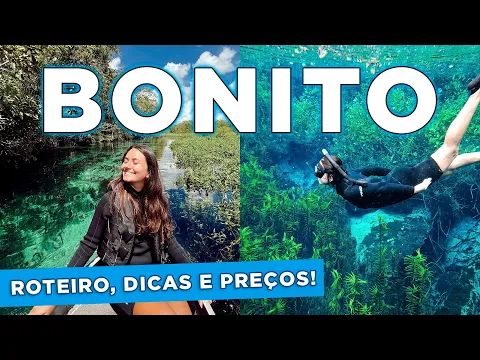

During the float, you glide smoothly over the waters along 1,800 meters. The river has a maximum depth of 3 meters, but you cannot touch the bottom with your hands or feet. This strict rule prevents sediments from being stirred up and destroying the transparency.
A support boat with a monitor accompanies each group of no more than 8 people. You don’t need to know how to swim because the life jacket and neoprene suit provide natural buoyancy. Children from the age of 4 can join the tour with their parents.
The water color varies from turquoise blue to tea green depending on the sunlight. The springs bubble up from the ground in boiling holes that look like small submerged volcanoes. The full tour lasts 2 hours and 30 minutes and costs an average of R$ 346 per person.
The Unique Voucher System That Became a Global Model
The most revolutionary innovation in Bonito is a simple paper called the unique voucher, implemented in 1995. It completely changed the way tourism operates in the city and is now copied by dozens of destinations.
No tourist can enter tourist attractions without purchasing this official document issued by accredited agencies. The voucher contains the visitor’s name, date and exact time of the tour, number of spots, and maximum capacity allowed.
Each attraction has had its carrying capacity calculated by biologists through detailed technical studies. The Sucuri River allows a maximum of 8 people per group every 20 minutes. When spots run out, no one else can enter that day.
Bonito controls with surgical precision how many people visit each attraction at any given moment. This prevents crowds from gathering and destroying the place they came to visit.
The system, since the 1980s, included pioneering measures. Mandatory trained tour guides for all tours, rigorous environmental licensing, and the creation of COMTUR, which brings together government, private sector, and community.
Bruno Wendling, director of the MS Tourism Foundation, summarizes: “Bonito is the only destination in the country that effectively controls carrying capacity. This set makes Bonito unbeatable in sustainable ecotourism.”
The success has inspired other destinations. Nobres in Mato Grosso, Fernando de Noronha, and Chapada dos Veadeiros have adopted similar visitor control models.
First Carbon Neutral Destination Certified by the UN
In December 2022, Bonito received the historic certificate as the first ecotourism destination in the world to achieve carbon neutrality. The certification was the result of a rigorous technical process conducted by the Green Initiative over several months.
The first step was taken in 2014 when Mato Grosso do Sul published a law anticipating carbon neutrality for the entire state by 2030. This brought forward the commitments of the Paris Agreement by two decades.
Juliane Salvadori, Secretary of Tourism, explains: “It was tremendously challenging work. The most important thing is to continue maintaining the effort year after year.”
In addition to the municipality, Estância Mimosa was considered the first tourist destination in the world “Climate Positive.” This means the system absorbs more carbon than it emits. Located in a reserve with 420 hectares, only 35 are used for tourism.
Sylvia Schmidt, from Hotel Paraíso das Águas, the first with a zero waste certificate in the state, dispels the myth: “By managing waste correctly, you reduce carbon emissions. It shows that it is possible without breaking financially.”
The Numbers That Prove It Works
Bonito received a total of 293,712 tourists in 2025, a 1% increase compared to 2024. The year 2023 was the best in history with 313,316 tourists and 909,605 visits, surpassing 2019 by 49.5%.
Most tourists come from São Paulo (34.95%), Paraná (9.09%), Rio de Janeiro (7.82%), and Santa Catarina (7.56%). Among foreign visitors, Paraguay (1.50%), Netherlands (1.49%), USA (1%), and Germany (0.96%) stand out.
The regional airport recorded 36,388 landings in 2025, a growth of 34.67% over 2024. Today three airlines operate: Gol from Congonhas, Azul from Campinas, and Latam from Guarulhos.
The paving of highway MS-345 completed in 2024 shortened the route between Campo Grande and Bonito by 50 km. The journey became faster and safer.
The average hotel occupancy rate was 53% in 2025. With 7,000 beds and 500 rental houses, Bonito could accommodate many more people. But it consciously chooses not to do this because overcrowding would be unsustainable.
Why Charge for Mandatory Voucher
First reason: the attractions are not public beaches or national parks. They are private properties where owners have invested millions to create quality infrastructure with trails, bridges, changing rooms, restaurants, and safety equipment.
Second: part of the revenue goes to the Municipal Tourism Fund, which finances environmental preservation projects, maintenance of public attractions such as the Blue Lake Cave, educational campaigns, and training for guides.
Third: price regulations set by the city hall prevent each vendor from charging whatever they want, avoiding unfair competition and tourists feeling cheated.
Fourth: the voucher with scheduled times is the only way to control carrying capacity while respecting scientifically calculated environmental limits.
Fifth: the high cost reflects a deliberate decision to seek quality tourism with high added value rather than mass tourism with low quality.
The mayor, Josmail Rodrigues, summarizes: “This award we’ve won 18 times is the result of intense work. We entered history as the first carbon neutral destination. We still have challenges in river conservation, but we are prepared.”
The Complete Experience in Bonito
When you arrive in Bonito, you find a charming city with a tranquil atmosphere. The center features a tree-lined square, clean and safe streets, and restaurants serving cuisine that blends Pantanal, Paraguayan, and Brazilian influences.
The nightlife offers bars with music ranging from sertanejo to MPB and rock. On the main avenue, there are regional craft shops with pieces in wood, ceramics, and fabrics inspired by local fauna.
The heart of the experience lies in the more than 50 tourist attractions spread across the region. Floats in rivers like Sucuri, Rio da Prata, and Nascente Azul are the most iconic activities, allowing you to float in natural aquariums.
The freshwater bathhouses offer a more economical option for families. Waterfalls like the 10 falls of Estância Mimosa provide cinematic scenery and natural pools.
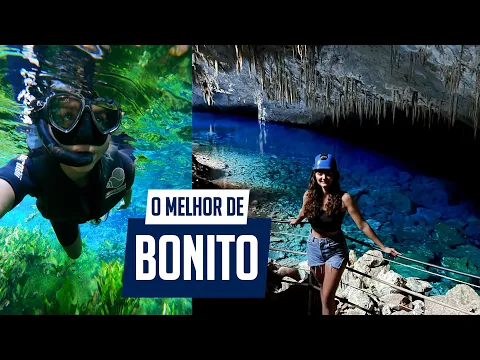
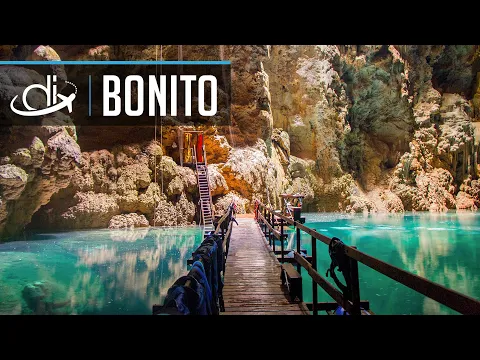
The caves, such as the Blue Lake Cave, listed by IPHAN in 1978, reveal geological formations with gigantic stalactites and stalagmites. The Anhumas Abyss offers a 72-meter rappel followed by diving in an underground lake.
Adventure activities include rafting, ziplining, trails of varying difficulties, quad biking, and scuba diving for all experience levels.
Future Challenges That Bonito Needs to Face
Despite the success, Bonito does not rest on its laurels. The biggest current challenge is the conservation of the rivers that are the heart of the tourist activity. Any degradation in water quality would destroy the city’s main asset.
The mayor, Josmail, explains: “We still have many challenges in conserving our rivers. We are already developing, with the State, a master urban drainage plan to prevent pollution and protect springs.”
Global climate change poses a real threat even to well-managed destinations. Changes in rainfall patterns and extreme events can affect fragile aquatic ecosystems.
Population growth will increase pressures on urban infrastructure, demand for treated water, and sewage collection. This necessitates careful planning and ongoing investments.
The growing expectations of tourists for extraordinary experiences creates pressure to develop new attractions. But this needs to be balanced against the real limits of the region’s carrying capacity.
Environmental education for tourists with varying levels of ecological awareness requires ongoing pedagogical work from the guides. They explain rules like not touching animals, not feeding fish, and not using sunscreen before entering the water.
The balance between cultural authenticity and the demands of tourists accustomed to urban comforts is a permanent challenge. The city strives not to become an artificial theme park that has lost its genuine character.
The economic dependence on tourism, which accounts for over 50% of revenue, creates vulnerability. Any event that affects the sector can devastate the local economy, suggesting a need for diversification.
The Universal Lesson That Bonito Teaches the World
The story of Bonito is a profound lesson about how economic development and environmental preservation can coexist. Forty years ago, it was a little-known town living off agriculture with an uncertain future.
Some visionaries realized that the crystal-clear waters could be valuable economic assets if managed with a focus on quality and sustainability. They faced skepticism, community resistance, and a lack of infrastructure.
But they persisted. They invested limited resources, educated the community about preservation, created COMTUR, implemented the unique voucher, and trained professional guides. Gradually, they built the impeccable reputation recognized worldwide.
The result is that Bonito now has a per capita income higher than the state average. Young people find rewarding careers without migrating to big cities. The community values preservation because it sees direct benefits.
The most important lesson is not about unique geographical features. It has everything to do with the deliberate choices that communities make about how to value and preserve natural assets.
Thousands of places have beautiful rivers, waterfalls, and forests. Very few have transformed this into sustainable models because they lack discipline to resist quick gains, long-term vision, and courage to implement strict rules.
When tourists from developed countries arrive in Bonito and are impressed to discover that a small Brazilian town has created a more efficient model than European destinations, it validates that sustainable development is possible in any context.
The final message is clear and inspiring. Rigorous environmental preservation and prosperous economic development are not contradictory goals. They are complementary faces that reinforce each other when managed with intelligence, planning, cooperation, and genuine commitment to long-term sustainability.





Já fui 8 vezes, é o local de natureza mais espetacular que conheço!
Estive no começo de 2025 em Bonito eu e meu marido e ficamos encantados com tudo , a cidade é muito charmosa e as águas dos rios são de derramar lágrimas de emoção e gratidão por tanta beleza.
Realmente Bonito merece esse título e esse nome .
Em 2007 já era caro. A flutuação sobre o rio Formoso foi a melhor coisa que eu fiz na vida. Inesquecível.