





 Portuguese
  English
  Spanish
  4 min of reading
  1 comment


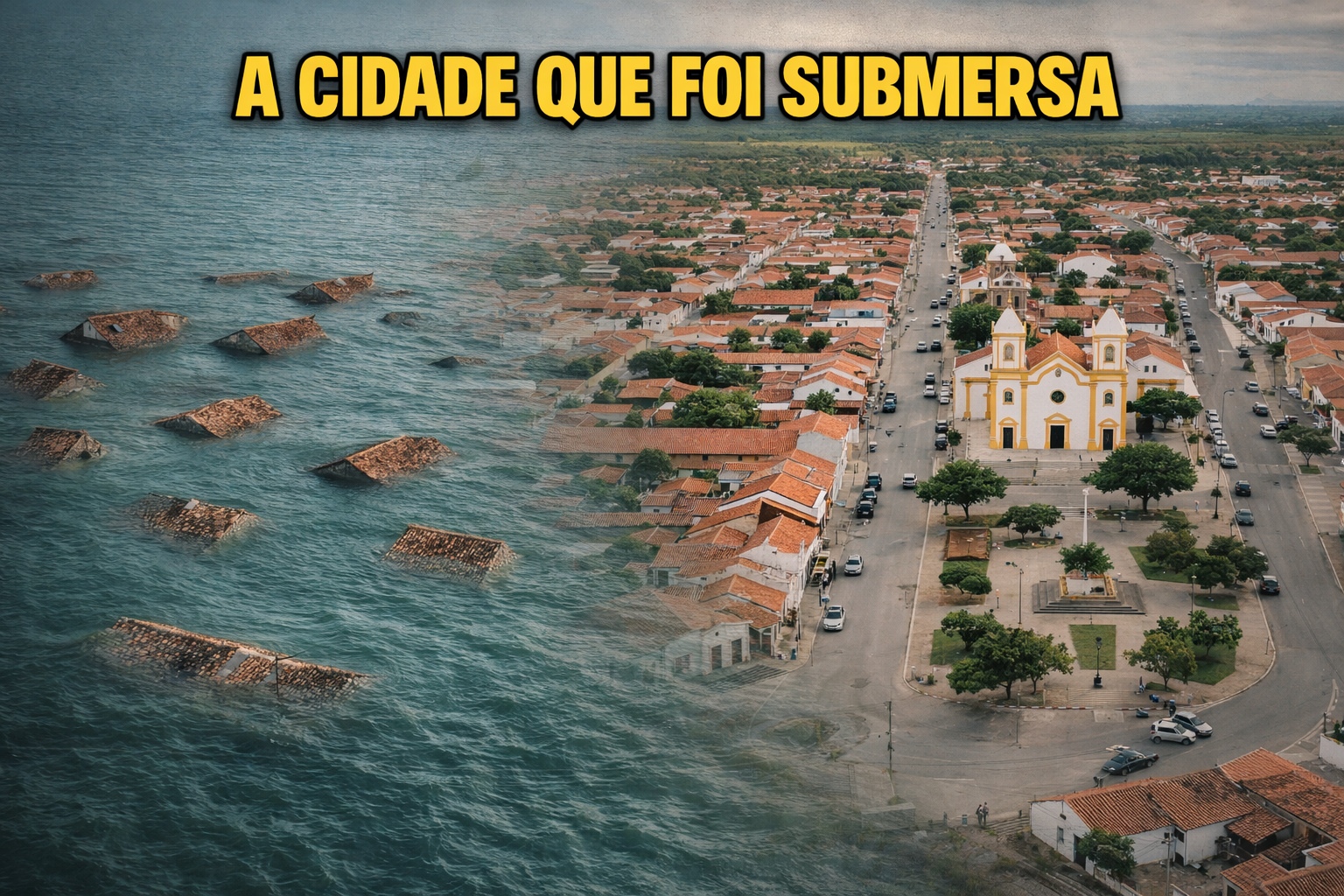


Jaguaribara Was Dismantled, Transferred, and Rebuilt from Scratch After Being Submerged by the Castanhão Reservoir, Becoming One of the Most Remarkable Cases of a Submerged and Recreated City in Brazil.
Few urban stories in Brazil are as symbolic as that of Jaguaribara. In the early 2000s, this small town in the interior of Ceará underwent an extreme process: it was literally dismantled, emptied, and flooded to make way for a gigantic water reservoir. In its place, a new Jaguaribara was born, planned from scratch, modern, organized — but deeply marked by memory, longing, and rupture.
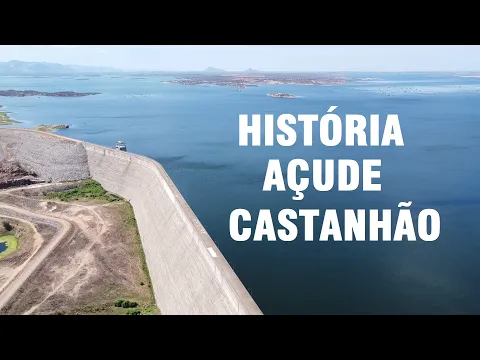
The reason for the change was the construction of the Castanhão Reservoir, the largest freshwater reservoir in Ceará and one of the largest in Brazil. A strategic work for the state’s water security, but one that required a rare social price: the physical disappearance of an entire city.
A City That Had to Disappear to Ensure Water
The old Jaguaribara existed for centuries on the banks of the Jaguaribe River. Small, simple, and deeply connected to the territory, the town organized its life around fishing, local trade, religious festivals, and neighborhood relationships.
-
The daily coffee can hide one of the most unexpected strategies to tackle the climate crisis, combat urban loneliness, and rebuild the human bonds that sustain communities in times of chaos.

-
Malaysian students present a possible solution to a problem that the human eye cannot see with a cheap filter to remove pesticides and fertilizers from water used in agricultural areas.
-
12-year-old boy who has already published two books creates a project to take young writers from Ceará to the São Paulo Book Biennial and inspire a new generation of authors
-
Two teenagers from Pennsylvania put microalgae in the exhaust of a regular car and create a $50 filter that they claim reduces emissions by more than 74% in tests.


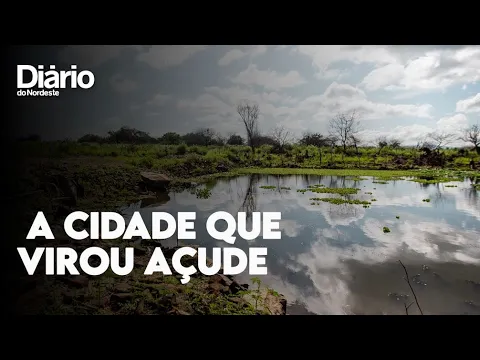

With the advancement of the Castanhão project, initiated in the 1990s, it became clear that the urban territory would be completely submerged. There was no alternative: either the city would move, or it would disappear under billions of cubic meters of water.
The process of removal was slow, painful, and inevitable. Houses were vacated, streets became empty, and little by little, Jaguaribara ceased to exist as an inhabited space.
Before the Living, the Dead Changed Cities
One of the most symbolic — and disturbing — episodes of this story was the transfer of the cemetery from the old town. Even before the residents moved, the dead were transferred.
Tombstones were opened, remains identified, and relocated to the new cemetery of the planned city. For many inhabitants, this moment represented the definitive confirmation that there was no return. Jaguaribara was not just moving; it was being concluded.
The New Jaguaribara: Planned, Organized, and Strange
The new Jaguaribara was officially inaugurated in 2001. Unlike the old town, it was born as a complete urban project, with wide streets, well-defined blocks, squares, schools, a hospital, a public market, and standardized housing.
Everything was designed for a population much larger than the current one, which created a curious contrast: a city with a future look, but with fewer people than expected.
For many residents, the new city offered better material conditions — brick houses, sanitation, energy, public facilities. But at the same time, it brought a difficult-to-explain feeling: the lack of soul.
When Progress Does Not Erase Longing
The biggest challenge for Jaguaribara has never been infrastructure but belonging. The old town had been built over generations, with stories, affections, and memories tied to every street, every corner, every piece of the river.
In the planned city, everything appeared ready — but without a past. Older residents report that the emotional impact was profound, especially among the elderly, who lost spatial and symbolic references. The new Jaguaribara began to physically exist, while the old one continued to exist in collective memory.
Ruins That Reappear When the Water Recedes
During periods of intense drought, an impressive phenomenon occurs: the ruins of the old Jaguaribara reappear.
Remains of houses, streets, sidewalks, and structures emerge from the bottom of the reservoir, revealing a ghost town that was never completely forgotten. For former residents, visiting these remnants is an emotionally intense experience — a mix of reunion, mourning, and longing.
These appearances reinforce the idea that Jaguaribara was not just transferred: it began to exist in two different times.
The Castanhão and the Dilemma of Development
The Castanhão Reservoir is now a key piece of water security in Ceará. It supplies cities, supports irrigated agriculture, fish farming, and helps face historical droughts in the semi-arid region.
From a technical and strategic perspective, the project is considered a success. But Jaguaribara has become a symbol of the dilemma between development and human impact.
The question that remains, two decades later, is not just whether it was worth it — but how major works can be done without erasing entire histories.
A New City, A Submerged Memory
Jaguaribara remains alive, with new residents, new generations, and new challenges. But its identity carries something rare: it was born from the disappearance of itself.
Between planned streets and submerged memories, the city has become a powerful reminder that progress also leaves scars — and that some cities never completely disappear, even when they are underwater.






É muita água.