






 Portuguese
  Spanish


While the world completes corridors connecting two oceans and signs bullet trains to cross deserts in two hours, Brazil, with its continental size and its mountain of grains to transport, is still in the stage of unlocking railways that were promised almost twenty years ago and never fully materialized.
It’s a contrast that tightens the heart. On one side, gigantic projects gaining tracks around the planet at an impressive speed. On the other, a country that produces food for a good part of the world and still transports almost everything by truck, on potholed roads, spending more and polluting more than necessary. It’s worth understanding why this gap exists.
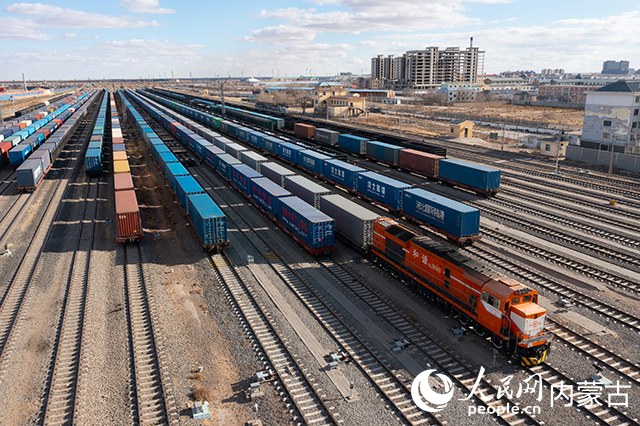
What the rest of the world is building
In the south of Mexico, a corridor of about 300 kilometers of railway, combined with ports at both ends, is connecting the Pacific to the Atlantic by land, as an alternative to the Panama Canal. The idea is to move cargo from one ocean to another in competitive time, and the first test batch has already crossed the route. It’s a work that changes the geography of trade in an entire region.
On the other side of the planet, Saudi Arabia and Qatar signed an agreement to build a high-speed railway connecting their capitals, with trains at 300 kilometers per hour crossing almost 800 kilometers of desert in about two hours. These are two neighbors who not long ago were in a diplomatic crisis and now bet on integration over tracks. The combined message is clear: railways have returned to being a symbol of the future worldwide.
-
Toxic Waste from Brazilian Cassava Processing Transformed into Patented Eco-Friendly Bricks, Passing National Standards and Promising Lower Costs

-
Brazil’s Busiest Port to Triple Soybean Loading Speed with $1.1 Billion Investment in Paraná Terminal, Reaching 8,000 Tons per Hour

-
Cost of Installing Subflooring in 2026: The Importance of Proper Slope to Prevent Water Damage and Costly Repairs
-
New Offshore Borehole Mining Technique Extracts Lithium and Cobalt Without Damaging Ocean Floor


And there’s no need to go far for examples. In just over fifteen years, China has built the largest high-speed rail network on the planet, with tens of thousands of kilometers of track connecting almost all its major cities, while simultaneously expanding a colossal freight network to transport production. While this became routine on the other side of the world, here we were still discussing the first real stretch. The difference, it’s worth insisting, is not in the technology, which is available for anyone who wants it, but in the ability to take a project from paper to completion without it dying halfway through.
The continental Brazil that moves on wheels
Now look at home. Brazil has a continental size and depends on moving crops and minerals over enormous distances, from the agricultural frontier in the Midwest to the ports on the coast. It would be a textbook case for a dense railway network. But the reality is different: most of the cargo still travels by truck, in a more expensive, slower model, and much more prone to losses along the way.
The numbers expose the imbalance. In Brazil, highways account for around 60% of all cargo transport, while railways account for about 20%, a proportion almost inverted compared to countries of similar size. In the United States and China, which also have continental distances, trains carry a much larger share of production because it is cheaper per ton and per kilometer traveled. Every sack of soybeans that travels by truck from Mato Grosso to the port carries an extra cost that could simply not exist.
The projects to change this exist but drag on. The Transnordestina, started back in 2006, is still being completed almost twenty years later. The Ferrogrão, which would connect the grain region of Mato Grosso to a port on the Tapajós River, was stuck in a legal dispute for five years before finally being unlocked. The Central-West Integration Railway and the North-South Railway advance in pieces, section by section, decade after decade. When one is completed, the news sounds almost like a miracle.
Why railways stall here
The reasons accumulate. The Brazilian geography is tough, with mountains, rivers, and forests that increase the cost of each kilometer of track. The financing of such long projects, which only yield returns after many years, scares off investors in a hurry. And there is the judicialization: contested environmental licenses, disputes over routes, and impasses in the Supreme Court that freeze projects for years, as happened with Ferrogrão.
The cost of all this appears in the final bill. When freight becomes more expensive because there are no tracks, the rural producer earns less, the consumer pays more, and the country loses competitiveness when competing in the market abroad with those who move their own crops by train. It’s the famous burden of producing far from the port without a good connection in between, a cost that has accompanied the Brazilian economy for decades and that each stalled railway helps keep standing. Add this up year after year and the silent loss becomes a mountain.
It’s not that there is a lack of plans or money in the world wanting to come in. Often, there is a lack of predictability that makes a twenty-year project move forward without stopping at every change of government or every new court action. I confess it’s frustrating to see the country with everything to lead in railway logistics and stumble precisely in the part of taking it off the paper.
The good news is that something finally seems to be moving. With Ferrogrão released and other projects advancing, there is a window for Brazil to shorten this distance from the rest of the world. But the comparison bar is rising fast: while we celebrate unlocking an old project, abroad they are already connecting ocean to ocean. I imagine the size of the country we would have with the network that others are building now.
Why is it that a country that feeds the world still hasn’t managed to put its own harvest on the tracks? Leave your opinion below.


